






























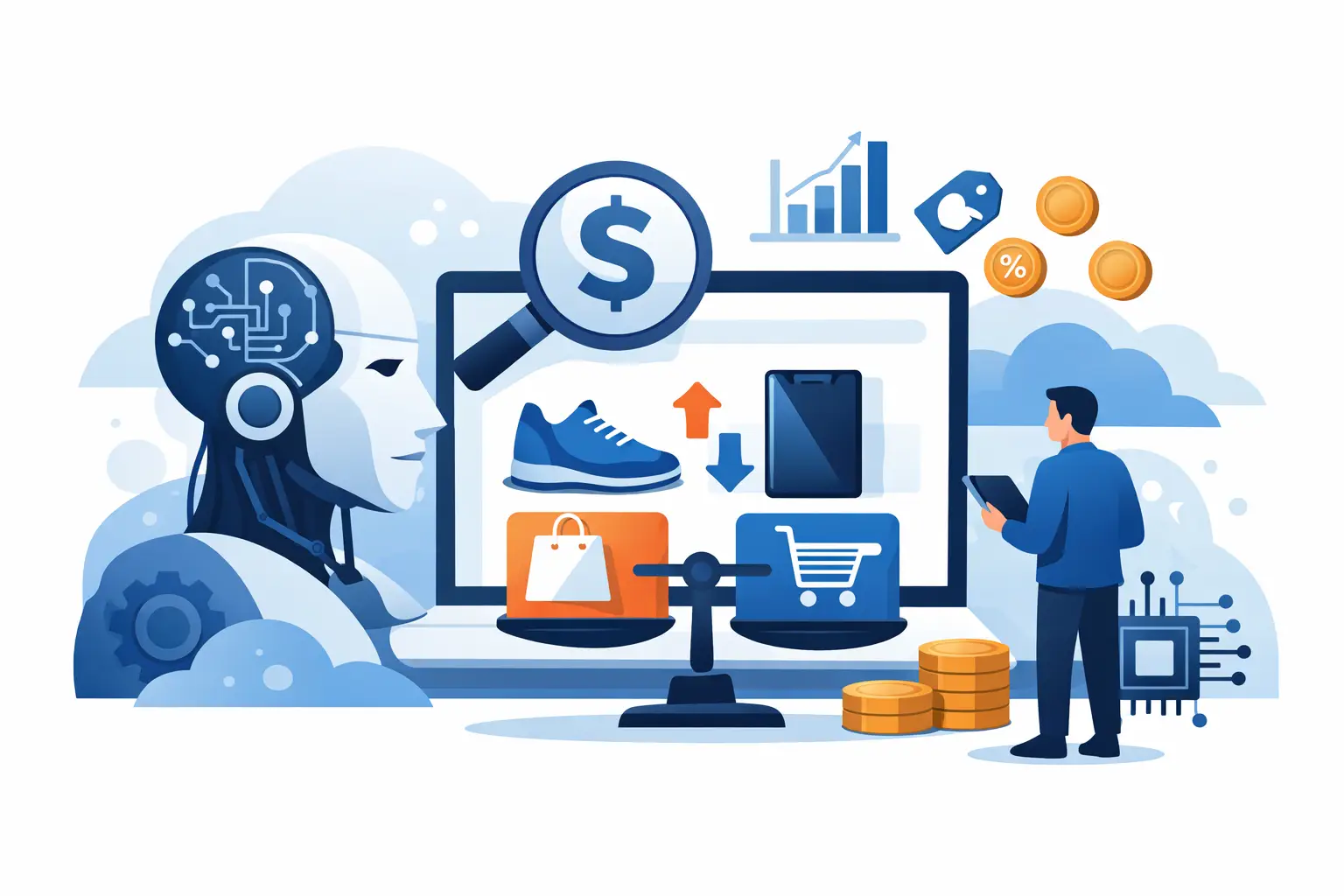
Checking five stores for the same product used to mean opening tab after tab, comparing model numbers, and hoping the listings were actually for the same item. That is the problem AI price comparison is built to solve. If you are asking how does ai price comparison work, the short answer is this: it collects product and pricing data, organizes it into a structured format, matches equivalent items across sellers, and ranks the results so you can see the best options faster.
The useful part is not just speed. It is accuracy. A basic comparison tool can show a list of prices, but an AI-powered system is designed to figure out whether those prices refer to the same product, whether the offer is current, and which result is actually most relevant to your search.
How does AI price comparison work behind the scenes?
At a high level, the system combines data collection, normalization, product matching, and result ranking. Each layer matters. If one piece is weak, the comparison becomes less trustworthy.
First, product data enters the platform from multiple sources. That can include seller feeds, marketplace listings, manufacturer information, catalog uploads, and pricing updates. The platform then cleans and organizes that data into a consistent structure. This matters because one seller may list a product as "Apple AirPods Pro 2nd Gen," while another says "AirPods Pro Gen 2 USB-C." If the platform treats those as unrelated items, the comparison fails.
AI helps identify patterns across titles, descriptions, brand names, specifications, images, categories, and identifiers such as UPCs or manufacturer part numbers. Instead of relying only on exact text matches, it evaluates whether listings are likely to represent the same item. That is what makes modern comparison more useful than a simple keyword search.
Once matching is done, the system compares active offers. It may factor in base price, shipping cost, promotions, seller rules, stock status, and product condition. In a structured marketplace environment, this data can also connect to product detail pages, manufacturer profiles, and shopping workflows so the comparison is not isolated from the rest of the buying process.
The core stages of AI price comparison
1. Data collection
Everything starts with data ingestion. A platform pulls in product details and pricing from connected sellers, merchants, manufacturers, and marketplace sources. Some updates may be near real time, while others happen on a schedule.
This is one of the biggest variables in result quality. A comparison engine is only as current as the data it receives. If a seller updates prices every few hours instead of instantly, there can be a lag between the listed deal and the live checkout price.
2. Data normalization
Raw commerce data is messy. Sellers use different naming conventions, different category structures, and different ways of describing specs. One merchant may list storage as "1TB" and another as "1024GB." One may include bundle details in the title while another puts them in the description.
AI models and rules-based systems work together to normalize this information. The goal is to create a clean, searchable product record with consistent attributes. That gives the platform a stable foundation for matching and filtering.
3. Product matching
This is where AI has the biggest practical impact. The platform looks at multiple signals to decide whether two listings belong to the same product. It can compare brand, model number, title similarity, technical specs, category alignment, and sometimes image-level signals.
Good matching reduces false comparisons. That matters more than people think. The cheapest result is not helpful if it is actually a different size, generation, or regional version of the product.
4. Price evaluation
After matching, the system compares offers at the product level. Some engines show the lowest listed price only. Better systems evaluate total buying cost and offer quality. That can include shipping fees, taxes where available, promotions, seller reliability, stock availability, and whether the item is new, refurbished, or used.
This is where "lowest price" can become more nuanced. A $199 offer with $25 shipping is not better than a $209 offer with free shipping and faster delivery. AI can weigh those signals and surface results that reflect actual shopper value rather than raw sticker price alone.
5. Ranking and presentation
Once the platform has valid matches and evaluated offers, it ranks results. The ranking logic may consider relevance to the search, confidence in the product match, price competitiveness, listing quality, conversion likelihood, and seller or affiliate rules.
For users, this appears as a clean result page. Under the hood, it is a decision system trying to balance accuracy, speed, and usefulness.
Why AI performs better than basic comparison tools
Traditional comparison engines often depend heavily on exact identifiers or fixed merchant feeds. That works well when every seller submits perfect data. In practice, that rarely happens.
AI improves performance by handling inconsistency. It can recognize that two listings are probably the same even when wording differs. It can detect incomplete records and infer missing structure from related data. It can also improve search intent handling, so a user typing a broad phrase such as "wireless noise canceling headphones" gets relevant product groupings instead of a cluttered list of loosely related listings.
There is still a trade-off. AI adds flexibility, but it also depends on model quality, training, and ongoing tuning. If thresholds are too loose, the system may combine products that should stay separate. If thresholds are too strict, it may fail to merge valid offers. The best platforms keep human oversight, structured data controls, and feedback loops in place.
What signals does an AI price comparison engine use?
A strong engine does not rely on one field. It looks across the catalog.
Common signals include product title, brand, manufacturer, model number, UPC or GTIN, technical specifications, category, product descriptions, images, seller history, stock status, shipping details, and promotion data. In a more advanced marketplace setup, it may also use manufacturer profiles, merchant relationships, and listing governance rules to improve confidence.
The point is simple: better inputs produce better comparisons. If the product data layer is well organized, the AI has a much easier job.
Where AI price comparison can go wrong
No comparison platform is perfect, and shoppers should know where edge cases happen.
Bundles are a common problem. A listing for a laptop alone should not be treated as identical to a laptop bundled with a bag, mouse, and warranty extension. Variant-heavy products can also create issues. The same shoe style in different colors or widths may share a title pattern but should not always be merged. The same goes for electronics with different storage capacities or regional versions.
Timing can also create friction. If price updates are delayed, a result may look better than it really is. And some sellers structure shipping or discounts in ways that are hard to compare cleanly at first glance.
That is why a good platform does more than display numbers. It structures product pages, seller details, and offer context so users can verify what they are buying before they move to cart.
How shoppers benefit from AI price comparison
For most users, the value comes down to decision speed. Instead of manually checking multiple stores, the platform organizes comparable offers in one place. That reduces search time, lowers the chance of missing a better deal, and gives shoppers more confidence that they are looking at equivalent products.
It also improves product discovery. If your first search is broad, AI can help narrow the field by grouping similar items, identifying likely matches, and surfacing relevant brands or manufacturers. That is especially useful for users comparing technical products, office equipment, appliances, or repeat-purchase business items where small pricing differences add up.
In a platform model like aipricesearch, that value extends beyond search. Structured product listings, manufacturer information, and shopping functionality support the full path from research to purchase.
How does AI price comparison work for sellers and manufacturers?
It is not just a shopper tool. Sellers and manufacturers benefit when products are structured correctly and matched accurately. Better data quality improves visibility in search, reduces catalog confusion, and helps offers compete on the right product page.
For manufacturers, structured profiles can reinforce product identity and reduce mismatch issues across the marketplace. For sellers, accurate listing data increases the odds that their pricing appears in relevant comparisons instead of being buried by poor categorization.
This matters because comparison is only fair when equivalent offers are being evaluated side by side. AI helps create that structure at scale.
What to look for in an AI price comparison platform
If you want useful results, look past the claim of "AI-powered" and focus on execution. The platform should show strong product matching, current pricing, clear offer details, and enough product context to confirm you are comparing the right item.
It also helps if the platform brings search, product data, seller information, and shopping actions into one workflow. That reduces friction. You spend less time verifying listings and more time making a purchase decision based on clean, organized information.
The best AI price comparison tools do not just find low prices. They reduce noise. They turn scattered listings into a structured buying view that is faster to trust and easier to use.
If you compare prices often, that is the real advantage: less guesswork, fewer tabs, and a clearer path to the right deal.