85.7M vs 75.9M: Black Friday vs Cyber Monday for Cyber Week Buyers
September 21, 2026

85.7M vs 75.9M: Black Friday vs Cyber Monday for Cyber Week Buyers
Black Friday wins for big-ticket items you’d rather see and touch first: TVs, appliances, mattresses, furniture. Cyber Monday wins for laptops, software, and small electronics, where online configurators and manufacturer sites give their deepest discounts. Neither day stands alone anymore. Deals now stretch across a full Cyber Week, so the smartest move is picking your category, then watching prices continuously instead of betting everything on one 24 hour window.
TL;DR:
- Black Friday generally offers better discounts on large items like TVs, appliances, mattresses, and furniture, but delivery delays are common without checking shipping estimates.
- Cyber Monday provides the deepest discounts on laptops, software, subscriptions, and online-only electronics, especially during evening peak shopping hours.
- Timing and order-specific price alerts are crucial, as many deals are compressed into Cyber November, making early price monitoring essential.
- Online fraud risks are high, so paying with a credit card, verifying seller reviews, and avoiding suspicious payment methods protect shoppers during these sales.
- Price comparison tools can help identify genuine discounts by checking price history and total costs, ensuring deals are not just inflated “doorbusters.”
Table of Contents
- Black Friday vs Cyber Monday: What Black Friday Actually Is
- What Is Cyber Monday, and Why Does It Still Matter Online?
- Black Friday or Cyber Monday: Which One Should You Prioritize?
- When to Buy: A Practical Strategy for Cyber Week
- How to Avoid Scams During Black Friday and Cyber Monday
- Cyber November Is Reshaping When the Best Deals Actually Land
- Why I Trust Data Over Hype During Cyber Week
- Let Aipricesearch Handle the Price-Checking for You
- Sources
- FAQ
Black Friday vs Cyber Monday: What Black Friday Actually Is
Black Friday falls on the Friday after Thanksgiving. Most retailers now start pushing online deals Thursday evening, sometimes days earlier, so the “one day” framing has always been a bit misleading.
The category strengths haven’t changed much in years. Doorbuster culture still centers on:
- Large-screen TVs and home theater setups
- Major appliances (refrigerators, washers, dryers)
- Mattresses and furniture
- Select in-store apparel and footwear drops
Online and in-store offers overlap heavily now. A “doorbuster” price often shows up on the retailer’s app hours before the store opens, which removes some of the incentive to stand in line. Before buying, confirm the exact SKU or model number. Retailers frequently discount a stripped-down “value” version of a TV or laptop under a name nearly identical to the flagship model, and delivery windows on big appliances can slip well past the holidays if you don’t check shipping estimates at checkout.
What Is Cyber Monday, and Why Does It Still Matter Online?
Cyber Monday started as a purely online counterpart to Black Friday, born from the observation that people shopped from work computers once they got back from the long weekend. It falls on the Monday after Thanksgiving and remains the heaviest single day for online-only sales.
Its category strengths lean digital:
- Laptops and desktop configurator discounts direct from manufacturers
- Software and subscription service promotions
- Small electronics, headphones, smart home gadgets
- Amazon device markdowns and online-only brand sales
Shopping behavior differs too. Cyber Monday traffic peaks in the evening, often between 8pm and 10pm, and manufacturers tend to save their deepest configurator and software discounts for this day because online checkout systems handle configuration heavy purchases better than a crowded store register. Buy now, pay later usage also tends to run higher on Cyber Monday than on Black Friday.
Black Friday or Cyber Monday: Which One Should You Prioritize?
The honest answer depends entirely on what’s in your cart, not on which day sounds like the bigger event.
Quick category matrix:
- TVs, appliances, mattresses, furniture: Black Friday usually has the edge
- Laptops, software, subscriptions, configurator upgrades: Cyber Monday usually wins
- Apparel, footwear, in-store impulse buys: Black Friday, especially for doorbuster timing
- Small electronics, Amazon devices, online-only brands: Cyber Monday
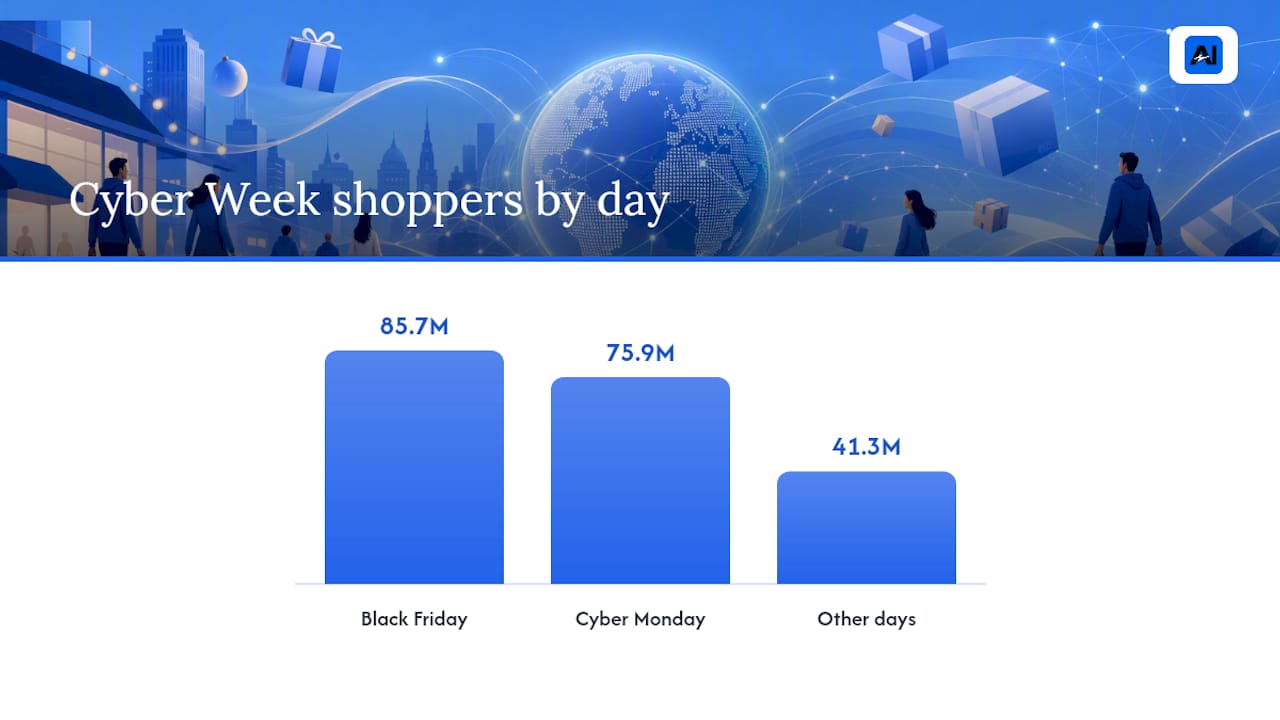
Cyber Week by the numbers: Black Friday drew 85.7 million online shoppers in 2025, while Cyber Monday pulled in 75.9 million out of a record 202.9 million total shoppers across the five-day weekend. Black Friday’s online sales outpaced Cyber Monday’s that year, reversing the old assumption that Monday always wins on dollars.
Timing matters as much as the day itself. Black Friday traffic peaks midday, roughly 10am to 2pm Eastern, driven heavily by mobile browsing during breaks and errands. Cyber Monday’s peak comes at night, and per-session revenue tends to run higher during that evening window, likely because shoppers are deliberately sitting down to buy rather than scrolling casually. Retailers also run “second-chance” deals on items that sold out over the weekend, usually reappearing Sunday night or Monday morning.
Rule of thumb: if you can hold something in your hands and it’s expensive to ship, lean Black Friday. If it lives entirely on a screen, wait for Monday.
When to Buy: A Practical Strategy for Cyber Week
Treat the entire window from Thanksgiving through Cyber Monday as one continuous sale rather than two separate events. Retailers now run staggered promotions inside that stretch, and Adobe’s holiday data shows AI-driven personalization and social commerce are compressing deals into what’s now called Cyber November, which means the “best” price on a given item might actually land on the Wednesday before Thanksgiving.
Here’s a simple sequence to follow:
- Identify the exact model number or SKU for anything on your list, not just the product name.
- Set price alerts a week or two before Thanksgiving so you have a baseline to judge against.
- Compare total cost, including shipping and estimated tax, not just the sticker price.
- Check the return policy and warranty terms before checkout, especially on appliances and electronics.
- Separate your list into “buy the moment it hits target price” versus “can wait until Cyber Monday.”
Pro Tip: Price history is your best defense against fake “door buster” pricing. If a retailer’s “50% off” price is only 5% below what it charged in October, a running price history exposes that immediately, something a single-day sale page will never show you.
Urgent, likely to sell out items (specific TV models, popular game consoles) deserve action the moment they hit your target price. Everything else, especially laptops and software, can usually wait for Monday evening without real risk.
How to Avoid Scams During Black Friday and Cyber Monday
Holiday shopping season is peak season for online fraud too, and the FTC’s core advice is to pay with a credit card whenever possible, since credit cards make disputing a fraudulent charge dramatically easier than debit cards or bank transfers.
- Avoid any seller demanding payment by gift card or cryptocurrency; legitimate retailers never require this.
- Be skeptical of deals discovered through social media ads, a common vector flagged repeatedly in FTC consumer alerts.
- Check for real reviews, verifiable company information, and a clear return policy before entering payment details.
- For collectibles and limited-run items, counterfeit risk spikes; learn to spot fakes before you buy rather than after the package arrives.
- Keep order confirmations, screenshots, and tracking numbers. If something goes wrong, that paper trail is what makes a credit card dispute succeed.
Cyber November Is Reshaping When the Best Deals Actually Land
Retailers no longer treat Black Friday and Cyber Monday as two isolated dates. They’ve stretched promotions into a longer window industry insiders call Cyber November, running early-access events, VIP previews, and staggered mini-sales throughout the month.
- AI-driven personalization now surfaces relevant deals to individual shoppers earlier than the mass-market blast used to.
- Retailers deliberately sequence early access, mid-November pushes, a Black Friday anchor, and post-Cyber Monday clearance to spread out demand and clear inventory efficiently.
- Loyalty program previews and merchant emails often reveal pricing days before the general public sees it.
Watching your inbox and a retailer’s early-access list is no longer optional extra credit. It’s become part of the baseline strategy.
Why I Trust Data Over Hype During Cyber Week
Every year, shoppers ask which single day to prioritize, and every year the honest answer is “it depends on the item,” not a slogan. Cross-retailer price comparison and price history matter most on big-ticket purchases precisely because a single “sale” tag tells you nothing about whether the underlying price actually dropped.
A simple workflow works better than instinct: pick the item, set a price alert, verify the seller’s return policy and reliability, then buy only once it hits your target.
— Timothy
Let Aipricesearch Handle the Price-Checking for You
Price comparison tools exist because comparing multiple retailer tabs by hand during Cyber Week is a losing game. Such tools typically pull prices from verified US retailers and factory-direct sources, then rank results by total cost, including shipping and tax, so you’re never comparing a sticker price against a higher real one.

It also runs price history and alerts so you know whether a “Black Friday doorbuster” is an actual discount or a repackaged October price, plus a dropship detector that flags inflated markups before you check out. The AI shopping assistant supports image and URL search, so if you spot a deal on social media, you can verify it against real pricing in seconds instead of trusting the ad. Build a shopping list now for everything you’re watching this Cyber Week, set your target prices, and let the free price comparison tool tell you the moment a deal is actually worth clicking “buy.”
Sources
- Thanksgiving holiday weekend draws a record 203 million shoppers (NRF)
- Online shopping | Federal Trade Commission
- Adobe’s 2026 holiday forecast projects $284B in U.S. online spending – Ecommerce Times
- US Cyber Monday Nov 30 vs Black Friday Nov 27 2026: Strategy, category timing, and what to buy when | ShopBack Blog
FAQ
Does Amazon Do Cyber Monday Deals?
Yes, Amazon treats Cyber Monday as one of its biggest sales days, with steep markdowns on its own devices like Echo and Fire tablets alongside laptops and small electronics. Amazon also runs deals throughout the preceding week as part of the broader Cyber Week push.
What Is the Real Difference Between Black Friday and Cyber Monday?
Black Friday started as an in-store shopping event tied to doorbuster deals on big-ticket items like TVs and appliances, while Cyber Monday began purely online, focused on laptops, software, and electronics. Black Friday drew more online shoppers in 2025 (85.7 million versus 75.9 million), though Cyber Monday still often posts strong per-session revenue thanks to evening buying patterns.
Is Black Friday a Dying Shopping Trend?
Not based on the numbers. Black Friday remains the single biggest shopper-volume day of the season, and its online sales have grown fast enough to outpace Cyber Monday’s in recent years, even as promotions spread across a longer Cyber November calendar.
Are Flights Really Cheaper on Cyber Monday?
Travel deals do appear during Cyber Monday promotions, but airfare doesn’t follow the same predictable discount pattern as electronics or appliances. Airlines and travel sites run their own promotional calendars, so tracking specific route prices ahead of time is more reliable than assuming Cyber Monday guarantees the lowest fare.
Is Walmart or Amazon Cheaper for Black Friday and Cyber Monday Deals?
Neither retailer wins consistently. Amazon and Walmart routinely price-match each other during peak shopping events, so the cheaper option shifts item by item rather than staying fixed with one retailer all season.