U.S. Shoppers: 4 Evidence Backed Steps to Beat Free Shipping Markups
September 27, 2026

U.S. Shoppers: 4 Evidence Backed Steps to Beat Free Shipping Markups
Free shipping is rarely free. Retailers who advertise it often build the delivery cost into the item’s price, which means you pay for shipping whether you notice it or not. The fix is simple: before you buy, add up the product price, any shipping fee, and tax, then compare that total across sellers instead of trusting the word “free” on its own.
TL;DR:
- Retailers often embed shipping costs into the item price, so “free shipping” frequently results in higher base prices compared to transparent pricing.
- Comparing total costs by adding item price, shipping fee, and estimated tax reveals when “free shipping” listings are inflated versus genuinely cheaper options.
- Regulatory guidelines require clear disclosure of shipping charges before checkout if they are excluded from advertised prices, to prevent misleading consumers.
- Research shows that sellers advertising free shipping often set higher base prices, with printers in a 2012 study priced roughly 5.4% above their partitioned-price competitors.
- Using automation tools or a quick manual check can help shoppers uncover hidden markups and avoid deceptive “free shipping” offers.
Table of Contents
- How free-shipping pricing actually works
- What research and regulators say about hidden shipping costs
- A step-by-step method to compare true total cost
- Red flags that signal hidden shipping markup
- Why automating the total-cost check makes sense
- The bias toward “free” is the real problem
- An optional way to check total cost automatically
- Sources
- FAQ
How free-shipping pricing actually works
Retailers price shipping in one of two ways. Partitioned pricing shows the product price and shipping fee separately, so you see exactly what delivery costs. Non-partitioned pricing folds shipping into the item price and calls the result “free,” even though someone still paid for the box and the truck.
Stores lean on a few familiar tactics to make this work, as explained in this Ecommerce Programmatic SEO: A Practical Rollout Playbook.
- Free-shipping thresholds that waive fees once your basket hits a set amount, like “free shipping over $55.”
- Unconditional free shipping on every order, with delivery cost baked into every listed price.
- Delivery-speed surcharges that charge extra only for faster shipping, while “standard” stays labeled free.
- Price adjustments that quietly raise the base price to offset delivery costs across the catalog.
The psychology behind this is well documented. Removing a price tag entirely, even a small one, triggers what researchers call the zero-price effect: shoppers overweight anything marked “free” and are more willing to buy, even if the total cost hasn’t changed. Retailers know a $0 shipping line converts better than a $4.99 one, so they redistribute that $4.99 into the product price instead of losing the sale.
Pro Tip: When a listing highlights “free shipping” in bold but hides the item price in small font, that’s usually a sign the price has been adjusted to cover delivery.
What research and regulators say about hidden shipping costs
The skepticism here isn’t just intuition. A 2012 empirical study comparing retailers that charge separate shipping fees against those advertising free shipping found that free-shipping sellers frequently set higher base prices for the same products. In the study’s sample, shipping fees charged by partitioned-price retailers represented a small share of the product price for printers and digital cameras, meaning free-shipping competitors had likely built a comparable amount into their sticker price.
Regulators have caught up with this pattern. The FTC’s 2025 guidance on unfair or deceptive fees allows businesses to exclude shipping from the advertised price, but only if they disclose that excluded charge clearly before asking for payment, and the final amount shown at checkout must include it. In other words, a retailer can call shipping “free” or leave it out of the sticker price, but it can’t spring a real shipping charge on you at the last screen without warning.
The Consumer Financial Protection Bureau has separately warned that marketing something as “free” becomes misleading when the real cost shows up elsewhere, buried in fine print or folded into an inflated price.
One in-sample finding worth remembering: free-shipping sellers in the 2012 study priced printers roughly 5.4% higher than the shipping fee charged by their partitioned-price competitors, a gap you’d never see on the label alone.

A step-by-step method to compare true total cost
You don’t need a spreadsheet to catch a hidden markup. A few minutes and the same short workflow works for almost any purchase.
- Match the exact product. Find the identical SKU, model number, or manufacturer part number across at least two or three sellers so you’re not comparing different configurations.
- Add up the all-in cost. Total the item price, the shipping fee (even $0), and an estimated tax based on your state’s rate to get one comparable number per seller.
- Check whether the base price is typical. Use a price-history tool or an image or URL search to see if the “free shipping” listing’s price is inflated compared to its own recent history or to competitors.
- Factor in returns and delivery timing. A cheaper total loses its appeal fast if return shipping isn’t covered, a restocking fee applies, or you need to pay extra for faster delivery.
A quick example: if Seller A lists a blender at $79.99 with free shipping and Seller B lists the same model at $71.99 plus a $6 shipping fee, Seller B’s all-in cost of $77.99 is actually the better deal, even though its listing looks more expensive at first glance.
Keep a short checklist handy:
- Same SKU or model number confirmed across sellers.
- Item price, shipping, and estimated tax added into one total.
- Base price checked against price history or other listings.
- Return policy and delivery speed compared, not just the sticker price.
Red flags that signal hidden shipping markup
Some listings give themselves away if you know what to look for.
- A noticeably higher base price than competitors selling the exact same item with disclosed shipping fees.
- A free-shipping threshold set suspiciously close to the average basket size, nudging you to add one more item.
- Shipping details buried in fine print or only revealed after you select a delivery speed.
- A seller with inconsistent shipping history, vague return policies, or reviews mentioning delivery surprises.
A few habits make these easier to catch. Always compare single-unit totals rather than bundle deals, which can mask per-item markup. Skim seller reviews specifically for delivery and return complaints, since a pattern of “shipping took forever” or “return cost me $15” often points to a seller cutting corners elsewhere. And favor sellers who show a clear shipping cost table over ones that just say “free” with no breakdown.
Pro Tip: Add the item to your cart, but don’t check out. Most sites reveal the real shipping charge, tax, and final total at that stage, often before you’ve entered any payment information.
Why automating the total-cost check makes sense
Doing this math by hand for every purchase gets old fast, which is part of why so many shoppers just trust the word “free” and move on. That’s the gap an automated comparison tool is built to close.
Price comparison tools can compare prices from various retailers and sources, checking not just the sticker price but also seller reliability, helping spot when a “free shipping” listing is really a marked-up price in disguise. Some tools include features to flag sellers with unreliable pricing patterns, and reported average savings per user can reflect total-cost comparisons rather than headline price alone. For a shopper trying to apply the checklist above at scale, matching identical SKUs, comparing all-in totals, and catching baked-in shipping pricing across dozens of listings, that’s the practical use case automation solves.

The bias toward “free” is the real problem
The evidence here points to a simple conclusion: the word “free” does more psychological work than financial work. Shipping costs money to move a box from a warehouse to your door, and no retailer absorbs that cost out of generosity. What varies is who sees the number and when.
The conventional advice, “look for free shipping,” gets this backward. Free shipping isn’t a discount, it’s a pricing format, and the format that looks cheapest at a glance is often the one with the least transparency built in. A seller that shows you a $6 shipping line at least lets you do the math. A seller that hides the same $6 inside the price is betting you won’t bother.
If you take one thing from this, prioritize matching identical products and comparing all-in totals before you ever notice which listing says “free.” The sticker that flatters your instincts is exactly the one worth double-checking.
— Timothy
An optional way to check total cost automatically
If you’d rather not run the math by hand every time, AI Price Search does the comparison for you, pulling prices from verified US retailers and factory-direct sources so you can see the all-in cost, not just the headline number.
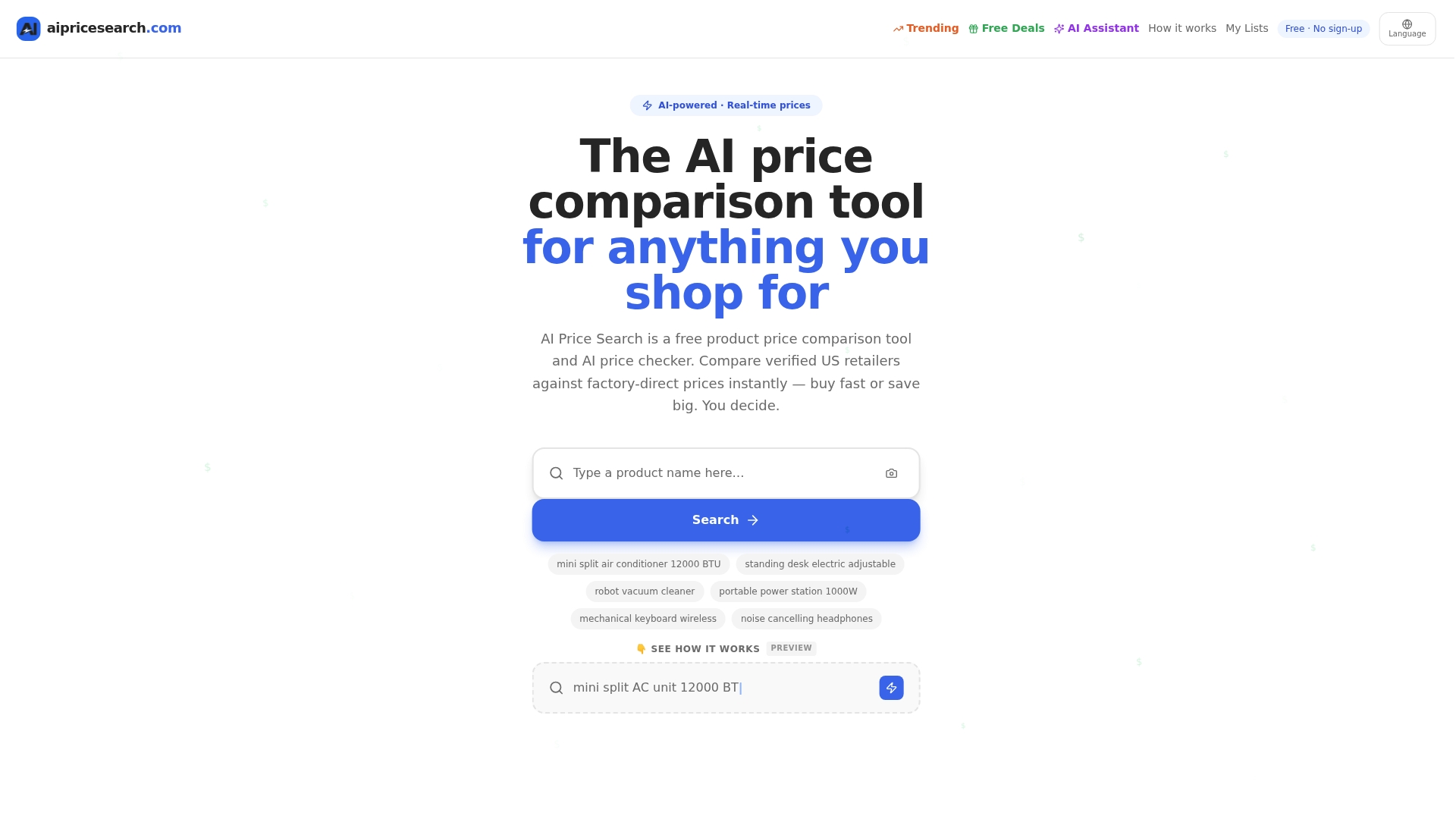
A few ways to put it to work:
- Search by product name, photo, or URL to line up identical SKUs across sellers.
- Use the dropship detector to flag sellers with questionable pricing or reliability patterns.
- Build a shopping list to track total cost, including shipping, on items you’re watching.
It’s an optional step, not a replacement for the checklist above, but it turns a five-minute manual comparison into a few seconds.
Sources
- Shipping Fees or Shipping Free? A Tale of Two Price Partitioning Strategies in Online Retailing
- Rule on Unfair or Deceptive Fees: Frequently Asked Questions | Federal Trade Commission
- Consumer Financial Protection Bureau guidance and warnings about hidden fees
FAQ
Is free shipping ever actually free?
Rarely in the strict sense. Someone pays for the box and delivery, and research on retailer pricing shows that cost is often folded into a higher item price rather than eliminated.
How do I calculate the true total cost of an order?
Add the item price, the shipping fee (including $0 if shipping is advertised as free), and an estimated tax to get one comparable number. Then repeat that math for each seller offering the same SKU or model number before deciding where to buy.
Do retailers have to disclose shipping charges before checkout?
Yes. Under FTC guidance, businesses can exclude shipping from the advertised price, but they must disclose any excluded charge clearly before payment, and the final checkout amount must include it.
What are the most common free-shipping tactics to watch for?
The two most common are a spending threshold that unlocks free shipping and unconditional free shipping baked into every price. Both can redistribute the real shipping cost into the item price rather than removing it.
Can a price comparison tool catch hidden shipping markup?
A tool that compares all-in pricing across verified sellers can flag when a “free shipping” listing has a higher base price than competitors charging a disclosed fee. AI Price Search does this by comparing verified retailer and factory-direct prices alongside seller reliability signals.