Hidden Fees Online: Checklist for US Shoppers, FTC & CFPB Tips and AI
October 4, 2026

Hidden Fees Online: Checklist for US Shoppers, FTC & CFPB Tips and AI
Hidden fees typically show up at checkout as shipping, handling, taxes, order-protection add-ons, or service charges tacked onto a price that looked lower on the product page. The single most useful habit is confirming the full payable total before you enter payment details. If a charge still surprises you afterward, pause, screenshot the order summary, and check the seller’s return policy to see who covers return shipping.
TL;DR:
- Confirm the total payable amount, including shipping and taxes, before entering payment details, as hidden fees often appear late in checkout.
- Watch for pre-checked boxes for protection plans, insurance, and add-ons, and deselect them if not explicitly chosen.
- Compare final totals across multiple sites rather than just listed prices, paying attention to shipping surcharges and optional fees.
- Read the full order breakdown line by line and verify the seller’s details, return policy, and delivery date before paying.
- Use a patience pause of several minutes to review and uncheck unwanted add-ons or fees, preventing most hidden charges from sneaking into the final total.
Table of Contents
- What drip pricing is and why headline prices mislead you
- Common hidden fees to watch for before you check out
- Checkout checklist: how to spot hidden fees before you pay
- Federal rules that protect you from surprise charges
- If you are charged unexpectedly, here is what to do
- How your payment method changes the fees you pay
- Your rights beyond federal fee rules
- One habit that stops most hidden fees from working
- Let AI Price Search check your final total for you
- FAQ
- Sources
What drip pricing is and why headline prices mislead you
Drip pricing is the practice of advertising a low initial price, then adding mandatory charges one step at a time as you move through checkout. By the time you reach the payment screen, the total can look nothing like the number you first saw. A bait-and-switch version of this happens when a listing omits a cost entirely until the final page, banking on the fact that you have already invested time choosing the item and are less likely to abandon the cart.
The FTC’s online shopping guidance lists shipping, handling, delivery, taxes, other checkout fees, return shipping, and restocking fees as the most common unexpected costs shoppers run into. The agency’s broader reasoning, reflected in its Rule on Unfair or Deceptive Fees, is that piecemeal pricing makes it almost impossible to compare offers accurately. When one site bundles shipping into the price and another adds it at checkout, the “cheaper” listing can end up costing more.
A legitimate checkout should make a few things clear before you pay:
- The item price, shipping cost, and estimated tax listed separately but added into one visible total.
- Any optional add-ons, like protection plans, shown as checkboxes you can deselect.
- A return policy you can read before committing to the purchase, not after.
Fees that must be disclosed before you consent to pay are not supposed to appear as a surprise on your bank statement. The FTC’s fee rule requires covered businesses to state the nature, purpose, and amount of any excluded charges before you agree to the purchase.
Common hidden fees to watch for before you check out
Most hidden costs fall into a short list of repeat offenders. Knowing the pattern makes them easier to catch the moment they appear.
- Shipping and handling surcharges. Some retailers fold shipping into the listed price; others add it, plus a separate handling fee, once you reach checkout. Evening or expedited delivery windows often carry their own surcharge, as seen in delivery services that charge extra for timed delivery slots.
- Order-protection or package insurance. These are usually optional, but they often arrive as a pre-checked box you have to notice and uncheck yourself.
- Restocking and return-shipping fees. A retailer can legally charge to restock a return or require you to pay for the shipping label back. Read the return policy before buying, not after you need to send something back, since some return and exchange services spell out these costs in detail.
- Service, convenience, or processing fees. These are often labeled vaguely, like a flat “service fee” with no breakdown. The FTC’s fee rule exists partly because this kind of vague labeling makes comparison shopping harder.
- Negative-option subscriptions and trial-shipping charges. A “free” trial that asks for your card number can quietly convert into a recurring charge if you do not cancel in time, and some trials tack on a shipping fee even though the product itself is free.
Pro Tip: Before clicking “place order,” scroll back through every screen of checkout once more. Pre-checked boxes for protection plans and insurance are the single most common way optional fees sneak into a final total.
Checkout checklist: how to spot hidden fees before you pay
Run through these steps any time you are about to complete a purchase, especially on a site you have not used before.
- Add up the real total. Combine the item price, shipping, estimated tax, and any mandatory fees, then compare that number across the sites you are considering rather than comparing listed prices alone.
- Scan for pre-checked boxes. Protection plans, insurance, and donation add-ons are frequently opted in by default. Uncheck anything you did not choose yourself.
- Read the full order breakdown. Most checkout pages show a itemized summary right before payment. Read it line by line instead of skimming to the total.
- Confirm who you are actually buying from. On a marketplace, check the seller’s name, rating, and fulfillment location, since return policies and shipping timelines can vary seller to seller even on the same platform.
- Get a shipping date in writing. Screenshot the product page, your cart, and any delivery promise before you pay, so you have evidence if something does not match later.
- Set a cancellation reminder for free trials. If a trial requires your card details, put a calendar reminder a few days before the renewal date and write down the exact cancellation steps while you still have access to your account.
Federal rules that protect you from surprise charges
A handful of federal protections cover most of what goes wrong with hidden fees, even though no single rule covers every kind of online purchase.
The FTC’s online shopping guidance recommends calculating the total cost before placing an order and keeping records of the item, seller, promised shipping date, return policy, and any communications with the seller. Separately, the Rule on Unfair or Deceptive Fees requires certain businesses, including live-event ticket sellers and short-term lodging platforms, to disclose the total price up front rather than drip-feeding charges through checkout.
The Mail, Internet, or Telephone Order Merchandise Rule matters when a shipment is late or never arrives: if a seller made no specific shipping promise, it generally must ship within a reasonable time or refund you if it cannot.
For credit card issues, CFPB guidance gives you 60 days from the statement date to send written notice of a billing error to your card issuer.
- Contact the seller first when a charge looks wrong, since many errors are fixed faster that way.
- Keep every screenshot and confirmation email until the transaction is fully settled.
If you are charged unexpectedly, here is what to do
A wrong or surprise charge is frustrating, but there is a clear order of operations that tends to work.
- Contact the seller or marketplace first. Explain the discrepancy, request a refund or correction, and save the entire exchange, including timestamps.
- Escalate to your card issuer if the seller does not resolve it. CFPB guidance gives you 60 days from the statement date to send written notice of the error; the issuer generally must acknowledge it within 30 days and can take up to two billing cycles to investigate.
- Keep paying undisputed charges. Disputing one line item does not mean you should withhold payment on the rest of the bill.
- For items that never shipped or arrived unordered, federal guidance under the Mail, Internet, or Telephone Order Merchandise Rule supports disputing the charge and seeking a refund rather than settling for store credit.
- Report the pattern if it continues. A state consumer protection office or the FTC can take complaints about recurring deceptive pricing, even when your individual charge has already been resolved.
How your payment method changes the fees you pay
The card or account you choose at checkout can change your total before a single hidden fee even enters the picture. Credit card surcharges are the clearest example: some merchants add a percentage-based fee specifically for paying by credit card, while the same purchase made with a debit card or bank transfer carries no such charge. That surcharge is usually disclosed at the point you select a payment method, but it is easy to miss if you are rushing through the final screen.
Buy-now-pay-later options introduce a different risk. The headline offer is often “four payments, no interest,” but missed payment fees or deferred interest can turn a seemingly free plan into an expensive one if a payment is late. Digital wallets and store-branded cards sometimes work the other way, waiving a service fee that would otherwise apply to other payment types, which is worth checking before you assume one payment method is costing you extra.
The practical habit here is the same one that works for shipping and handling: look at the total for your specific payment method, not the price displayed before you choose how to pay. If a site shows a lower total for one payment type and a higher one for another, that difference is the fee, whether or not it is labeled as a “surcharge.”
Your rights beyond federal fee rules
Federal guidance sets a floor, but it does not cover every scenario, and state and industry rules fill in some of the gaps. Many states have their own consumer protection statutes that address deceptive advertising and unfair business practices more broadly than federal rules do, often giving residents the option to file a complaint with a state attorney general’s office in addition to the FTC.
Industry-specific protections exist too. Card network rules from major payment processors often set limits on how and when merchants can disclose credit card surcharges, independent of what federal law requires. Shipping carriers also publish their own service terms. The USPS page on optional shipping add-ons shows that insurance, signature confirmation, and expedited handling are priced and disclosed separately from base postage, so a merchant that bundles these into an unlabeled “shipping and handling” line is not following the carrier’s own transparency standard.
None of this replaces reading a seller’s actual return and refund policy before you buy, since that policy, not a general rule, usually determines who pays if something goes wrong. When a dispute involves an amount large enough to matter, a state consumer protection office can often act faster than a federal complaint, particularly for local or regional sellers.

One habit that stops most hidden fees from working
Hidden fees succeed because checkout design rewards momentum. Every extra screen between the product page and the payment button is a chance to slip in a pre-checked box or a vague line item, and most shoppers are moving too fast by that point to notice.
The habit that actually works is boring: add up the real total, then wait five minutes before paying. That pause is enough time to scroll back through the cart, uncheck anything you did not choose, and confirm the seller’s return policy. It is a small delay that catches a surprisingly large share of add-on charges, and it costs you nothing but patience. Automation can make that same check faster, which matters when you are comparing more than one retailer.
— Timothy
Let AI Price Search check your final total for you
We built our tool to do the five-minute check automatically, so you do not have to reopen five browser tabs to compare final totals. Our AI price comparison tool pulls listings from verified US retailers and factory-direct sources and ranks them by total cost, not headline price, which is the comparison that actually matters once shipping and tax are added in.
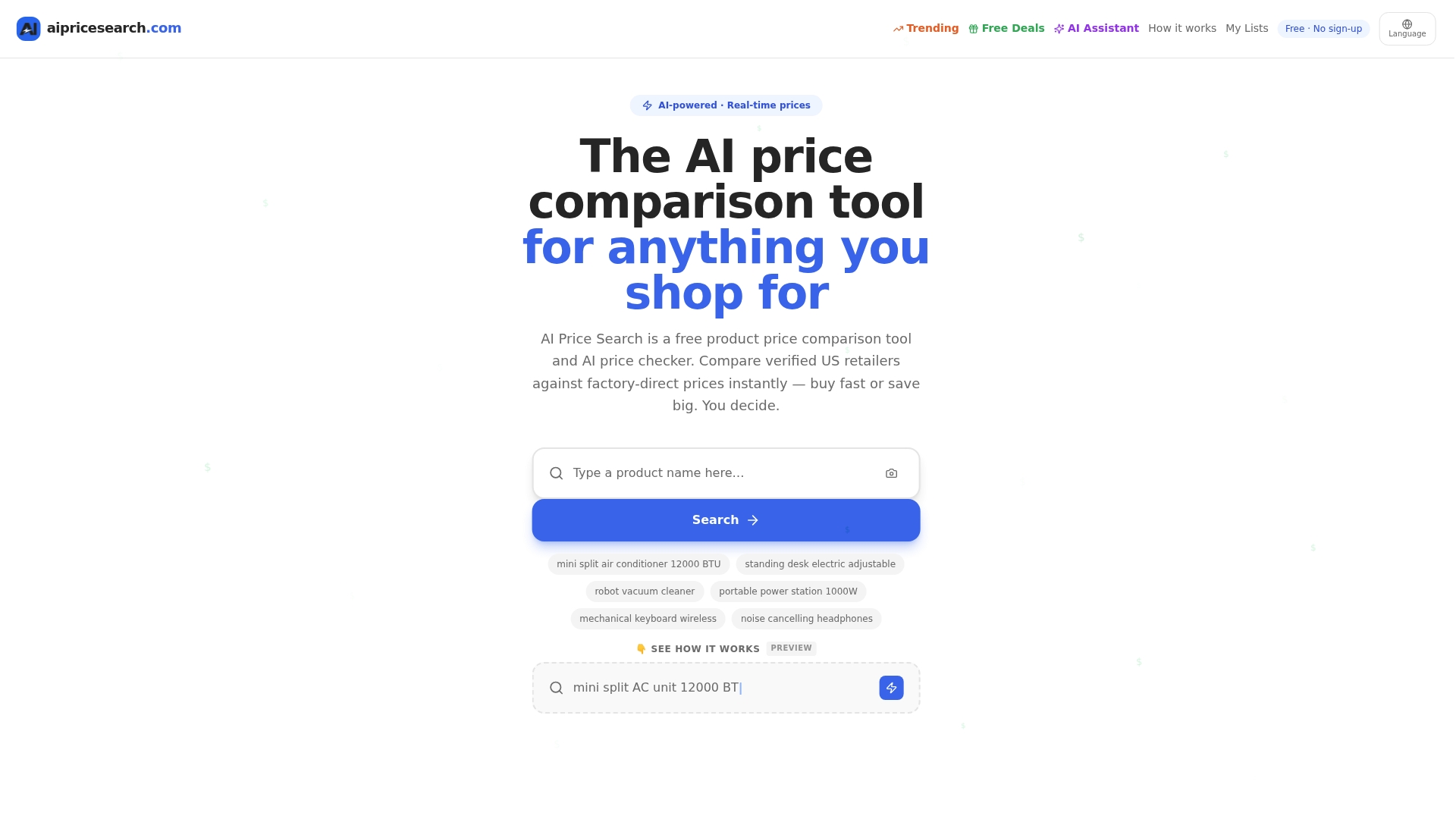
A few ways we help beyond the basic comparison:
- Our Dropship Detector flags listings that look like inflated reposts of a cheaper factory-direct item.
- Our AI shopping assistant tracks price history and sends alerts when a tracked item drops.
- Our shopping lists let you save and share items you are watching across multiple retailers.
You can verify current figures and start a search on our product page.
FAQ
What are the most common hidden fees in online shopping?
The most common hidden costs are shipping, handling, taxes, return shipping, and restocking fees, according to the FTC’s online shopping guidance. Order-protection add-ons and vague service or convenience fees also show up frequently, often added late in checkout.
How can I calculate the real total cost before I buy?
Add the item price to shipping, estimated tax, and any mandatory fees shown in the order summary before you pay. The FTC recommends doing this calculation and keeping a record of the total, the seller, and the promised shipping date.
What should I do if a seller charges me after a free trial?
Contact the seller first and request a refund or cancellation confirmation, keeping a record of the exchange. If the charge is not resolved, send your card issuer written notice within 60 days of the statement date under CFPB billing error guidance, since negative-option trials are a known source of surprise billing under the FTC’s negative-option rule.
Who pays for return shipping on online purchases?
It depends entirely on the seller’s stated return policy, which can require the buyer to cover return shipping or offer it for free. Always check this before buying, since the FTC lists return shipping and restocking fees among the most common unexpected costs shoppers encounter.
Can AI Price Search help me avoid hidden fees?
Our tool compares listings by total payable cost across verified retailers, which helps surface shipping and fee differences that a headline price alone would hide. It also flags suspicious markups through our Dropship Detector, though you should still confirm the seller’s return policy before completing any purchase.
Sources
- Online shopping | Consumer Advice
- Rule on Unfair or Deceptive Fees — FAQs
- How to fix mistakes in your credit card bill | CFPB
- Shipping insurance and extra services | USPS