U.S. Shoppers: Compare Bundle and Individual Pricing in 5 Minutes
October 1, 2026

U.S. Shoppers: Compare Bundle and Individual Pricing in 5 Minutes
The only way to know whether a bundle or individual items cost less is to itemize every component, add shipping and tax for each seller, and check what you pay after any trial or promotional period ends. Skip that step and a bundle that looks like a deal can quietly cost more once you reach checkout. The rule of thumb: compare final totals, not sticker prices, and always check renewal terms before you click buy.
TL;DR:
- Comparing final checkout totals, including shipping and taxes, is essential because bundles can incur hidden costs that outweigh perceived savings.
- Unit pricing helps detect hidden costs or shrinkflation by comparing per-unit costs across different pack sizes or bundle contents.
- Checking renewal and cancellation terms before subscribing prevents unexpected high costs from automatic billing after free trials or promotional periods.
- Bundles that consolidate shipping costs and offer genuine discounts on each component provide the most value, especially when all items are needed.
- Itemizing and comparing individual components remain the most reliable method, but AI price search tools can significantly reduce the time and effort involved.
Table of Contents
- How to compare total cost quickly
- Unit pricing: what it is and how to use it
- Shipping, taxes, and hidden fees that flip the math
- Subscriptions, free trials, and negative-option billing: read the renewal terms
- When a bundle is probably the better deal
- When buying items individually is likely cheaper
- Itemize-and-compare template with a short worked example
- How price-comparison tools speed the decision
- Psychological pricing effects of bundles vs individual items
- Impact of bundle pricing on perceived value and consumer behavior
- Types of bundle pricing strategies (pure bundle, mixed bundle, leader bundle)
- Advantages and disadvantages of bundling for sellers
- Examples of bundle vs individual pricing in various industries
- Author perspective: a short shopping routine to copy
- Try AI Price Search to automate the itemize-and-compare checks
- Sources
- FAQ
How to compare total cost quickly
A reliable comparison takes five minutes if you work through it in order. Do this before you add anything to a cart.
- List every item in the bundle and its individual counterpart.
- Find the standalone price for each component from a retailer you would actually buy from.
- Note the seller and shipping cost for each individual item, since multiple sellers mean multiple shipping charges.
- Add applicable sales tax to both the bundle and the individual total.
- Check for promo codes, minimum-order discounts, or free-shipping thresholds that apply to one option but not the other.
- Compare the two final numbers, not the advertised savings percentage.
Say a skincare bundle costs $45 with free shipping, while the same three items bought separately total $52 plus $6 shipping across two sellers. The bundle wins by $13, but only after shipping is added to both sides.
Pro Tip: Always run the comparison after adding items to the cart, since promo codes and shipping estimates often change the total that appeared on the product page.
Unit pricing: what it is and how to use it
Unit price is the cost per standard measure, like per ounce, per sheet, or per count, instead of per package. It lets you compare a 12-pack sold individually against the same 12 items bundled into a single box, even when the packaging looks different.
- Divide the price by the quantity to get a per-unit figure you can compare across brands and pack sizes.
- The NIST unit-pricing guide recommends consistent units and clear display so shoppers can compare value across package sizes without doing the math themselves.
- Unit pricing matters most when a bundle changes the pack size or count, since that is exactly when sellers can raise the per-unit cost while the total price looks unchanged.
When a bundle keeps the same unit price as the individual item, the only real variable left is shipping and tax.
Shipping, taxes, and hidden fees that flip the math
The sticker price rarely matches what you pay at checkout. The FTC’s online shopping guidance specifically advises checking total cost, including shipping, handling, delivery, and taxes, before comparing offers.
- Buying individual items from several sellers often means paying shipping more than once, which can erase a lower combined price.
- Free-shipping minimums frequently favor bundles, since a single higher-value order clears the threshold that several small individual orders do not.
- Marketplace or service fees, expedited shipping upgrades, and destination-based sales tax can all shift the final number after you thought you had already compared prices.
The fix is simple: add everything to the cart, including the individual items across their separate sellers, and compare the totals at the final checkout screen rather than on the product page.
Subscriptions, free trials, and negative-option billing: read the renewal terms
Bundles tied to subscriptions or free trials carry a different risk: the first charge is rarely the real cost. The FTC warns that negative-option billing, where a trial or promotional rate converts to automatic renewal at a higher price, is one of the most common ways a bundle ends up costing more than buying items outright.
- Find the renewal price before you accept the offer, not after the first charge hits your card.
- Check the cancellation window and whether cancellation requires a phone call, a form, or a simple account setting.
- Confirm how the seller notifies you of the upcoming renewal, since a vague notice is a reason to contact the company directly.
- If the renewal terms do not state a clear price, the FTC recommends contacting the seller before the promotional period ends.
A bundle that looks like $19 for three months can turn into a recurring $49 monthly charge. Calculate the cost through at least the first renewal before deciding.
When a bundle is probably the better deal
Bundles earn their discount in a few consistent situations, and spotting them takes less effort once you know the pattern.
- You need every item in the bundle at full retail value, so nothing in the package goes to waste.
- The bundle consolidates shipping from multiple sellers into one charge, which often offsets a modest price difference on its own.
- The promotion applies a clear discount to each component or adds a genuinely useful item at a price lower than buying it alone.
Academic research on bundle evaluation backs this up: shoppers value bundles more when the package reduces search and assembly costs, meaning the time saved from not hunting down each item separately is itself part of the deal.
When buying items individually is likely cheaper
The same research that explains why bundles work also explains when they fail. Itemizing bundle components makes hidden costs visible and can reduce the instinctive assumption that a bundle is automatically cheaper.
- A bundle padded with items you would not otherwise buy cancels out its discount, since you are paying for volume rather than value.
- Shrinkflation, where a bundle quietly reduces package size or count, can raise the real unit price even when the sticker price looks the same or lower.
- A bundle with subscription or negative-option terms attached often costs more over time than paying for each item once.
If even one component is something you would skip on its own, the bundle’s advertised savings rarely survive a real itemized comparison.
Itemize-and-compare template with a short worked example
Copy this into a notes app or spreadsheet before comparing any bundle.
- Component: name each item in the bundle.
- Seller: note where you would buy it individually.
- Unit price: record the per-item or per-unit cost.
- Shipping: list the shipping charge per seller.
- Tax: apply your local rate to each line.
- Line total: add unit price, shipping, and tax.
- Grand total: sum all line totals and compare to the bundle’s final checkout price.
Worked example: a three-item tool bundle costs $89 with free shipping. Bought separately, the items cost $38, $31, and $19 (total $88), but two different sellers charge $5 and $7 shipping, bringing the individual total to $100 before tax. The bundle wins by $11 once shipping is counted, even though the raw item prices were nearly identical.
Pro Tip: Test promo codes on both the bundle and the individual carts before comparing, since a code that only applies to one option can change which total is actually lower.
How price-comparison tools speed the decision
Running this comparison by hand across several sellers takes time, which is exactly the search and assembly cost that makes bundles attractive in the first place. A price-comparison tool shortens that work by pulling prices, shipping estimates, and seller details into one view.
A price comparison tool aggregates listings from multiple verified retailers and sources, flags potential dropship markups, supports search by photo or URL, and tracks prices over time with alerts. Reported average savings amount to a substantial sum per user this month. A tool like this matters most when a bundle has several components, multiple possible sellers, or a deal that expires soon, since that is when manual itemizing takes the longest.

Psychological pricing effects of bundles vs individual items
A bundle price tag does something an individual price tag does not: it hides the math. When three items are priced together at $45 instead of listed at $18, $15, and $14, most shoppers do not automatically add those numbers up before comparing. That gap between the advertised total and the sum of the parts is where a bundle’s perceived savings can outrun its actual savings.
Framing plays a role too. A bundle marketed as “save $20” draws attention to the discount rather than the final price, which shifts the decision from “is this worth $70” to “am I getting a deal.” Academic work on bundle evaluation found that when shoppers are prompted to itemize the components themselves, that framing effect weakens and purchase decisions become more realistic, because the hidden arithmetic becomes visible again.
Individual pricing works differently. Each item stands on its own merit, so a shopper comparing two single products is really comparing value, not a package discount narrative. That is often why unit pricing matters more for individual purchases: there is no bundle discount story to offset a higher per-ounce or per-count cost.
The practical takeaway is not that bundle pricing is manipulative, but that it relies on a shortcut most shoppers take without noticing. Itemizing the components, even roughly, restores the comparison to the same footing as buying items one at a time.

Impact of bundle pricing on perceived value and consumer behavior
Bundles change how shoppers judge value, not just how much they pay. A package that includes a few accessories alongside a primary product tends to feel more complete, even when the accessories add little practical use. That sense of completeness can push a shopper toward the bundle even when the standalone item would have served them just as well at a lower price.
This effect is strongest when the bundle includes an item the shopper perceives as high value, even if its standalone price is modest. Pairing a $200 appliance with a $15 accessory marketed as a $40 value shifts attention toward the accessory’s perceived markdown rather than the appliance’s actual price, which is the core of the purchase decision.
Consumer behavior research on bundling consistently points to one condition that determines whether this perception translates into a good decision: whether the bundle reduces the actual effort of finding and buying each item separately. When it does, the bundle delivers real value beyond the discount. When it does not, the perceived value is mostly a framing effect, and an itemized comparison usually reveals a smaller gap, or no gap at all, between the bundle and buying each piece individually.
Types of bundle pricing strategies (pure bundle, mixed bundle, leader bundle)
Not all bundles work the same way, and recognizing the type helps you know what to check before buying.
A pure bundle only sells items together, with no option to buy components separately. These are common with subscription software packages or multi-course meal kits, and because there is no individual price to compare against, you have to judge the bundle against similar standalone products elsewhere.
A mixed bundle offers the package at a discount while still letting you buy each item on its own. This is the most common format in retail, and it is the easiest to evaluate, since you can directly itemize and compare using the checklist above.
A leader bundle pairs a popular, competitively priced item with slower-selling or lower-margin products to move more inventory. The discount usually looks larger than it is, because the “leader” item was already priced to draw attention, and the added items may be worth less to you than their listed value suggests.
Knowing which type you are looking at tells you how much scrutiny the deal needs. A mixed bundle invites a quick itemized check. A leader bundle deserves a harder look at whether you actually want every included item.
Advantages and disadvantages of bundling for sellers
Sellers bundle items for reasons that do not always align with getting shoppers the lowest price, which is worth understanding before trusting the advertised discount.
On the advantage side, bundling lets sellers move slower-selling inventory alongside popular items, increase the average order value, and reduce the transaction costs of processing several small orders instead of one larger one. Regulatory guidance on bundled discounting generally recognizes that bundles can lower transaction and assembly costs for buyers when the bundling is not used to exclude competitors, which is part of why bundles remain common across retail.
The disadvantage, from a shopper’s side, is that a bundle built to help the seller’s inventory or margin does not guarantee it helps your wallet. A bundle can look like a discount while actually shifting cost onto items you did not need, and the savings percentage advertised is calculated against the bundle’s own component prices, not against what you would have paid shopping around.
The practical implication is not that bundles are bad for shoppers. It is that the seller’s incentive to bundle and the shopper’s incentive to save are related but not identical, which is exactly why itemizing matters more than trusting the advertised percentage off.
Examples of bundle vs individual pricing in various industries
The same math applies everywhere, but the risk factors shift by category.
In electronics, a camera bundled with a bag, memory card, and cleaning kit often beats buying each accessory separately, since accessory markups on individual sales tend to be high. The risk is a bundle that includes a lower-quality memory card or bag you would not have chosen on your own.
In beauty and personal care, bundles frequently repackage full-size and travel-size products together. Unit pricing matters most here, since a bundle with smaller sizes can carry a higher per-ounce cost than buying the full-size individual product.
In meal kits and grocery subscriptions, bundles are usually pure bundles with no individual option, so the comparison shifts to whether the per-meal cost beats buying the same ingredients and recipes on your own, including the time saved.
In software and streaming, bundles are almost always subscription-based, which makes renewal terms the deciding factor rather than the upfront price. A bundle that looks cheaper than three separate subscriptions can still cost more after a promotional period ends.
In furniture and home goods, a “build your bundle” format, like the one Loyal Saints uses to let shoppers pick components and see the combined discount update in real time, makes itemizing straightforward since the individual prices are visible the whole time.
Author perspective: a short shopping routine to copy
My own check is quick: itemize the bundle, compare shipping per seller, confirm renewal terms if a subscription is involved, and run a comparison tool when more than three sellers are in play.
— Timothy
Try AI Price Search to automate the itemize-and-compare checks
Running the checklist above by hand works, but it takes time once a bundle involves several sellers or a subscription with renewal terms buried in fine print. AI Price Search pulls prices from verified US retailers and factory-direct sources, estimates shipping and tax where available, and flags listings that look like inflated dropship markups before you commit to a cart.
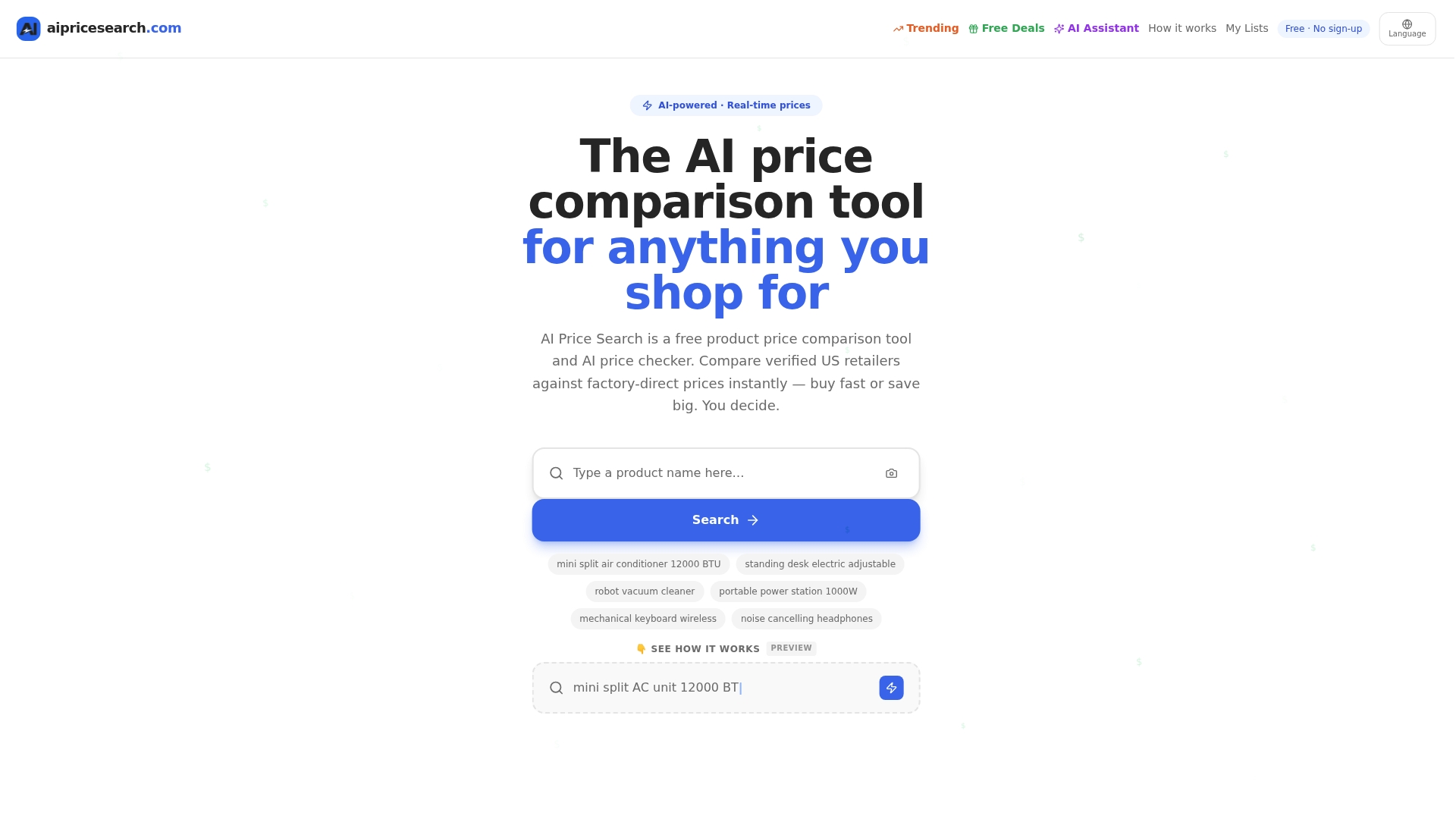
It will not replace reading the actual renewal terms or confirming the final number at checkout, but it removes most of the manual searching that makes bundle comparisons tedious. Start a comparison at AI Price Search and verify the final checkout total before you buy.
Sources
- Online Shopping | Consumer Advice
- Unit pricing guide: a best practice approach to unit pricing
- Evaluation effects of bundle size and price presentation
- Consumer Preference for Product Bundles: The Role of Reduced Search Costs
FAQ
Is bundle pricing always cheaper than buying items individually?
No. A bundle is cheaper only when the itemized total of its components, including shipping and tax, exceeds the bundle’s final checkout price. Bundles that include items you would not otherwise buy, or that carry subscription renewal terms, often cost more over time.
How do I quickly check if a bundle is worth it?
List each component’s standalone price, add shipping per seller and applicable tax, then compare that total to the bundle’s price at checkout. The FTC recommends checking total cost, including shipping and taxes, before comparing any offers.
What is unit pricing and why does it matter for bundles?
Unit pricing shows the cost per standard measure, like per ounce or per count, which lets you compare items packaged in different sizes. The NIST unit-pricing guide notes that consistent unit pricing helps shoppers detect shrinkflation hidden inside a bundle’s packaging.
What should I check before accepting a subscription bundle or free trial?
Confirm the renewal price, the cancellation window, and how the seller will notify you before the trial converts to a paid subscription. The FTC warns that negative-option billing can make a promotional bundle far more expensive after the first renewal.
Can a price-comparison tool help decide between a bundle and individual items?
Yes, a tool that aggregates prices, shipping, and seller details can speed up the itemized comparison, especially when a bundle involves several sellers. AI Price Search, for example, compares listings from verified US retailers and factory-direct sources and flags potential dropship markups before checkout.