Stop Overpaying, U.S. Shoppers: Compare Unit Prices by Total Cost
September 24, 2026

Stop Overpaying, U.S. Shoppers: Compare Unit Prices by Total Cost
The lowest listed price is rarely the lowest total cost. To compare unit prices online correctly, add up the item price, shipping, estimated tax, and any mandatory fees, then pick the verified seller with the lowest combined number. A tool that ranks listings by total cost and flags seller reliability, like AI Price Search, does this math for you. Before you click “buy,” confirm the free-shipping minimum and return policy on that specific listing.
TL;DR:
- Free shipping thresholds often outweigh lower item prices, as adding small accessories can help meet minimum order values for free shipping.
- Shipping and tax costs can significantly alter total price calculations, making the lowest sticker price less reliable for comparison.
- Using automated tools that rank listings by total cost, including shipping and tax estimates, increases savings and reduces checkout surprises.
- Verified seller ratings, clear return policies, and matching product identifiers are essential cues for trustworthy online shopping.
- Setting price alerts helps track drops on electronics and seasonal goods, which often fluctuate within short periods, maximizing savings.
Table of Contents
- What Counts Toward Total Cost When You Compare Unit Prices Online
- Which Tools and Signals Reveal the Real Total Cost?
- How Do You Compare Unit Prices Step by Step?
- The Pitfalls That Turn a “Cheap” Listing Into an Expensive One
- How AI Price Search Applies This Workflow for You
- Why Total Cost Beats Sticker Price Every Time
- Start Comparing Total Costs With AI Price Search
- Sources
- FAQ
What Counts Toward Total Cost When You Compare Unit Prices Online
Two sellers can list the exact same product with a $30 price gap in the wrong direction once you factor in shipping. Seller A charges $49.99 with free shipping. Seller B charges $44.99 but adds $9 in shipping because the order falls $6 short of its free-shipping threshold. Seller A wins by $4, and that gap only shows up once you look past the sticker price.
Minimum order values (MOVs) are the hidden lever here. Many retailers set free-shipping thresholds between $25 and $49, according to Bizrate Insights, which also found that a significant portion of shoppers prioritize free shipping over the single lowest item price. Sometimes tossing a $4 accessory into your cart to clear a $50 MOV beats buying from a seller who charges $8 flat shipping on a smaller order.
Tax adds another layer of unpredictability. Whether shipping itself gets taxed depends on the state, the product category, and whether the shipping charge is listed separately from the item price, according to Avalara’s guidance on shipping and sales tax. A listing that looks cheapest in one state can lose that edge once tax is applied at your specific address.

The stakes of skipping this math are real. Nearly half of U.S. shoppers have abandoned a cart because extra costs at checkout were higher than expected. That is not a rounding error. That is half of all attempted purchases falling apart at the exact moment sticker price meets total cost.
Before comparing two listings side by side, check:
- The item’s sticker price and any quantity discounts
- The shipping cost and whether it’s waived above a stated MOV
- Estimated sales tax based on your shipping address
- Mandatory fees like handling charges or membership requirements
Which Tools and Signals Reveal the Real Total Cost?
A useful comparison tool does more than list prices side by side. It should rank listings by total cost, estimate shipping and tax automatically, show price history, flag verified sellers, and let you search by photo or product URL instead of typing a model number by hand.
Price alerts and historical charts matter more than most shoppers realize. A price that looks like a deal today might be $15 higher than it was three weeks ago, and a chart showing that swing tells you whether to buy now or wait. Alerts also protect you from a subtler trap: chasing a discount that disappears the moment your order dips below a seller’s free-shipping MOV, turning a $10 “savings” into a $2 one.
Before trusting any listing, run it through a quick seller checklist:
- A clearly stated return policy with a real deadline, not “contact us for details”
- A tracking number promised at shipment, not “processing time varies”
- Full product identifiers (brand, model number, exact specs) that match what you searched
- A visible seller rating and a purchase history longer than a few weeks
Pro Tip: Screenshot the listing’s price and shipping terms before you buy. Some sellers alter shipping costs or MOVs after you’re mid checkout, and a screenshot gives you proof if the total changes.
AI Price Search bundles most of these signals into one search, ranking results by total cost while checking listings for the kind of mismatches that usually only surface at checkout.
How Do You Compare Unit Prices Step by Step?
Comparing prices well is a five-step habit, not a single search. Here’s the order that actually works.
1. Capture exact product identifiers. Note the brand, model number, size, and condition (new, refurbished, or open box). A $20 gap between two listings often means you’re comparing a new unit to a refurbished one, not the same product at two prices.
2. Run a total-cost search. Use a comparison tool that shows price plus estimated shipping and tax in one view, instead of opening five browser tabs and doing the math yourself. This is where a total-cost ranking tool earns its keep, since most product pages don’t display shipping estimates upfront, forcing you to guess until checkout.
3. Compare shipping thresholds and return terms. Check each seller’s free-shipping MOV against your actual order size, and factor in a likely return cost if the product is something you might send back, like clothing or electronics.
4. Check verification signals before you commit. Confirm the seller’s rating, return window, and shipping promise, then choose the listing with the lowest all-in cost among sellers that pass this check. A slightly higher price from a verified seller beats a rock-bottom price from an account with no history.
5. Set a price alert if you can wait. If the purchase isn’t urgent, set an alert and recheck in a few days. Prices on electronics and seasonal goods often dip within a two-week window, and an alert catches that drop without you having to check manually.

The Pitfalls That Turn a “Cheap” Listing Into an Expensive One
The lowest number on the page is sometimes a setup, not a deal. Checkout screens add member-only pricing, mandatory “protection plans,” or handling fees that never appeared on the product page, and by the time you see them, you’ve already entered your card details.
An implausibly low price on a name-brand item can be a warning sign, potentially indicating a refurbished product labeled as new or counterfeit listings under a legitimate brand name. Check the seller’s photos against the manufacturer’s official images and look at how long the seller’s account has existed. A seller with three weeks of history and zero reviews selling a “new” flagship phone for 40% off is not a coincidence.
Marketplace listings routed through third-party intermediaries can also quietly extend delivery times from two days to two weeks, which matters if you need the item by a certain date. Run these checks in under a minute before buying:
- Does the checkout total match the price you saw on the product page?
- Does the seller’s return policy have an actual deadline in writing?
- Do the listing photos match the manufacturer’s official product images?
- Has the seller account been active for more than a few months?
How AI Price Search Applies This Workflow for You
Every step in that workflow, capturing identifiers, checking total cost, verifying the seller, watching for price drops, maps directly to what AI Price Search does automatically. It pulls listings from verified U.S. retailers and factory-direct sources, ranks them by total cost instead of sticker price, and checks for the kind of listing mismatches that usually hide dropship markups.
Shoppers using the tool this month reported savings, largely by catching the shipping and tax gaps that a manual search misses. Price alerts handle step five of the workflow without you having to remember to check back. For shoppers who want to see the pattern in action, AI Price Search’s own tracking data, including a side-by-side look at Amazon and Walmart pricing, shows how often the “obvious” cheapest retailer isn’t the cheapest once shipping enters the picture.
Why Total Cost Beats Sticker Price Every Time
Most advice on saving money online still treats the item price as the number that matters. That’s backwards. The research is consistent on this point: shoppers who chase the lowest sticker price routinely lose money to shipping fees and tax surprises they didn’t account for, which is exactly why nearly half of all shoppers abandon carts once the real total appears.
The conventional wisdom, “just search around and compare prices,” assumes all the relevant information is visible on the product page. It usually isn’t. Shipping estimates are often missing until checkout, tax varies by state and by whether shipping is itemized, and return costs on big-ticket items can quietly erase a discount that looked real at first glance.
If you take one thing from this, prioritize total cost over sticker price, every single time, and treat seller verification as part of the price, not a separate step. A $5 cheaper item from an unverified seller with a vague return policy isn’t actually $5 cheaper. It’s a bet.
— Timothy
Start Comparing Total Costs With AI Price Search
Everything in this workflow, total-cost ranking, seller verification, and price alerts, is what AI Price Search runs automatically every time you search. Instead of opening five tabs to check shipping and tax by hand, you get one ranked list that already accounts for the full price.
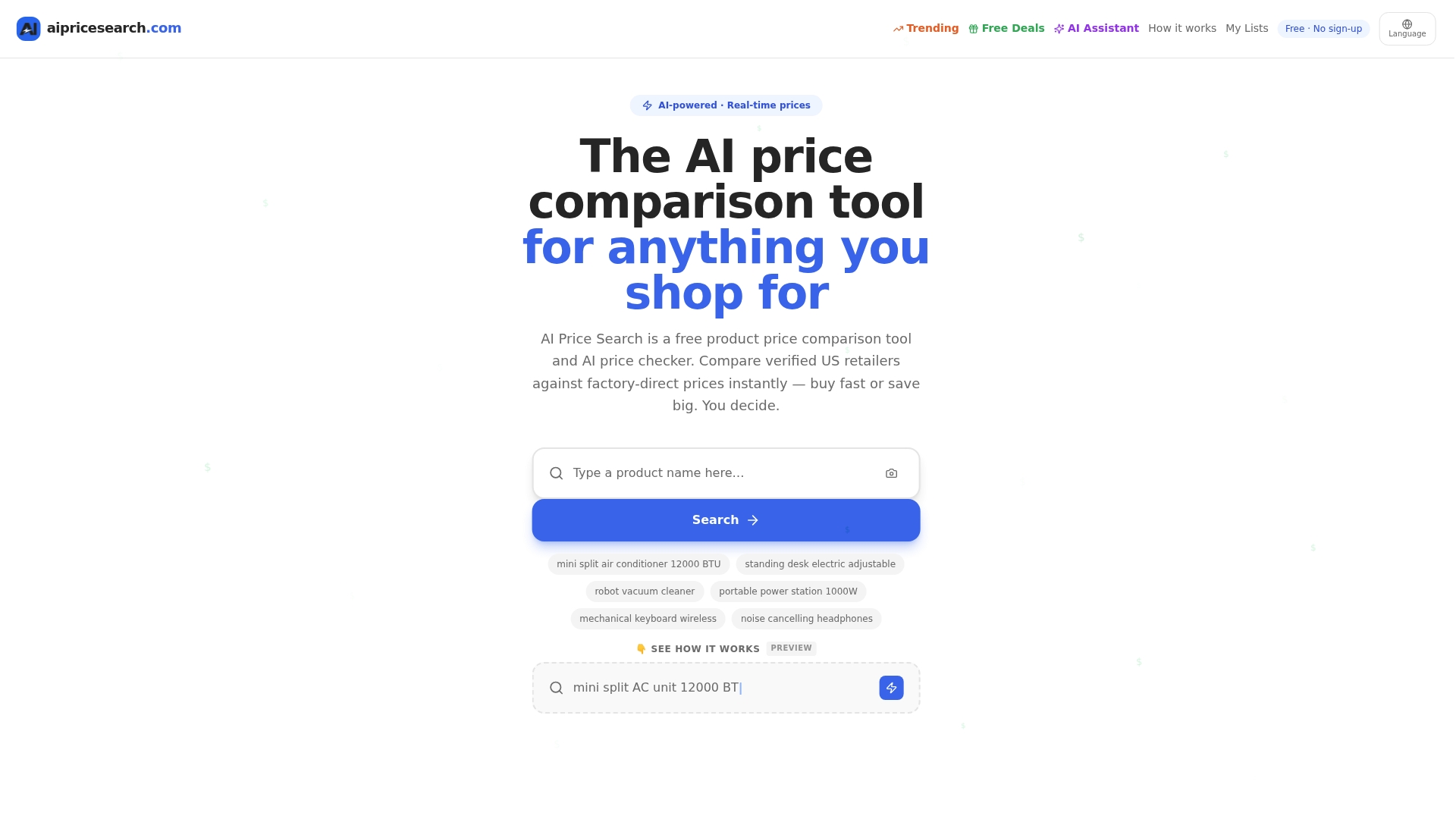
Head to the AI Price Search homepage and run a search on anything you’re currently shopping for. Most first-time users start with three moves: run a search on the exact product they want, set a price alert if they can wait a few days, and check the verification badge on the top listing before clicking through. If you want a guided hand instead of a raw search, the AI shopping assistant walks through the same total-cost comparison conversationally, and it’s free to try right now.
Sources
The FTC’s online shopping guidance is the baseline for knowing what sellers owe you: a clear total price, honest terms, and delivery within the promised window or 30 days by default. Its related rule banning hidden junk fees explains why more listings are starting to show all-in pricing upfront.
For shipping and tax specifics, Avalara’s guide to shipping charges and sales tax breaks down why the same shipping fee can be taxable in one state and exempt in another. Baymard’s research on checkout UX and its study on showing shipping costs earlier explain why so many shoppers get surprised at the final screen. Bizrate Insights’ 2026 data rounds it out with hard numbers on what shoppers actually prioritize.
- 2026 Data: Ecommerce conversion optimization drivers - Bizrate Insights
- Extra costs are the top reason consumers abandon online carts
- Small business guide: shipping charges and sales tax (Avalara)
- Show shipping costs on product pages (Baymard)
FAQ
What Does “Total Cost” Mean When Comparing Prices Online?
Total cost is the item price plus shipping, estimated sales tax, and any mandatory fees like handling or membership charges. The FTC advises shoppers to learn this full cost and read seller terms before buying, since the sticker price alone rarely reflects what you’ll actually pay.
How Do Free-Shipping Thresholds Affect the Cheapest Listing?
A seller with a slightly higher item price but free shipping often beats a cheaper item that charges shipping because it falls under the retailer’s minimum order value. Bizrate Insights found 57% of shoppers rank free shipping above the lowest item price for exactly this reason.
Is Shipping Always Taxed the Same Way?
No. Shipping taxability depends on the state, the product category, and whether the charge is itemized separately from the item price, according to Avalara’s state-by-state guidance. Always check tax at your specific shipping address rather than assuming one state’s rule applies everywhere.
How Can I Tell if a Seller Is Reliable Before Buying?
Look for a clearly stated return policy with a real deadline, a shipment tracking promise, complete product identifiers, and a seller rating backed by a purchase history longer than a few weeks. Tools like the Dropship Detector flag listings where the seller information doesn’t match what a legitimate retailer would show.
Does AI Price Search Cost Anything to Use?
AI Price Search does not publish a price for its core comparison tool, and current details are available directly on its website. Reported average savings for users this month were substantial, driven mainly by catching total-cost gaps that manual searching misses.