Savings for US Buyers: Factory Direct vs Retail, 5 Steps
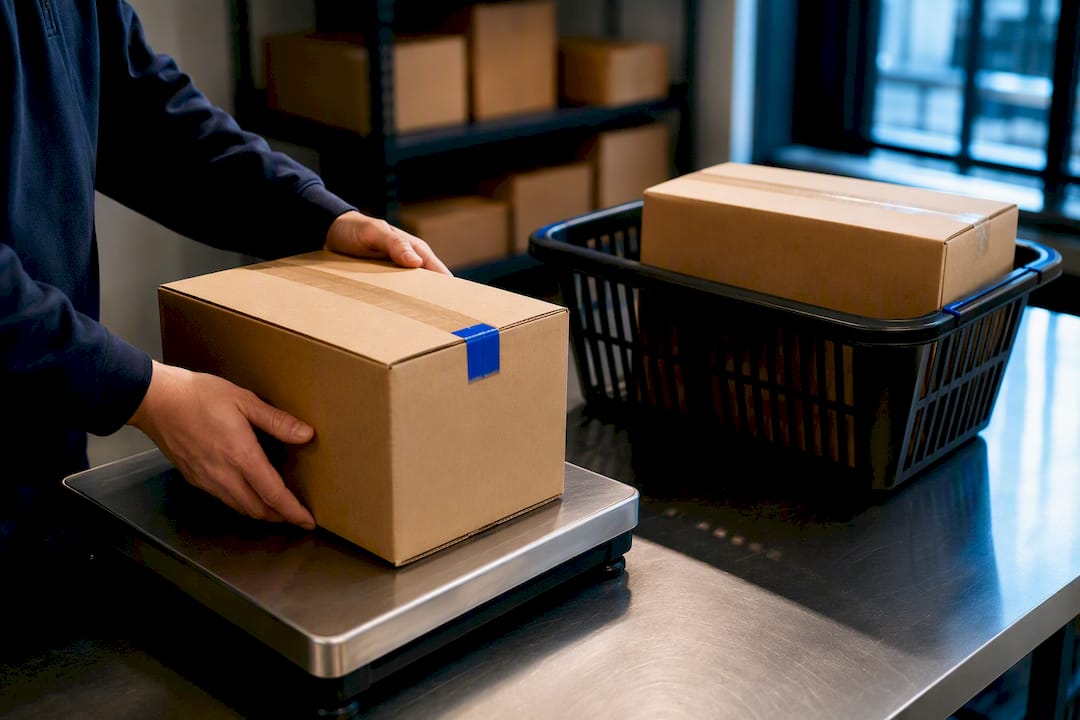
Factory-direct pricing often looks like the cheaper option on paper, but it doesn’t always win once you add shipping, taxes, assembly, and return costs into the total. Retail offers, especially with promotions or bundled services, can sometimes come out cheaper in the end. The fix is simple: calculate one all-in number for each option (item price plus every added fee) before you decide, and check the return policy while you’re at it.
TL;DR:
- Factory-direct prices often exclude shipping, taxes, and assembly costs, which can significantly narrow or eliminate the perceived savings compared to retail offers.
- Heavy, bulky, or freight-heavy goods tend to be cheaper when bought from retailers that have already optimized logistics, rather than directly from manufacturers.
- Consumers should always run a comprehensive all-in cost comparison, including potential return fees and bundled services, before choosing between factory direct and retail options.
- Retailers frequently bundle delivery, installation, and flexible return policies that factory-direct sellers may not provide, impacting overall convenience and value.
- Using AI tools can streamline price comparisons and help determine the true total cost, especially for complex or large purchases.
Table of Contents
- Factory Direct vs. Retail: What the Terms Actually Mean
- How Shipping, Taxes, and Returns Change the Real Price
- Weighing Convenience Against Price: The Real Tradeoffs
- A Five-Step Checklist for Comparing Any Two Offers
- What Real Price Data Shows About Factory Direct vs. Retail
- When Factory Direct Actually Wins (And When It Doesn’t)
- Let an AI Shopping Assistant Run the Math For You
- Sources
- FAQ
Factory Direct vs. Retail: What the Terms Actually Mean
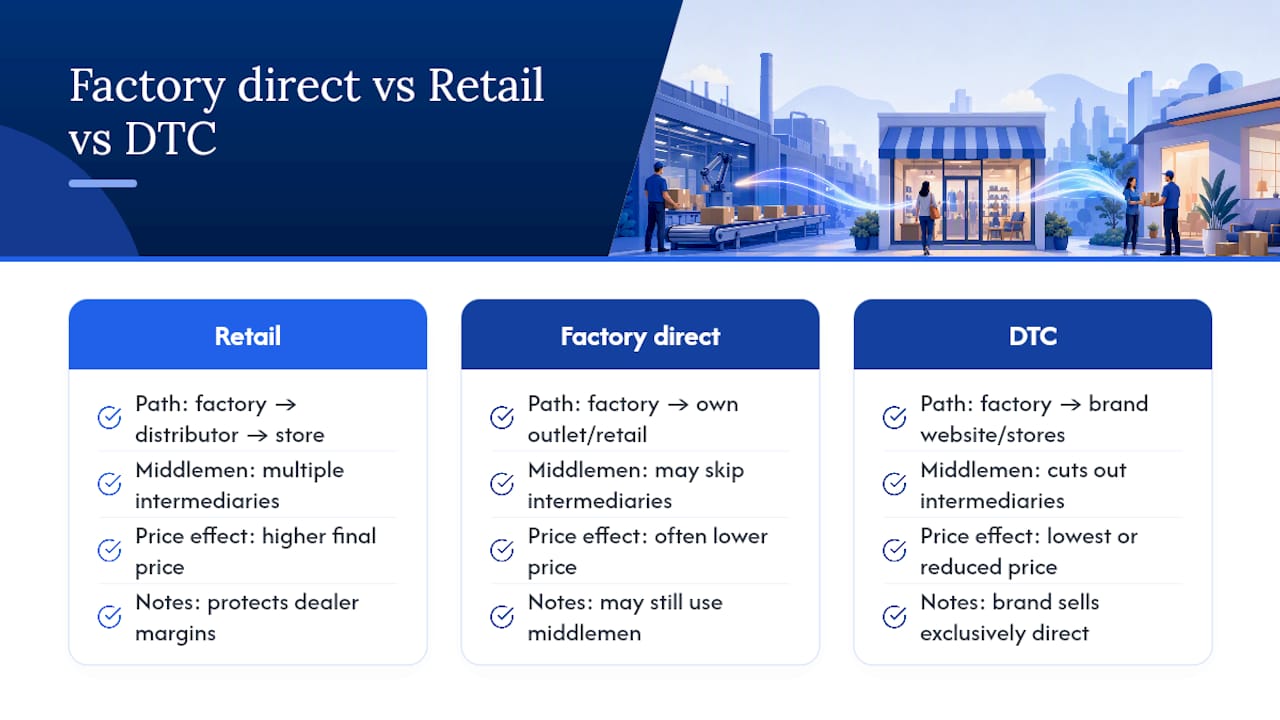
“Factory direct” means buying straight from the manufacturer, skipping the layers that normally sit between a factory and your shopping cart. Traditional retail routes a product through a chain: factory to national distributor, distributor to regional wholesaler, wholesaler to the store shelf. Each link in that chain typically adds its own markup to cover its own costs and profit margin, which is why the same item can cost noticeably more by the time it reaches a retail floor.
Direct-to-consumer (DTC) is closely related but not identical. DTC usually describes a brand that sells only through its own website or stores, cutting out wholesalers and third-party retailers entirely. Factory direct can mean the same thing, or it can just mean a manufacturer runs its own outlet alongside its normal retail distribution.
That distinction matters because plenty of brands keep retail prices artificially high to protect dealer relationships, even when they’d rather sell you the item directly for less. Others use “factory direct” as a marketing label slapped on what’s really just a standard online marketplace listing, with a middleman still very much involved.
How Shipping, Taxes, and Returns Change the Real Price
The sticker price is the opening bid, not the final answer. The number that actually matters is the all-in cost: item price, plus shipping or freight, plus sales tax, plus assembly or inside delivery, plus whatever a return would cost you if the item doesn’t work out.
Furniture and large appliances expose this fastest. One documented case involved a factory-direct furniture purchase priced 30% below retail, a genuine discount on paper. But freight handling and assembly costs ate into that margin fast, and the buyer’s net savings ended up far smaller than the sticker gap suggested. Big-box retailers selling similar categories often build delivery and installation into a bundled service model that a factory-direct seller can’t easily match without charging extra.
Before you trust any comparison, run through this:
- Add the manufacturer’s shipping quote, not just the item price, since freight on bulky goods can run into hundreds of dollars.
- Check whether sales tax applies. Some out-of-state factory-direct sellers don’t collect it at checkout, which shifts the burden to you.
- Price out assembly or installation separately if the listing doesn’t include it.
- Be skeptical of a crossed-out “retail price” next to a factory-direct number. That comparison price is sometimes inflated or simply invented.
Weighing Convenience Against Price: The Real Tradeoffs
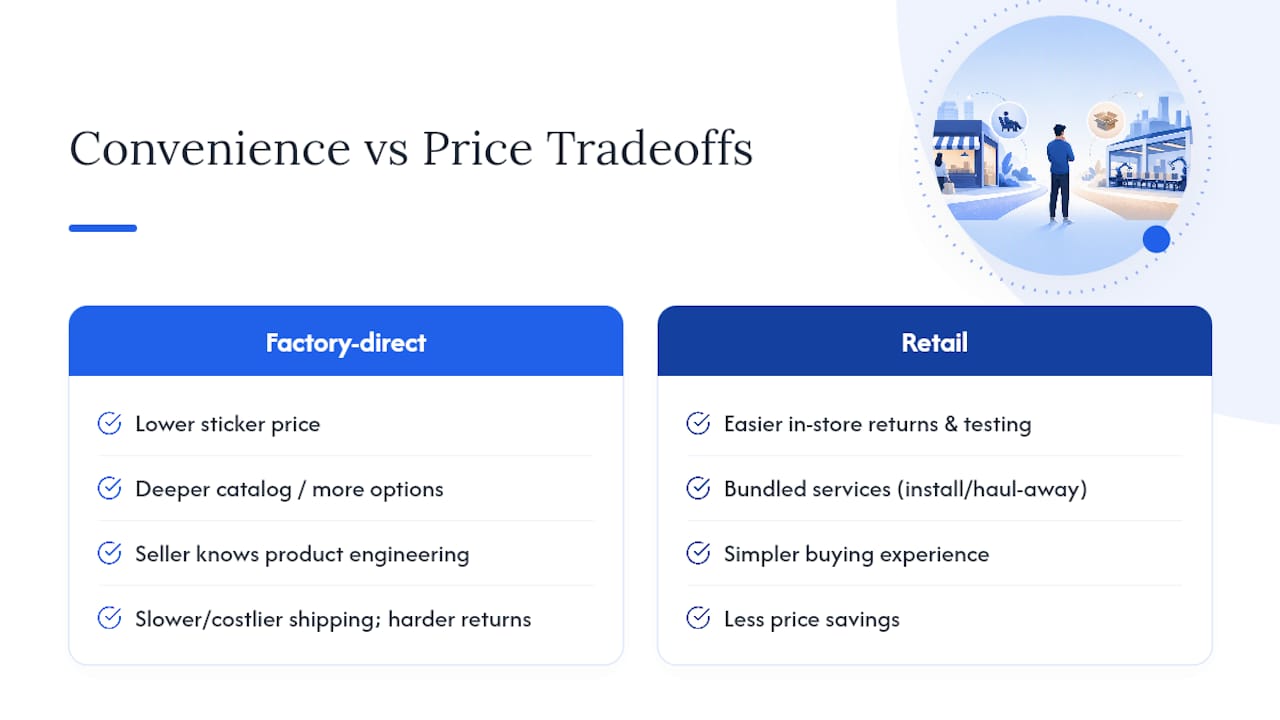
Factory-direct buying tends to win on sticker price and depth of catalog. You often get the full range of colors, sizes, or configurations a retailer never bothered to stock, plus a seller who actually knows the product’s engineering rather than reciting a spec sheet. The tradeoffs show up after checkout: shipping can be slower or costlier, returns are frequently harder to arrange, and warranty support varies wildly depending on how big the manufacturer’s customer service team actually is.
Retail flips those strengths and weaknesses. You lose some pricing power but gain simplicity: easy in-store returns, bundled installation or haul-away, and the chance to see or test a product before buying it. Quality itself isn’t tied to either model. A well-run factory-direct brand can build a genuinely excellent product, while a curated retailer might simply offer better selection and a safer return experience.
Pro Tip: Call the factory-direct seller’s support line before you buy, not after. A quick pre-sale question tells you a lot about how they’ll handle a return if something goes wrong.
A Five-Step Checklist for Comparing Any Two Offers
- List every cost, not just the price tag. Add shipping, taxes, inside delivery, and assembly to both the factory-direct and retail quotes.
- Read the return and warranty terms closely. Look for restocking fees and figure out who pays return freight, since that number can quietly wipe out a discount.
- Price out service extras. If installation or haul-away isn’t included, get a third-party quote so you’re comparing apples to apples.
- Scan independent reviews for shipping and service complaints. A seller with a pattern of delayed freight or unresponsive support is a red flag regardless of price.
- Check current retail promotions before finalizing. Free shipping codes, bundle discounts, or seasonal sales can shrink or erase the factory-direct advantage. Run the final all-in comparison side by side once you have every number.
What Real Price Data Shows About Factory Direct vs. Retail
Aipricesearch’s own data offers a useful sanity check on how these comparisons actually play out. The platform’s reported average savings of $212 per user this month came from shoppers who ran exactly this kind of all-in comparison before buying. A separate analysis of 225 product searches found that a major retailer was the cheapest option 51% of the time, meaning factory-direct or other sources won the other 49%. Neither side dominates.
Whether factory-direct beats retail depends heavily on the product category and how far the item has to travel. Small, easy-to-ship goods favor the manufacturer. Bulky, freight-heavy goods often favor a retailer that has already solved logistics at scale.
Industry reporting on categories like audio equipment backs this up. Hybrid brands that sell both direct and through dealers frequently set one uniform price across every channel, which erases any direct-only discount entirely. Averages are a starting point, never a guarantee for your specific item.
When Factory Direct Actually Wins (And When It Doesn’t)
Factory-direct makes the most sense for custom, small-batch, or niche goods where you’re comfortable arranging your own freight and assembly. Retail earns its markup on heavy items, anything you might need to return, or purchases where convenience and bundled service outweigh a modest price gap. Run the five-step checklist above before trusting either instinct.
— Timothy
Let an AI Shopping Assistant Run the Math For You
Running the all-in math by hand across five browser tabs gets old fast, especially when a factory-direct listing and three retail competitors all quote shipping differently. Aipricesearch was built to close that gap: its AI price comparison tool pulls prices from verified US retailers and factory-direct sources side by side, ranked by total cost rather than sticker price alone.
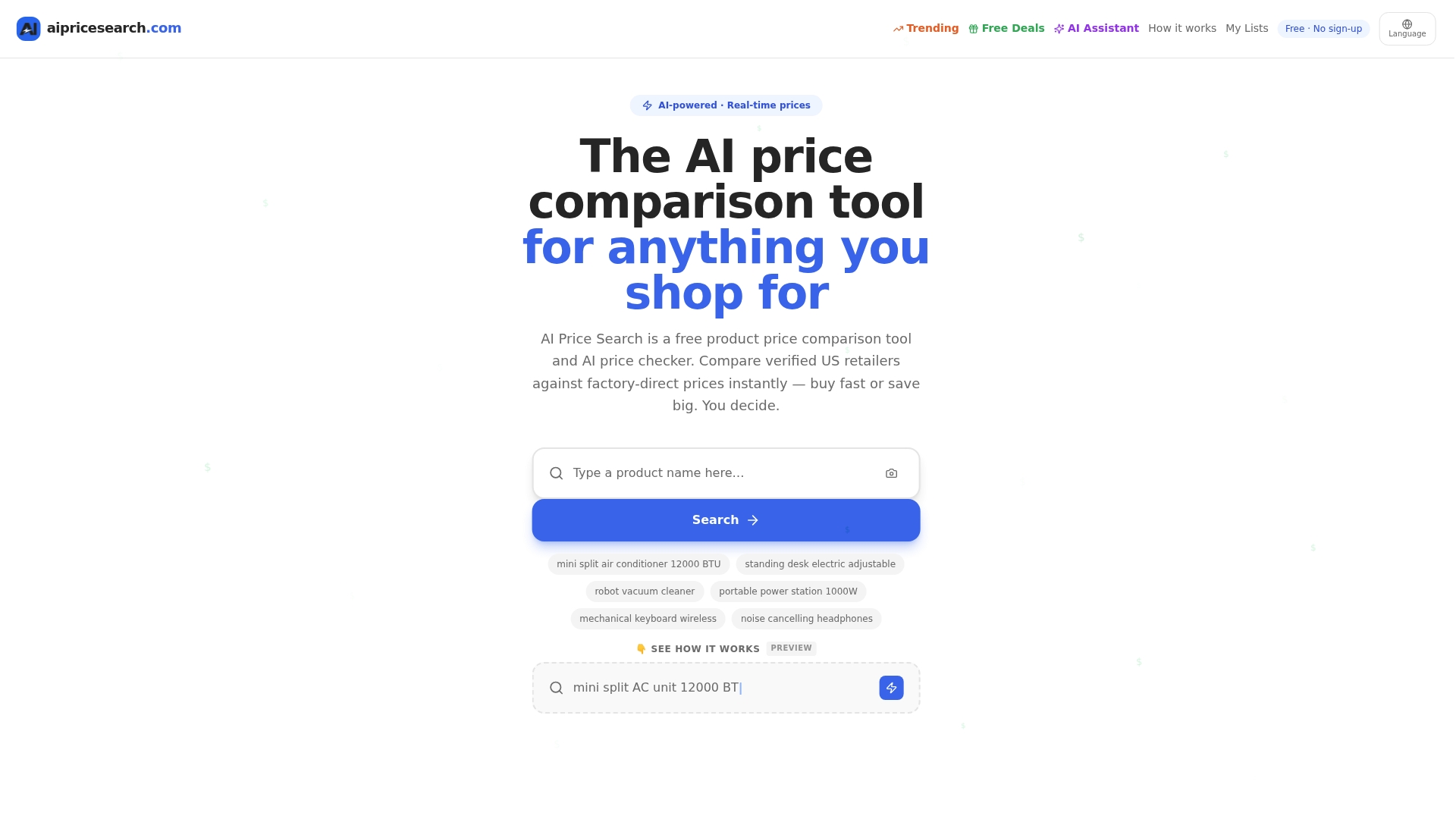
The AI shopping assistant tracks price history and sends alerts when a better deal appears, while the Dropship detector flags listings that look factory-direct but are actually markup-heavy dropship storefronts in disguise. Save comparisons to a shared list with the Shopping lists feature before you commit to anything. Run your next big purchase, such as furniture, appliances, or electronics, through an AI price comparison tool to see the real all-in number before you check out.
Sources
- Factory direct sales: the benefits and advantages | Poleview Group
- Does factory direct always save you money? | EatHealthy365
FAQ
What Does “Factory Direct” Mean?
Factory direct means buying a product straight from the manufacturer instead of through a distributor, wholesaler, or third-party retailer. It often, but not always, results in a lower sticker price since fewer businesses are adding their own markup along the way.
Is DTC Better Than Retail?
Neither model is universally better. Direct-to-consumer tends to offer lower prices and deeper product knowledge, while retail typically wins on convenience, easy returns, and bundled services like installation or haul-away.
Is Factory Direct Sale Legit?
Most factory-direct sales are completely legitimate, but the term gets misused by resellers and dropshippers who never touch a real factory. Verify legitimacy by checking the seller’s return policy, contact information, and independent reviews, and consider running the listing through a tool like Aipricesearch’s Dropship detector to catch markup disguised as a factory deal.
What Are the Disadvantages of Direct Selling?
The most common drawbacks are inconsistent shipping costs, harder or slower returns, and uneven customer service compared to an established retailer. Warranty support also varies depending on the size and resources of the manufacturer’s own support team.
Recommended
- Amazon Vs Walmart Price Leadership Across 182 Weekly Searches
- August Price Tracker Amazon Leads In Value Across 153 Shopper Queries
- Retailer Price Wars Aliexpress And Amazon Split The Lead In 184 Consumer Searches
Want to compare offers instantly? Search any product on AI Price Search.
Search a price →