Spot Dropshipping Sellers Fast: 3 Checks or an AI Scan
The fastest way to spot dropshipping sellers is to check three things at once: run a reverse image search on the product photo, look for shipping windows longer than two weeks, and compare the price against what the item sells for on Amazon or the manufacturer’s own site. If the same photo shows up on many other stores and the price is significantly above the wholesale rate, you’ve found a reseller. Start with an image search or a quick price comparison before you enter a card number.
TL;DR:
- Checking for matching product images across multiple stores and shipping times over two weeks can reveal dropshipping resellers.
- Comparing listed prices with verified retail sources, especially Amazon, helps identify inflated markup schemes.
- Shipping windows, shipping origin, and suspicious review or return policies provide further signals of dropshipping practices.
- Manual checks require only a browser but can be automated with tools like the Dropship Detector to save time and improve accuracy.
- Always document all evidence before purchasing and opt for credit card payments to facilitate chargebacks if issues arise.
Table of Contents
- What Are the Warning Signs of a Dropshipping Seller?
- How Do You Verify a Suspicious Listing Yourself?
- What Should You Do Before You Actually Order?
- Why Manual Checks Still Beat Guessing
- Let AI Handle the Checks You’d Rather Skip
- Where to Check Further
- Sources
- FAQ
What Are the Warning Signs of a Dropshipping Seller?
A dropshipping reseller rarely looks like one. The site has a real logo, a clean layout, and a checkout page that works fine. The tell is in the details most shoppers never check. Run through this list before you buy anything from a store you don’t recognize.
- Reverse image matches everywhere. The exact same product photo, cropped the same way, shows up on a dozen unrelated stores or on AliExpress and Temu listings.
- Shipping windows buried in fine print. The product page says nothing, but checkout or a shipping policy tab quietly lists 2 to 4 weeks.
- Stock photos instead of real ones. Every image looks like it came from a manufacturer’s press kit, with no packaging shots, no lifestyle photos, no signs anyone at the company has touched the product.
- A vague About page. No founder name, no street address, no phone number, just a paragraph about “passion for quality.”
- Prices that don’t match the market. A comparison of 225 product searches found Amazon was the cheapest retailer 51% of the time, so a price wildly above that baseline deserves a second look.
- Generic or imported review language. Reviews that read like translations, or that praise “the seller” instead of describing the actual product.
- A return policy that routes packages overseas. The address for returns is nowhere near the “ships from” claim on the product page.
One or two of these alone don’t prove much. Three or more together usually do.
How Do You Verify a Suspicious Listing Yourself?
You don’t need special software to run most of these checks. A browser and ten minutes will get you most of the way there.
- Reverse image search the main product photo. Upload it to Google Images, TinEye, or Yandex. Yandex often surfaces AliExpress matches that Google and TinEye miss, so run it through more than one engine before you decide the photo is clean. A single match on a manufacturer’s official page is normal. Matches across ten random storefronts are not.
- Check the shipping and processing times separately. Processing time is how long before the order ships. Shipping time is how long transit takes after that. A store that says “processed in 1 business day” but “delivered in 3 to 4 weeks” is very likely forwarding your order to an overseas warehouse rather than pulling it from its own stock.
- Read the reviews in the middle, not just the top ones. Five-star reviews get curated. Three- and four-star reviews tend to mention the details sellers can’t control, like a shipment that arrived from an unexpected country or took far longer than promised. If several reviews mention a country the site never names, that’s a real signal.
- Search a chunk of the product description in quotation marks. If identical paragraphs show up word for word on other sites, the store copied the listing rather than writing its own, a common shortcut among resellers running dozens of near-identical shops.
- Look up the domain’s age. A whois lookup takes seconds. Scam-pattern research on markup schemes has found that recently registered domains combined with vague manufacturing claims are a frequent red flag, especially on stores that popped up around a viral product trend.
- Check the return address against the “ships from” claim. If the product page claims US shipping but the return label on the policy page points overseas, the mismatch tells you where the inventory actually lives.
Pro Tip: Bookmark or screenshot the listing the moment you start checking it. Dropship storefronts change prices, swap photos, and vanish faster than legitimate retailers, so evidence you gather today might not exist tomorrow.
Keep in mind that no single check is proof by itself. Identical product photos alone don’t confirm dropshipping. Authorized retailers legitimately reuse manufacturer images too. The pattern across multiple signals is what tells you something real. Watch, too, for urgency tactics: countdown timers and “only 3 left” popups exist partly to keep you from doing exactly the kind of checking described here.
What Should You Do Before You Actually Order?
If a listing raises a couple of flags but you still want the item, a few precautions limit your downside without costing you the purchase.
- Pay with a credit card, not a debit card or bank transfer. Credit cards preserve your chargeback rights if the order never shows up or arrives as something completely different than advertised.
- Order a single cheap item first if you’re on the fence. A small test order tells you a lot about real processing time before you commit to a bigger purchase.
- Ask the seller directly where the item ships from and when it’ll arrive. Get the answer in writing, through chat or email, not a phone call you can’t reference later.
- Screenshot everything. The product page, the shipping policy, the seller’s written answers. If a dispute happens, this is your paper trail.
- Report and escalate if something goes wrong. Use the marketplace’s own reporting tool first, then a chargeback with your card issuer if the seller won’t resolve it directly.
Pro Tip: If a seller won’t answer a direct question about shipping origin within a day, treat the silence itself as an answer.
Why Manual Checks Still Beat Guessing
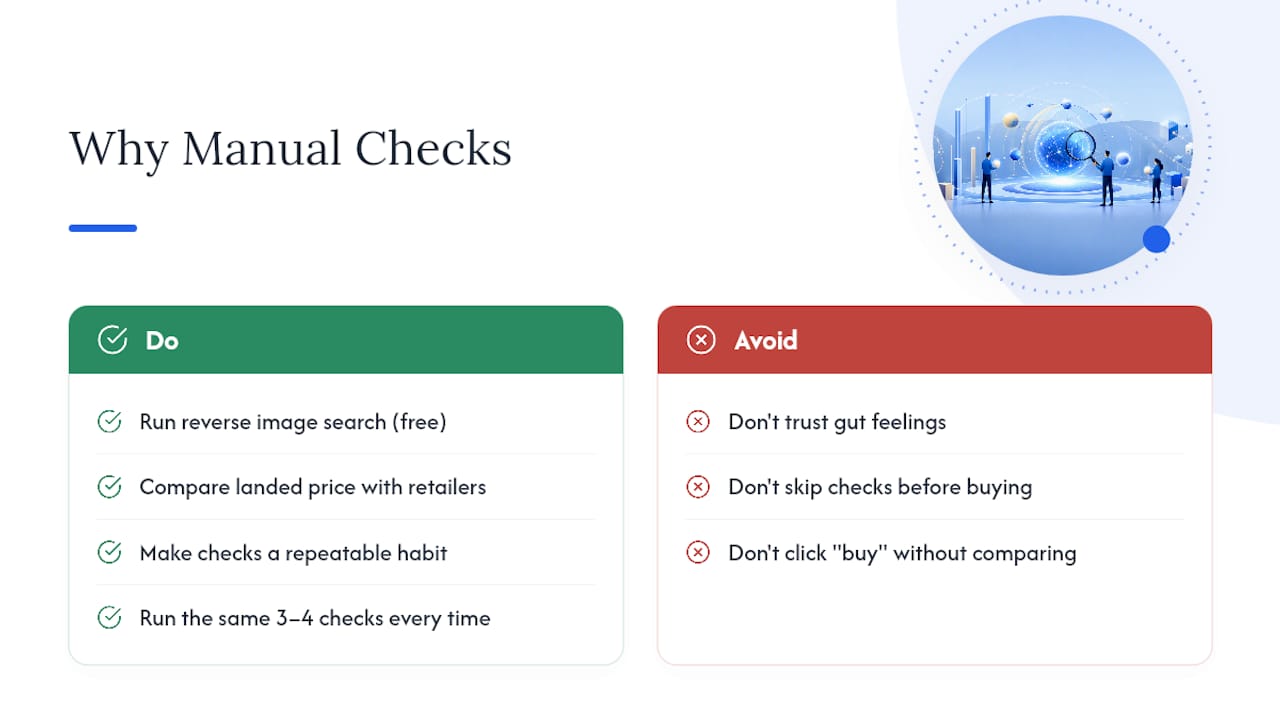
Shoppers lose real money to markup schemes every year, not because the checks are hard, but because almost nobody runs them before clicking “buy.” A five-minute reverse image search costs you nothing. Skipping it can cost you 3 to 5 times the item’s actual value.
I’d rather see shoppers build a repeatable habit than trust a gut feeling on any single listing. That’s part of why Aipricesearch’s analysis of 225 product searches found Amazon cheapest in 51% of cases. Comparing landed price against known retailers exposes inflated dropship pricing fast. Users have reported saving an average amount this month simply by comparing before buying. Run the same three or four checks every time, and the pattern becomes obvious.
— Timothy
Let AI Handle the Checks You’d Rather Skip
Manual verification works, but running an image search, checking shipping windows, and comparing prices across five retailers takes time most shoppers don’t have for every purchase. Aipricesearch’s Dropship Detector automates that comparison, flagging listings priced well above verified retail or factory-direct sources so you catch the markup before you check out, not after your package arrives late from an address you never expected.
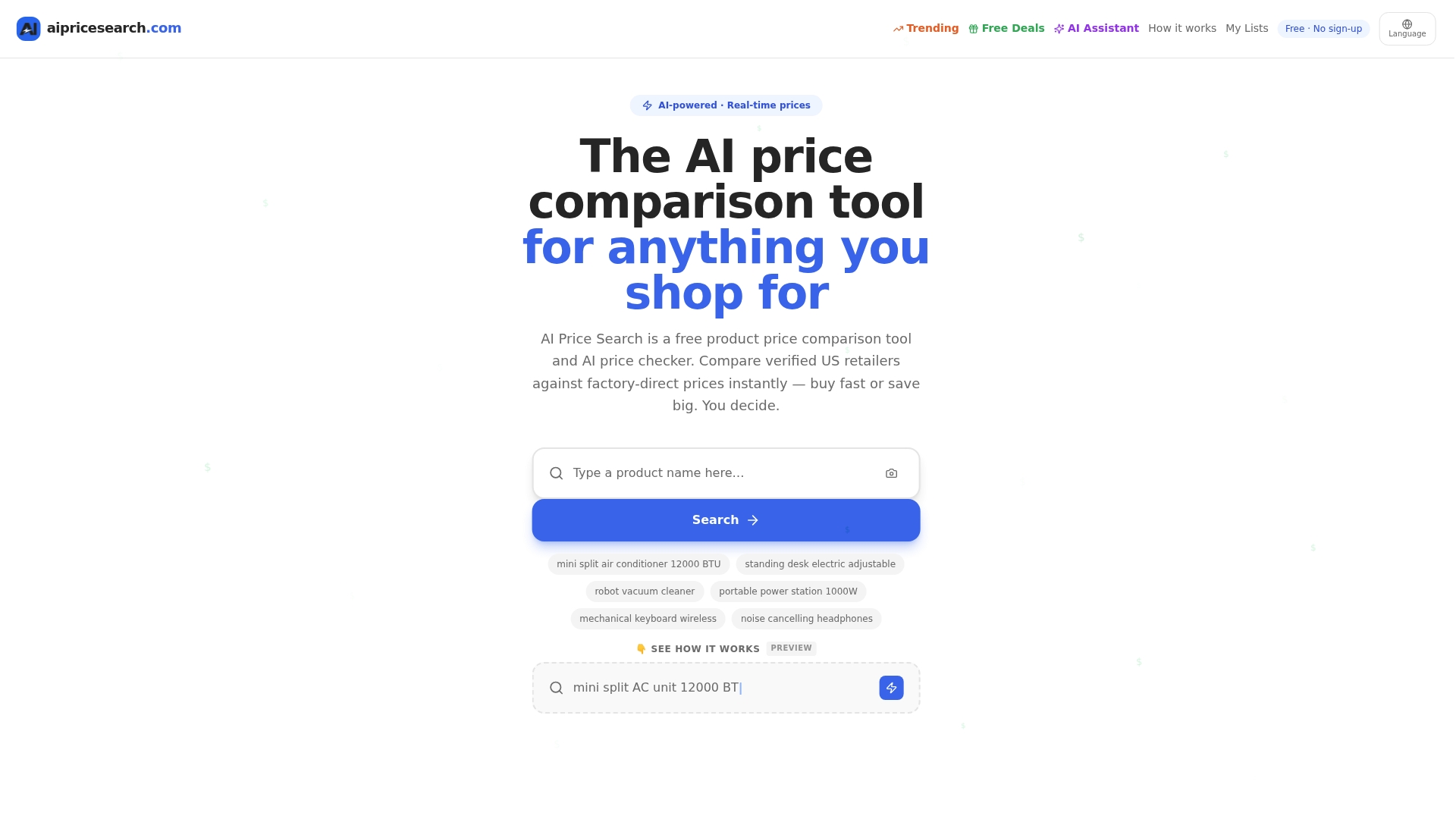
The tool pulls prices from verified US retailers and factory-direct sources, then ranks results by total landed cost, including shipping and tax, so you’re comparing what you’d actually pay rather than a teaser price. Pair that with visual search to confirm a product photo against known listings, and price history tracking to see whether today’s “deal” is actually a markup. None of this replaces reading a return policy or messaging a seller directly. It just narrows down which listings deserve that extra five minutes. Run your next questionable find through the Dropship Detector before you enter your card details.
Where to Check Further
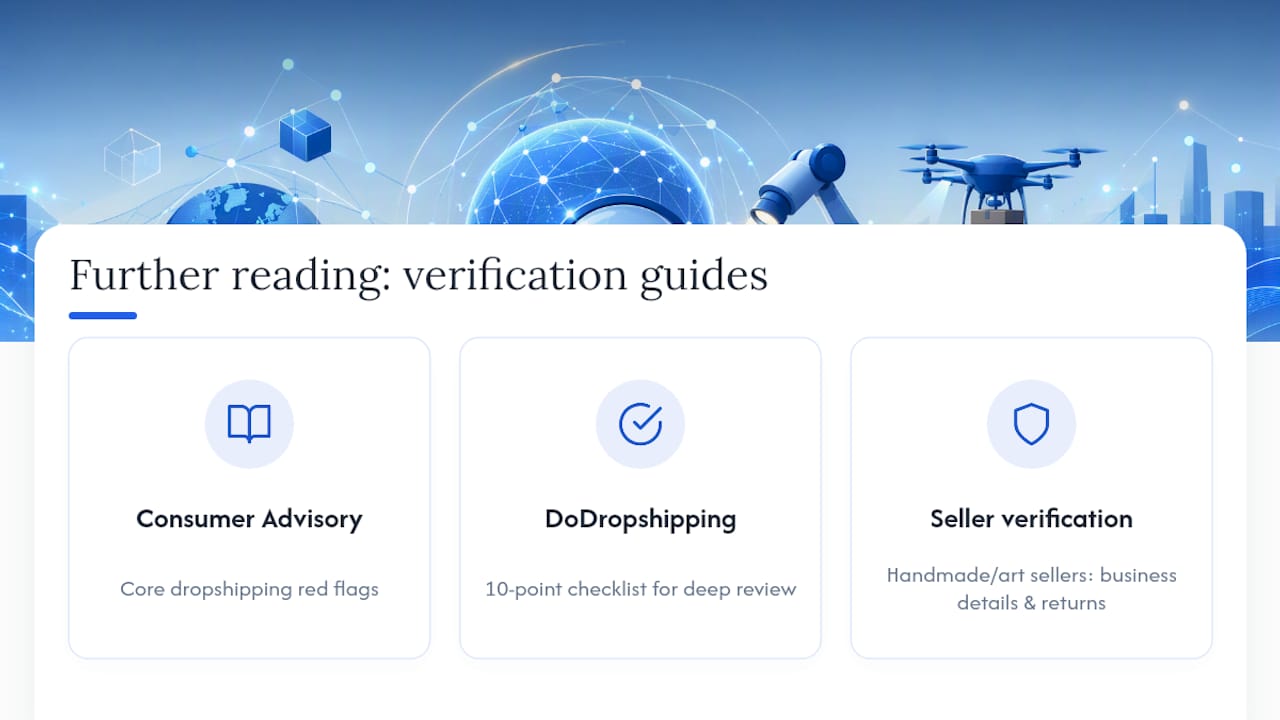
For deeper reading on spotting resellers, the Consumer Advisory guide on dropshipping red flags covers the core signals in more depth. DoDropshipping’s ten-point checklist is useful for a slower, more thorough review. For verifying sellers outside typical retail, including handmade and art marketplaces, this seller-verification guide walks through checking business details and return policies.
Sources
- How to Spot a Dropshipping Site Before You Order | Consumer Advisory
- Drop Shipping Scams: How to Spot AliExpress Markup Schemes and TikTok Shop Fraud
- How to see if a store is dropshipping | DoDropshipping
FAQ
What’s the fastest way to spot a dropshipping seller?
Reverse image search the main product photo and check the shipping window on the checkout page. If the photo appears on multiple unrelated stores and shipping takes more than two weeks, you’re likely looking at a reseller rather than the actual source.
Do long shipping times always mean dropshipping?
Not always, but they’re one of the strongest single signals. Short processing time paired with a long shipping estimate usually means the order gets forwarded to an overseas supplier rather than shipped from the seller’s own stock.
Can identical product photos alone prove a store is dropshipping?
No. Authorized retailers and distributors legitimately use the same manufacturer photos as everyone else. Treat image matches as one signal among several, not standalone proof.
How can I compare prices to check if I’m being overcharged?
Compare the listing’s price against known retailers and factory-direct sources before buying. Aipricesearch’s price comparison tool checks listings against verified US retailers, and its internal analysis found Amazon was the cheapest option in 51% of 225 searches tested.
What should I do if I already bought from a dropshipping reseller?
Save screenshots of the listing, the shipping policy, and any messages with the seller. If the order doesn’t arrive as promised, file a dispute through the marketplace first, then a credit card chargeback if the seller doesn’t resolve it.
Recommended
Want to compare offers instantly? Search any product on AI Price Search.
Search a price →