8 Step Checklist to Verify Factory Direct Sellers and Prices
Yes, factory-direct sellers can be legitimate, and they routinely undercut retail prices by a wide margin. Legitimacy hinges on one thing: whether you verify the seller’s documents, certifications, and payment setup before money changes hands. Skip that step and you’re gambling. This guide gives you the checklist that separates a real factory from a middleman pretending to be one.
TL;DR:
- Fake factory claims are common; verify business licenses, certificates, and payment details to avoid scams and trading companies posing as manufacturers.
- Factory-direct buying is cost-effective mostly for bulk orders, custom runs, or outlet clearance, but less suitable for quick delivery, easy returns, or personal use.
- Red flags include quotes significantly below market, evasive documentation, mismatched payment accounts, and lack of visible production capability, which indicate higher risk.
- Conduct thorough verification steps like live video tours, customs record checks, and third-party inspections before making larger purchases to reduce vulnerability.
- Use price comparison tools to confirm factory-direct quotes are genuinely below verified retail prices and to detect hidden dropshipping markups.
Table of Contents
- What Does Factory Direct Mean, and When Does It Make Sense?
- The Red Flags That Signal a Risky Factory-Direct Deal
- Step-by-Step Seller Verification Checklist You Can Use Before You Pay
- Buyer Protections That Reduce Risk After You’ve Paid
- How Price-Comparison Tools Fit Into Your Verification Workflow
- When I’d Buy Factory Direct, and When I Wouldn’t
- How Aipricesearch Fits Into Your Factory-Direct Research
- Where to Verify Supplier Claims Yourself
- Sources
- FAQ
What Does Factory Direct Mean, and When Does It Make Sense?
“Factory direct” describes a manufacturer or factory outlet selling straight to you, cutting out the wholesalers and retail markups in between. That’s the definition this article uses, and it matters because not every seller who claims the label actually fits it.
Three seller types show up under that banner, and the differences change your risk exposure:
- Manufacturers own or operate the production line and can usually show you the factory floor.
- Trading companies or export agents source from multiple factories and resell under their own name, often without disclosing that they don’t manufacture anything.
- Factory outlets sell overstock, returns, or discontinued runs directly from a brand’s own facility.
Factory-direct buying makes the most sense for bulk orders, custom manufacturing runs, or outlet clearance deals where the savings justify a longer lead time. It makes less sense when you need next-day delivery, hands-on customer service, or an easy return window. If you’re buying a single item for personal use and expect retail-level convenience, a factory-direct purchase probably isn’t worth the trade-off.
The Red Flags That Signal a Risky Factory-Direct Deal
Most factory-direct problems trace back to one issue: the seller isn’t who they say they are. Trading companies frequently pose as manufacturers because “factory direct” sounds more trustworthy and justifies skipping negotiation. One estimate from sourcing guides puts the share of trading companies posing as manufacturers on major B2B platforms at 70 to 80 percent of supplier listings. That single number should reset how skeptical you are by default.
Watch for these warning signs, roughly in order of severity:
- A quote far below market rate. A price 30% or more under comparable listings should trigger extra scrutiny, not excitement. It usually signals material substitution, fabricated specs, or a seller with no intention of shipping.
- Evasive or generic documentation. Refusal to share a specific business license, or sending you a scanned certificate with no verifiable issuer, is a hard stop.
- Payment requests that don’t match the business name. If the wire instructions name a personal account or a company you can’t find anywhere in the paperwork, walk away.
- No visible production capability. A seller who can’t answer basic production questions (machine count, daily output, raw material sourcing) is likely reselling, not manufacturing.
- Dropshipping disguised as factory-direct. Some “factories” simply relay your order to a third party, which means longer lead times, no quality control, and warranty claims that go nowhere.
- Vague warranty and return terms. If the seller won’t commit anything about returns or defects to writing, assume there isn’t one.
None of these individually proves a scam. Together, two or three of them are enough reason to keep looking.
Step-by-Step Seller Verification Checklist You Can Use Before You Pay
Verification doesn’t need to be complicated, but it does need to happen in order. Skipping steps to save time is exactly how buyers end up wiring money to a trading company that never manufactured anything.
- Pull the business registration. Check the business license’s registered scope. Manufacturers register verbs like “produce,” “manufacture,” or “process.” Traders register “sales,” “wholesale,” or “trade.” This single field is one of the most reliable indicators of what a company actually does.
- Request invoice samples and cross-check the company name. A legitimate manufacturer’s invoices should carry the same registered legal name as the business license and any certificates offered.
- Verify certifications directly with the issuer. Don’t take a PDF at face value. Call or email the certifying body (ISO registrar, safety-standard authority) to confirm the certificate number is real and current, since expired or misapplied certificates are a common failure point.
- Check the company’s digital footprint. Domain age, LinkedIn employee count, and years in business should roughly line up with what the seller claims. A “20-year-old factory” with a six-month-old website is a mismatch worth asking about.
- Search customs and bill-of-lading records where available. Services like ImportGenius or Panjiva can confirm a supplier’s export history, and repeated shipping entries under the same company name support their production claims.
- Ask for an unscripted live video tour. Not a polished promo reel. Request 15 to 30 minutes on a live call, walking the production floor, and ask specific technical questions about equipment and process as you go.
- Confirm the payment beneficiary matches the business license. Before sending a deposit, verify that the bank account name matches the legal entity on every document you’ve collected. A mismatch is one of the clearest fraud signals available.
- Set order-size thresholds for deeper diligence. For anything beyond a trial order, request third-party quality control inspection before final payment, and never release full payment before goods are inspected or shipped.
Pro Tip: Ask the same technical question two different ways, days apart. A real factory manager gives consistent answers about tooling and capacity. A trading company rep often contradicts themselves because they’re relaying answers from someone else.
Combining these checks (registry lookup, live video, customs records, and payment verification) gives you layered confidence that no single check provides alone.
Buyer Protections That Reduce Risk After You’ve Paid
Verification protects you before the deal. Contract terms and shipping choices protect you after.
Start with Incoterms, because they define who’s responsible for what and when:
- EXW (Ex Works) puts nearly all responsibility on you the moment goods leave the factory.
- FOB (Free on Board) shifts responsibility to you once goods are loaded onto the shipping vessel.
- DDP (Delivered Duty Paid) puts the most responsibility on the seller, who handles shipping and customs until the goods reach you.
For any order past a small trial run, require third-party pre-shipment inspection. An independent inspector checks quantity, quality, and packaging before the shipment leaves, catching problems while you still have leverage to fix them. Insure the shipment, get tracking numbers in writing, and build in buffer time. Factory-direct lead times run longer than domestic retail, and unrealistic timelines are how buyers get pressured into skipping inspection.
Pro Tip: Put return, warranty, and penalty clauses into the purchase contract itself, not a side email. A clause that says “seller pays return shipping for defective goods within 30 days” is enforceable. A verbal promise is not.
How Price-Comparison Tools Fit Into Your Verification Workflow
A verification checklist tells you whether a seller is real. A comparison tool tells you whether the price is real. Both questions matter, and running them together saves time.
Before you commit to a factory-direct quote, a tool like Aipricesearch can show you:
- Whether the “factory-direct discount” is actually below the market range across verified US retailers, or just below an inflated list price
- Seller reliability signals that flag inconsistent pricing patterns
- Whether the listing shows signs of dropshipping markup rather than genuine factory pricing
- Price tracking, so you know if today’s “limited-time factory price” reappears next month at the same rate
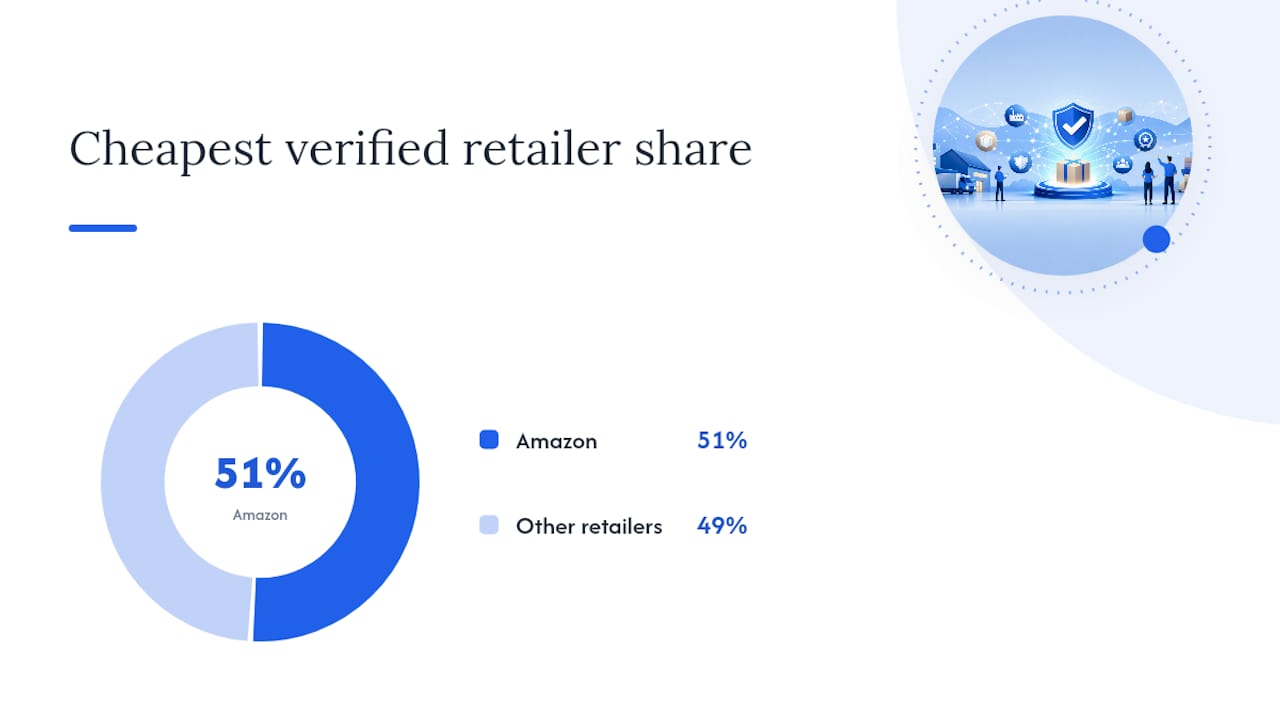
Aipricesearch’s own analysis of 225 product searches found Amazon led as the cheapest verified retailer in 51% of cases, which is useful context: a factory-direct quote should beat that benchmark, not just undercut a single competitor’s marked-up price.
When I’d Buy Factory Direct, and When I Wouldn’t
For a small trial order under a few hundred dollars, I’d skip most of the checklist and just confirm the business license and payment name match. Past that threshold, I want the live video call and a third-party inspection before final payment, no exceptions. The pattern that actually predicts trouble isn’t a single red flag. It’s a seller who gets impatient when you ask for verification at all.
— Timothy
How Aipricesearch Fits Into Your Factory-Direct Research
Aipricesearch is the check you run before you trust a factory-direct price, not after. Where a verification checklist tells you the seller is real, Aipricesearch tells you whether the deal itself holds up against verified US retailers and factory-direct sources side by side.
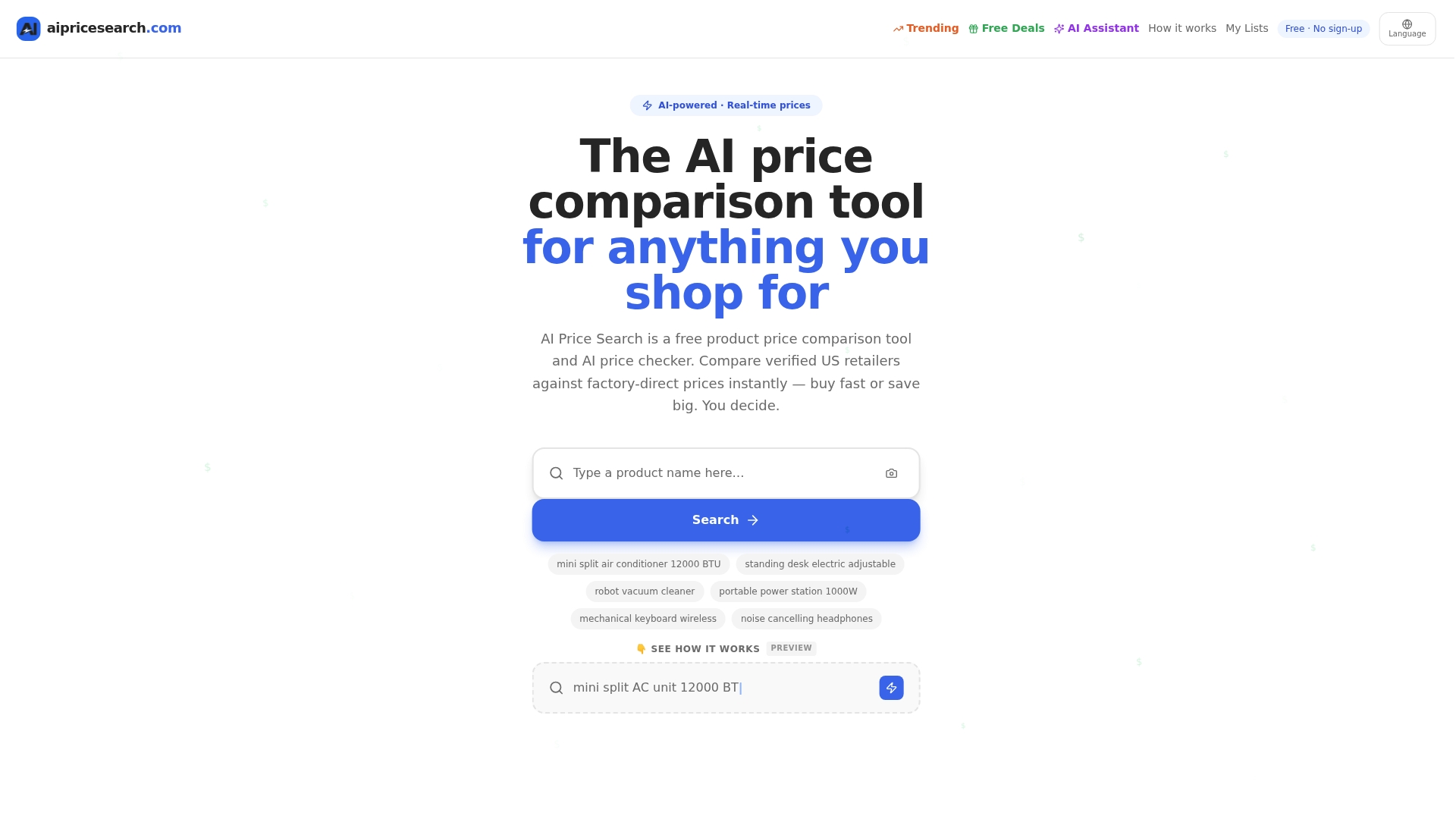
The platform’s dropship detection flags listings that look factory-direct but route through a markup layer, and its price tracking alerts you if a “limited-time” factory quote resurfaces later at the same rate. Many users report significant savings by catching exactly that kind of gap. Run a factory-direct quote through Aipricesearch before you wire a deposit, and you’ll know within minutes whether the price actually beats the verified market, not just one competitor’s inflated listing.
Where to Verify Supplier Claims Yourself
Check national business registries for license verification, request the certificate issuer directly to confirm ISO or safety certifications, and use bill-of-lading services like ImportGenius or Panjiva for export history. For large orders, hiring a third-party inspection auditor is worth the cost.
Sources
- How to Check If a Chinese Supplier Is a Real Factory or Trading Company (12 Methods) | ChineseCheck
- How to find a real Chinese factory vs a trading company | Akacia · Akacia
- How to Verify a Supplier You Have Never Met: 8-Step Guide | Reevol Source
- How to Verify a Chinese Supplier: The Complete Due Diligence Checklist (2026) | ExpoAlive
FAQ
Is Factory Direct Legit or Just a Marketing Term?
It can be genuinely legit when the seller is a verified manufacturer, but “factory direct” is also used loosely by trading companies with no factory at all. The label alone tells you nothing. Verification, not the phrase itself, determines whether the claim is true.
Is Factory Direct Safe for Online Payments?
It’s safe when you use trade-assurance, escrow, or milestone payments and confirm the payment beneficiary name matches the business license. Wiring a full payment upfront to an unverified account is the riskiest way to buy factory-direct.
What Are Common Factory Direct Complaints?
The most frequent factory direct complaints involve sellers who turn out to be trading companies, warranty claims that go nowhere, and orders that ship late or arrive with unexpected customs fees. Most of these trace back to skipped verification steps, not an inherently flawed model.
How Can I Check If a Factory Direct Seller Is Trustworthy?
Confirm the business license’s registered scope, verify certificates with the issuing body, and request a live unscripted video tour of the production floor. Cross-checking customs or bill-of-lading records adds another layer of confidence for larger orders.
Can a Price-Comparison Tool Help Me Shop Factory Direct More Safely?
Yes. A tool like Aipricesearch checks whether a factory-direct price actually beats verified retail prices and flags dropshipping markups disguised as factory pricing. It won’t replace document verification, but it catches pricing red flags before you commit.
Recommended
- 225 Product Searches Analyzed Amazon Leads As Cheapest Retailer In 51 Of Cases
- Amazon Vs Walmart Price Leadership Across 182 Weekly Searches
- August Price Tracker Amazon Leads In Value Across 153 Shopper Queries
Want to compare offers instantly? Search any product on AI Price Search.
Search a price →