U.S. Shopper Playbook Using Price Trackers

Multi-retailer search combined with price tracking beats any single comparison site, and for most shoppers, AI Price Search is the fastest way to run both at once. It checks verified U.S. retailers and factory-direct sources, flags dropship markups, and tracks price drops automatically.
TL;DR:
Multi-retailer search tools like AI Price Search save users an average of $212 by automatically comparing verified U.S. retailers and factory sources, flagging dropship markups.
Effective price comparison requires verifying coverage, total costs including shipping and tax, freshness of data, and seller reliability before trusting any site’s lowest price.
Using exact product identifiers, checking price history, and confirming landed costs help ensure the lowest total price rather than just the sticker price.
AI Price Search performs this layered process automatically, providing faster, more trustworthy insights and alerts when prices drop.
Relying solely on the first search engine results can be misleading for high-value items where hidden fees or markups erode apparent savings.
Table of Contents
Types of Price Comparison Tools and How They Differ
Not every comparison tool solves the same problem, and picking the wrong type wastes more time than it saves. Four categories cover almost every use case for shopping comparison sites in the USA.
-
Search-indexed shopping engines (like Google Shopping) pull listings from thousands of merchants in real time. Google Shopping is one of the largest-indexed engines and often shows prices updated within hours, making it a strong first stop for broad coverage.
-
Dedicated comparison sites aggregate a narrower set of retailers but go deeper on each one, often including stock status and shipping estimates. Services that focus on U.S. staples like Amazon, Walmart, and Target combine daily price updates with live stock data, which matters when a listed price expires overnight.
-
Browser extensions and coupon tools run in the background and surface a lower price or a promo code right at checkout, without you doing a separate search.
-
Price trackers and alert services watch a specific item over weeks or months and notify you when it drops, which is the right tool when you’re not buying today.
If you need to buy in the next hour, a search-indexed engine or extension works best. If you can wait for a sale cycle, a tracker earns its keep. MoneyCrashers’ roundup of top comparison sites groups tools this same way and notes that free options in each category can genuinely cut costs, provided you understand their limits.
What Should You Check Before Trusting a Price Comparison Site?
Every comparison site claims to find “the best price.” Few actually verify what that means. Run through this checklist before you trust any tool’s number.
-
Coverage. Confirm the site actually searches the retailers you’d consider buying from, including big-box stores, marketplaces, and factory-direct sellers, not just a handful of affiliate partners.
-
Price completeness. The listed “lowest price” is meaningless if it excludes shipping, tax, or handling fees added at checkout. Ask whether the total shown is the total you’ll pay.
-
Freshness. Prices swing daily on many products. Tools that update stock and pricing once a day stay more reliable than ones that cache results for weeks.
-
Seller reliability. Marketplace listings sometimes route through third-party dropshippers charging a markup over the same item sold direct. A tool that flags this saves you from paying more for identical goods.
-
Usability features. Image search, UPC lookup, barcode scanning, price alerts, and a mobile app all matter depending on how you shop. Barcode scanning in particular helps when comparing an in-store price against online listings before you walk out with something.
-
Monetization transparency. Most free comparison tools earn commissions when you click through to a retailer. That’s not a red flag by itself, but a site should be upfront about it rather than quietly favoring paying partners in its rankings.
Pro Tip: Test any new comparison tool on a product you already know the price of at three or four stores. If its “best price” matches what you already found manually, you can trust it on items you haven’t checked yet.
How Do You Actually Compare Prices to Get the Lowest Total?
Finding the lowest advertised price and finding the lowest price you’ll actually pay are two different jobs. Here’s the sequence that closes that gap.
-
Search with exact identifiers. Use the model number, UPC, or exact product title rather than a general description. Vague searches return near-matches that throw off every price comparison that follows.
-
Run a multi-site search first. Cast wide before narrowing. A tool that indexes verified U.S. retailers alongside factory-direct sources catches listings a single-store search misses entirely.
-
Check the price history. A tool that documents which retailer leads on value across specific queries shows you whether today’s price is actually low or just average dressed up as a deal.
-
Confirm the landed cost. Add shipping, tax, and any handling fee before comparing two listings. A $2 difference in sticker price can flip once a $9 shipping charge shows up on only one of them.
-
Verify seller reliability. Check whether the listing ships from the retailer directly or through a third-party marketplace seller, and whether a dropship markup is baked in.
-
Run a final coupon and extension pass. Once you’ve picked a retailer, let a browser extension check for an active promo code before you hit purchase.
Watch for two common traps: “free shipping” thresholds that push you to add items you didn’t want, and marketplace listings that look cheaper until a third-party seller’s shipping fee erases the savings. Set a price alert if the item isn’t urgent. Buy now only when price history and current stock both support it.
Why AI Price Search Helps U.S. Shoppers
AI Price Search runs the checklist above automatically instead of asking you to do it by hand. It compares listings from verified U.S. retailers and factory-direct sources, uses AI matching to confirm you’re comparing the same product across sites, and flags dropship markups before you click through.
-
AI-driven product matching to avoid comparing mismatched listings
-
Verified U.S. retailer and factory-direct coverage
-
Automatic dropship markup detection
-
Price tracking with alerts for items you’re not ready to buy yet
-
Visual search for finding a product from a photo alone
Reported savings: Users averaged $212 in savings per person this month using AI Price Search, based on the platform’s internal tracking data.
The publisher’s own August Price Tracker analysis found Amazon led on value across 153 tracked shopper queries that month, a reminder that value leadership shifts by product category and isn’t fixed to one retailer. That’s exactly why checking price history matters more than assuming any single store is always cheapest. For a shopper, that combination means faster discovery of the actual lowest landed price and a clearer signal about which seller to trust before checkout.
Is the Cheapest Listed Price Always the Real Deal?
Most advice about price comparison tools misses the actual failure point: it’s not that these tools are inaccurate, it’s that shoppers stop checking too early. A tool showing you the lowest sticker price on a search engine like Google Shopping is doing its job. The mistake is treating that number as final before shipping, tax, and seller reliability get factored in.
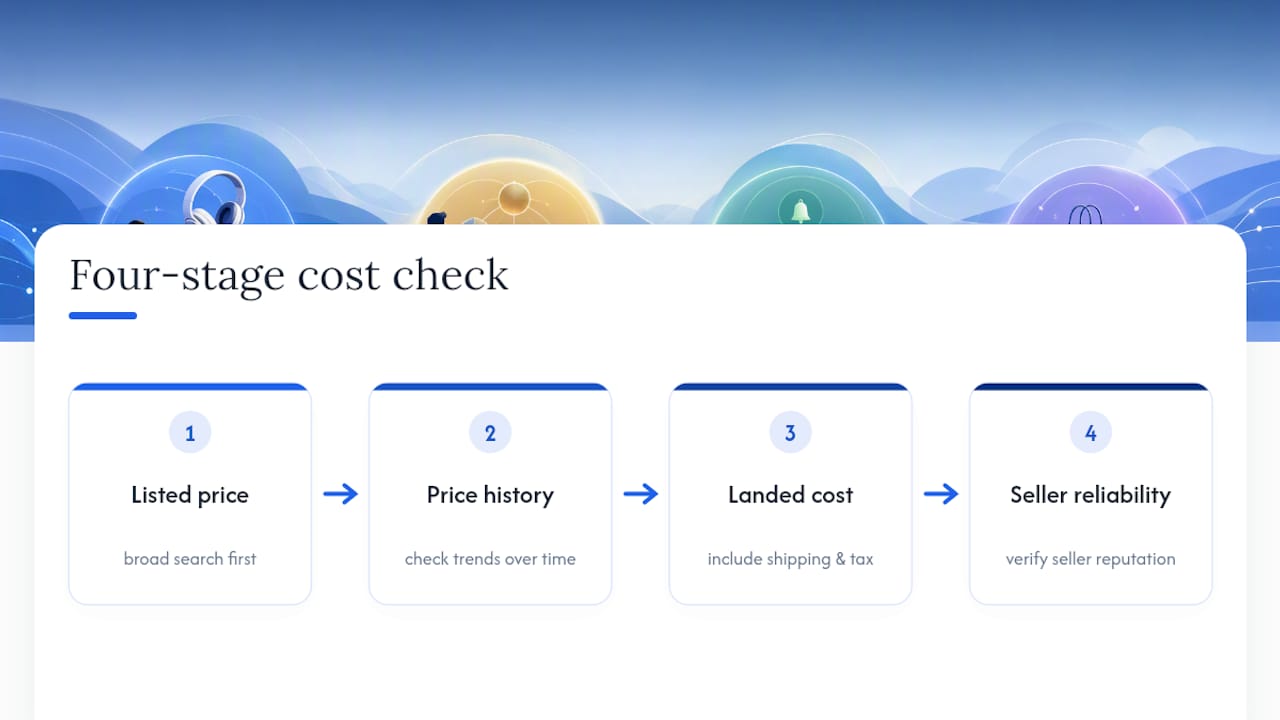
The conventional wisdom, “just use whichever site pops up first,” works fine for a $15 phone case and fails badly on a $600 appliance where a dropship markup or a hidden shipping fee can wipe out what looked like a real discount. What the research behind this article actually supports is a layered approach: broad search first, price history second, landed cost and seller verification last.
If you take one thing from this, prioritize price history over price snapshot. A number that looks low today might be the same price it was three weeks ago, or worse than it was last month. Tools that document this over time, rather than just scraping a single moment, give you a genuinely different level of confidence.
— Timothy
Try AI Price Search: How to Get Started
AI Price Search earns its place when you’re comparing the same product across multiple U.S. retailers and want to know if waiting will save you more. If you’re buying something unusual with no clear comparison point, a broader search-indexed engine still has its place. But for anything sold at more than one store, tracking beats guessing.
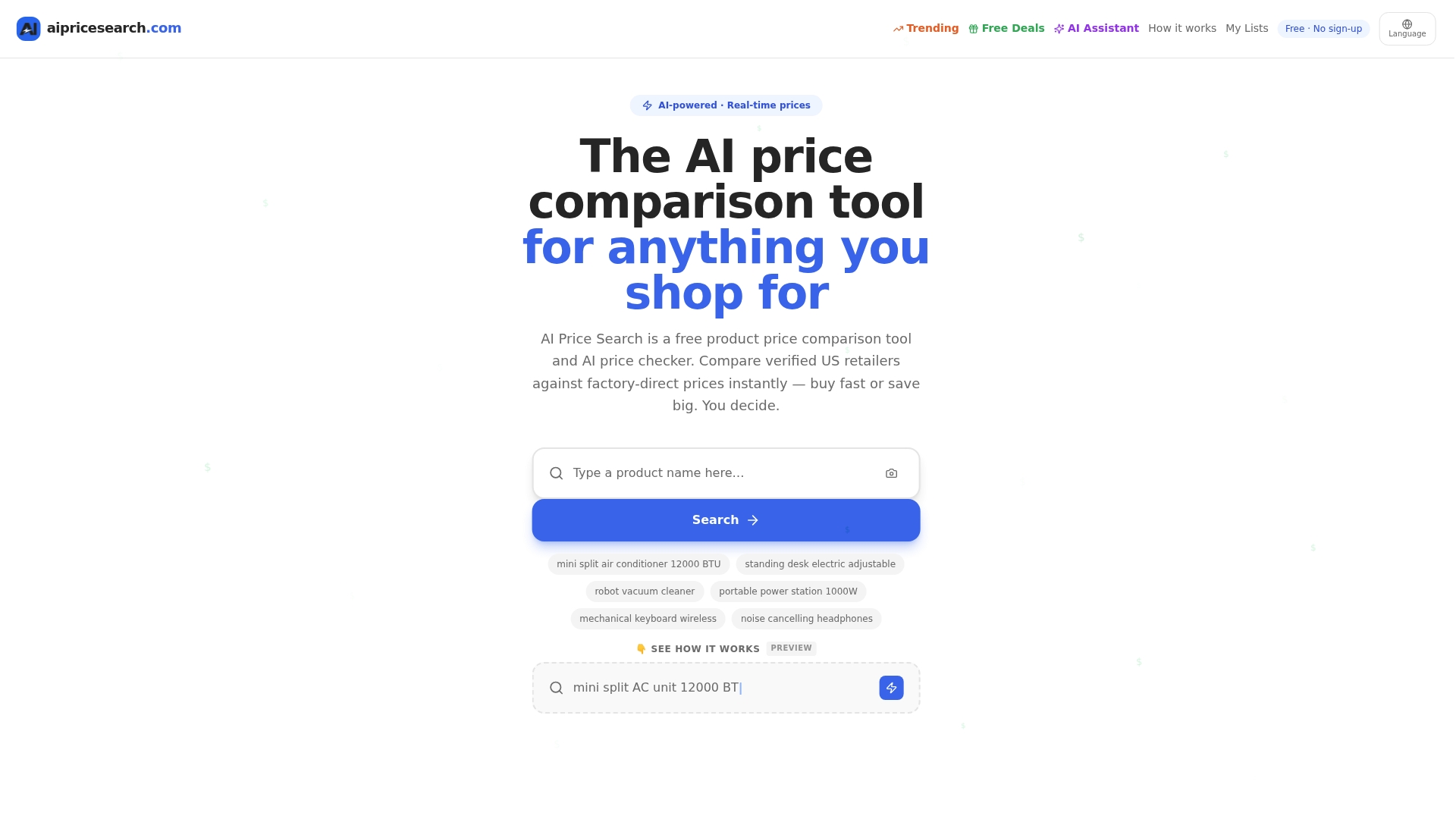
Getting started takes three steps. First, search the exact product using its model number or an uploaded photo through visual search. Second, if the price isn’t where you want it, set a price alert instead of buying on impulse. Third, run a quick check against Yahoo Shopping’s results or Google Shopping’s listings to confirm the comparison holds up against other engines. See how AI Price Search stacks up directly on the Google Shopping comparison page, then run your own search to see what you’re currently overpaying for.
Sources
-
BuyWhere US — Compare Prices from Amazon, Walmart, Target & More
-
Google Shopping - Shop Online, Compare Prices & Where to Buy
FAQ
What Are the Best Price Comparison Sites in the USA?
The strongest options combine broad search-indexed coverage (like Google Shopping) with a dedicated tracker that verifies U.S. retailer pricing and seller reliability, which is the approach AI Price Search is built around.
Do Price Comparison Sites Include Shipping and Tax?
Not always. Many tools show a base product price only, so confirm the final total at checkout before assuming you’ve found the cheapest option.
How Often Do Price Comparison Tools Update Their Listings?
It varies by tool. Some services update stock and prices daily, while others cache results for longer, which is worth checking before you trust a “lowest price” label.
Are Browser Extensions Better Than Dedicated Comparison Sites?
Neither is universally better. Extensions are faster for last-minute coupon checks at checkout, while dedicated comparison sites and trackers work better for finding the lowest price across multiple retailers before you decide where to buy.
How Do I Know if a Marketplace Listing Has a Dropship Markup?
Look for pricing that’s noticeably higher than the same item sold directly by the manufacturer or a major retailer. Tools with built-in dropship detection flag this automatically instead of leaving you to compare listings manually.
Recommended
-
Amazon Vs Walmart Price Leadership Across 182 Weekly Searches
-
Retailer Price Wars Aliexpress And Amazon Split The Lead In 184 Consumer Searches
Want to compare offers instantly? Search any product on AI Price Search.
Search a price →