Shoppers, Avoid 5–10x Markups: Spot Dropshipping Markups in 90 Seconds
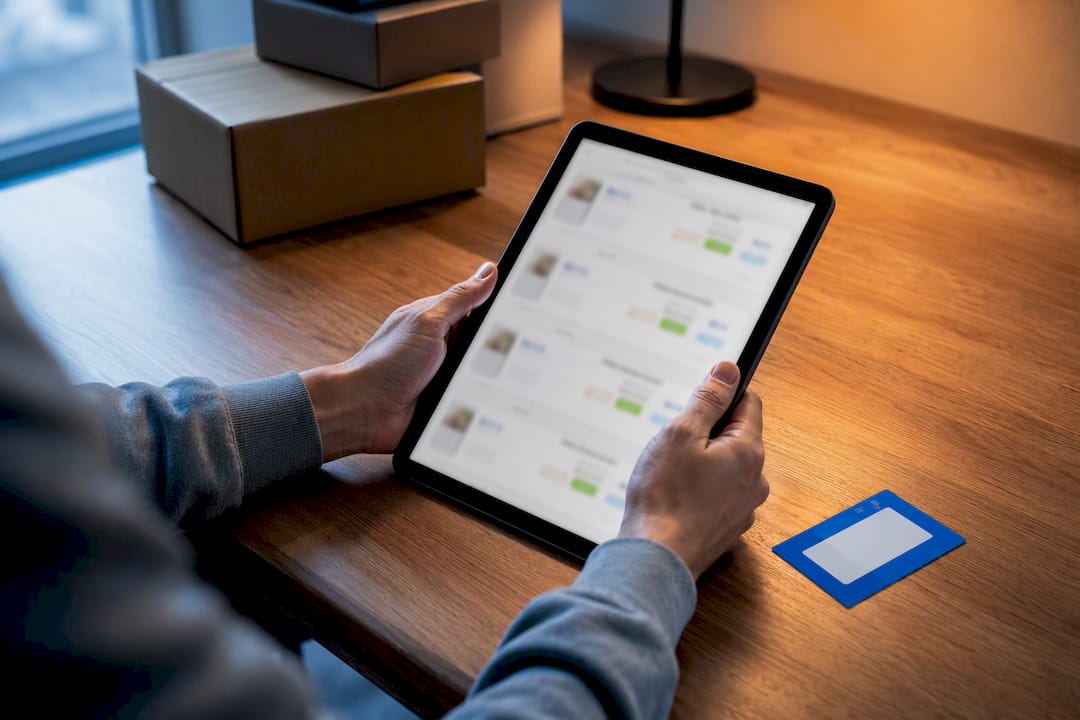
A dropshipping markup is the extra amount a seller tacks onto a product’s actual factory or supplier price before it reaches your cart, often several times above cost. The fastest way to catch it: run the product photo through a reverse image search and compare the listed price against verified retailers. If the same image shows up on a supplier marketplace at a fraction of the price, you’ve found your markup, and a tool that automates that comparison will save you the legwork.
TL;DR:
- Most dropshipping products have a markup of five to ten times the wholesale cost, with prices often far above verified retailer prices.
- Visual and shipping clues, such as identical photos across stores and long delivery times without domestic warehouses, strongly indicate dropshipping markup schemes.
- Automated price comparison tools can quickly identify inflated listings by cross-referencing verified prices, saving time compared to manual checks.
- Confirming a suspicious price involves reverse image searches, checking supplier marketplaces, verifying domain history, and examining shipping policies.
- Not all dropshipping stores are scams; the focus is on recognizing when a markup is excessively inflated beyond what verified sources or retail prices justify.
Table of Contents
- Five Quick Signs You’re Looking at a Dropshipping Markup
- How to Verify a Price in Five Steps
- Why Price-Comparison Tools Catch What Manual Checks Miss
- An Editor’s Take on Chasing Down the Real Price
- Check Prices Before You Click Buy
- Sources
- FAQ
Five Quick Signs You’re Looking at a Dropshipping Markup
Most inflated listings share the same tells. You don’t need special software to catch the obvious ones, just a spare minute and a suspicious eye.
Start with the photos. If a product image looks like it came straight from a manufacturer’s spec sheet, that’s because it probably did. Reverse-image checks commonly reveal identical photos on multiple stores and supplier listings, which means the seller never touched the product themselves.
Shipping time is the second giveaway. A store that promises delivery in a few weeks, with no domestic warehouse mentioned anywhere, is likely shipping directly from an overseas supplier rather than from its own stock.
Then there’s the catalog itself. A single store selling everything from kitchen gadgets to phone cases to pet toys, paired with a generic “About Us” page that says nothing specific about the company, is a classic dropship pattern rather than a specialty retailer.
The markup math: Investigations into dropshipping storefronts have found wholesale costs as low as $2 to $8 marked up to $30 to $80 for the same item, a 5x to 10x multiple that a supplier would never charge a retail customer directly.
Here’s your quick checklist:
- Product photos look identical across several unrelated stores
- Shipping estimates run 2 to 6 weeks with no stated domestic warehouse
- Catalog spans dozens of unrelated categories with no clear specialty
- Price sits far below what established retailers charge for the same item on some discount versions but wildly above true supplier cost
- Contact page lists only an email form, and the return policy reads like it was copied from another site
None of this means every dropshipper is running a scam. Plenty of small stores use supplier fulfillment honestly and price fairly. The goal isn’t to write off the entire business model, it’s to know when you’re paying a markup steep enough that a verified retailer or the supplier itself would beat it easily.
How to Verify a Price in Five Steps
Spotting a red flag is one thing. Confirming the markup and finding a cheaper source takes a slightly more deliberate process, but it only takes a few minutes once you know the order of operations.
- Screenshot the product photo and run it through Google Lens. Lens surfaces similar images, matching websites, and product listings tied to that exact photo, which is usually enough to find where the item actually originates.
- Follow up with TinEye if Lens comes up short. TinEye specializes in tracing an image back to its earliest appearance online, which helps when a photo has been resized or cropped by the reseller.
- Search the supplier marketplaces directly. Type the product name or a distinctive detail into AliExpress, Alibaba, or Temu and compare the wholesale price against what you were quoted. This is where the actual markup becomes visible.
- Open the shipping and returns pages. Look for 2 to 6 week delivery windows, return addresses located overseas, and restocking fees buried in fine print. Shipping estimates of two weeks or longer often signal international direct shipping rather than domestic stock.
- Run a quick WHOIS check on the domain. A site registered a few months ago, especially one hiding behind privacy protection, deserves more scrutiny than an established retailer with years of history.
Before you check out, pay with a credit card rather than a debit card or direct bank transfer. Credit cards provide chargeback protection if the item never arrives or differs from the listing, which is important for higher-priced purchases.
Pro Tip: Email the seller a specific question about the product, like asking for the exact material or a shipping carrier name, before buying anything over $50. A legitimate retailer answers with details. A dropshipper often stalls or gives a vague, copy-pasted reply.
No single check is airtight on its own. An image match plus a long shipping estimate plus a domain registered last month builds a far stronger case than any one signal alone.
Why Price-Comparison Tools Catch What Manual Checks Miss
Manual verification works, but it’s slow when you’re comparing more than one or two products. Automated price-comparison tools run the same checks in seconds by pulling live pricing from verified retailers and factory-direct sources, then flagging listings priced well above that band.
These tools typically check three things at once: the price range across verified sellers, signals tied to seller reliability, and whether shipping and tax are already baked into the quoted price rather than added as a surprise at checkout. That last piece matters more than shoppers expect, since a “cheaper” listing can end up costing more once shipping fees land.
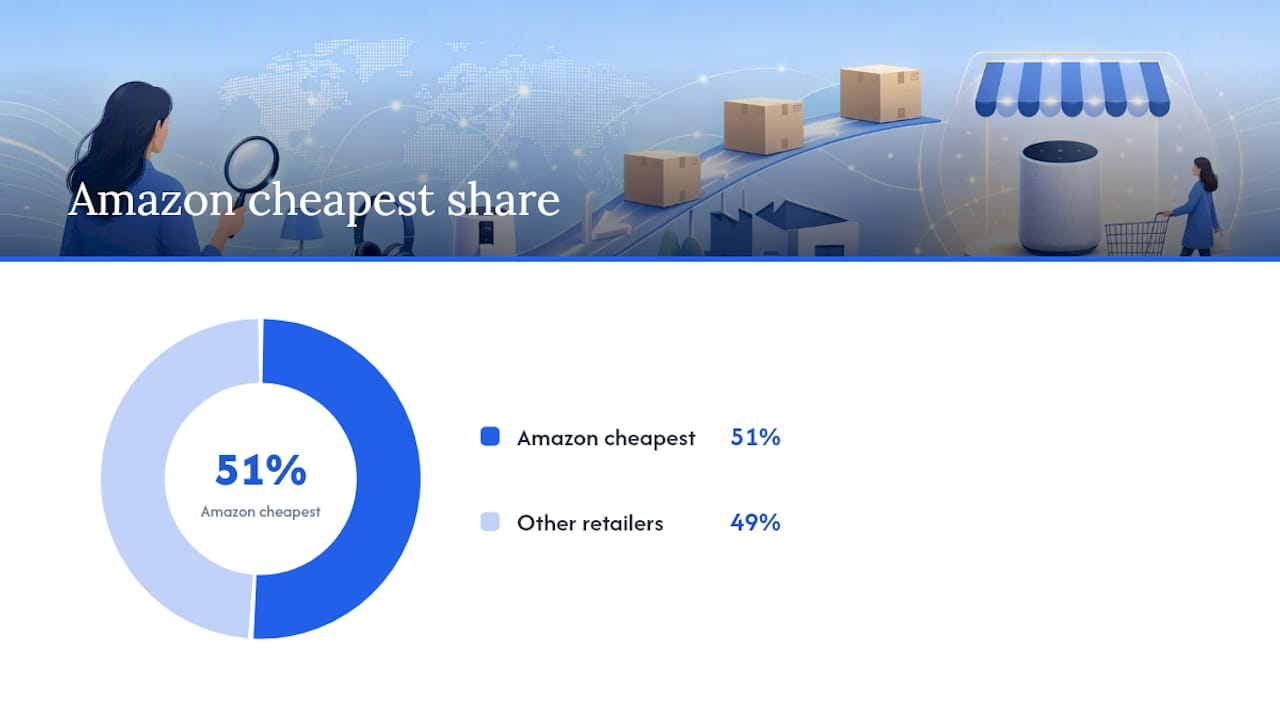
The payoff shows up in the numbers. Aipricesearch users report average savings of $212 per user this month simply by comparing verified prices before buying, and a broader look at 225 product searches found Amazon was the cheapest verified retailer in 51% of those cases, which tells you the lowest price isn’t always where you’d guess.
Running your own check is simple:
- Upload a product photo or paste the title into a comparison tool
- Review the lowest verified price across retailers, with shipping and tax included
- Flag any listing whose seller metadata looks thin or newly registered
- Cross-check the price band against known retailers before adding to cart
These tools aren’t perfect. Reverse image matching can get confused when a legitimate manufacturer licenses the same photo to multiple authorized sellers, and private-label goods sometimes look identical to a dropshipped item without actually being one. Some product categories, like small electronics assembled overseas, also carry thin margins throughout the entire supply chain, so a modest markup there isn’t necessarily predatory. Treat any tool’s flag as a strong lead, not a final verdict.
An Editor’s Take on Chasing Down the Real Price
Shoppers get blamed for being cheap when they push back on a $60 phone case that costs $4 to make. That framing is backwards. Asking what something actually costs to produce isn’t stinginess, it’s basic financial literacy, and the businesses annoyed by that scrutiny are usually the ones relying on you not asking.
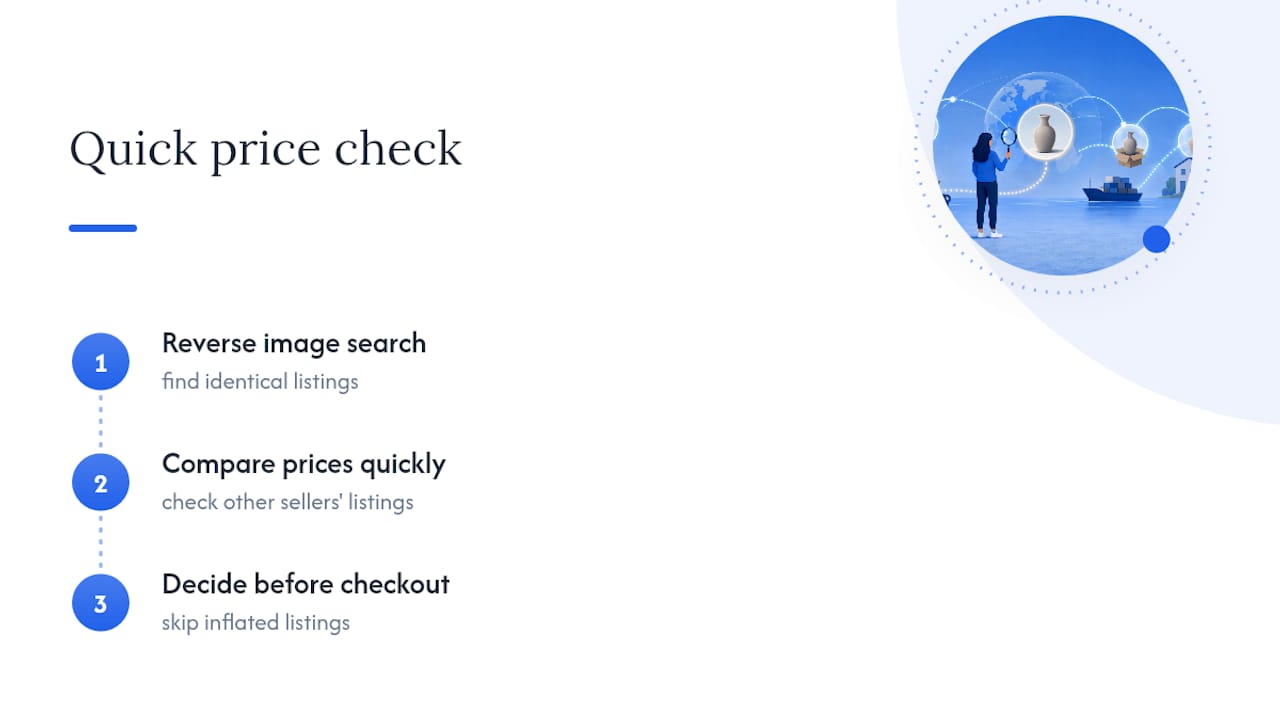
The habit that actually protects your budget isn’t clipping coupons, it’s running a 90 second check before checkout: reverse image search, quick price comparison, done. Do that consistently and the inflated listings stop working on you specifically, even if they keep working on everyone else.
— Timothy
Check Prices Before You Click Buy
Aipricesearch built Dropship Detector for exactly the scenario this article walks through: a product photo that looks reused, a price that feels off, and no easy way to confirm it manually in under a minute. The tool runs automated image and price checks against verified US retailers and factory-direct sources, then surfaces seller reliability signals so you’re not guessing based on a polished storefront alone.
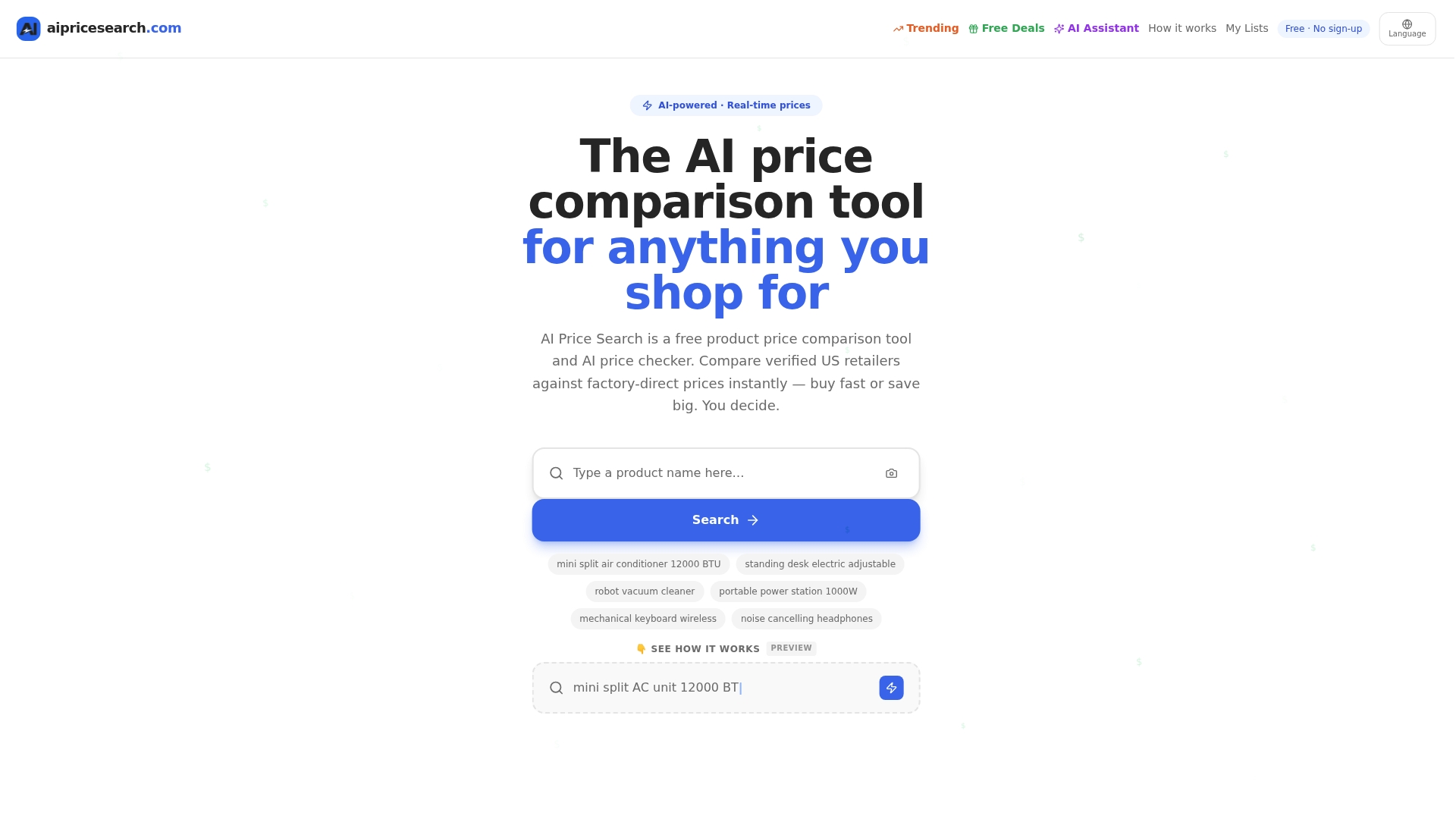
The proof is in what shoppers actually save. Paste in a product link or upload the photo you’re suspicious of, and let Dropship Detector show you the verified price before you enter your card number.
Sources
Consumer Advisory’s dropshipping guide, SlashGear on reused photos, Google Lens, TinEye, and shipping-rate context.
- How to Spot a Dropshipping Site Before You Order | Consumer Advisory
- Google Lens support: find product images and similar results | Google Support
FAQ
Is Reverse Image Search Really Enough to Prove a Markup?
It’s the fastest first check, since identical photos across multiple stores usually mean the seller never handled the product, but pairing it with a shipping-time check and a domain-age check builds a stronger case.
Does a Long Shipping Time Always Mean Dropshipping?
Not always, but delivery windows of two to six weeks with no domestic warehouse listed are a strong signal of overseas direct shipping rather than local stock.
Can an AI Price-Comparison Tool Actually Save Me Money?
Yes.
Should I Avoid All Dropshipping Stores?
No. Many dropshippers price fairly and fulfill reliably; the goal is catching the inflated ones, not avoiding the entire business model.
Recommended
Want to compare offers instantly? Search any product on AI Price Search.
Search a price →