Price First: Marketplace vs Retailer, Checklist and Five Minute Seller Vet

For low-risk, low-cost items, buy from whichever marketplace seller has the strongest track record and lowest all-in price. For anything expensive, technical, or hard to return, buy from the retailer or brand store, where accountability is clearer. Headline price alone is a bad guide either way: AI Price Search’s analysis of 225 product searches found Amazon was cheapest just 51% of the time, meaning the other half of the time, a different retailer won.
TL;DR:
- Marketplace prices often include hidden fees such as shipping, handling, and restocking costs, which can negate any initial savings compared to retailers.
- Quick assessment of seller reliability should include recent reviews, review volume, and checking for signs of dropshipping or fake listings using AI tools.
- High-risk or warranty-dependent items are safer to buy from brand or retailer stores with clear accountability and support options.
- For urgent or high-value purchases, buying from a retailer with guaranteed delivery and direct customer support reduces dispute complexity.
- Combining platform buyer protection with a credit card provides the best safeguard against losing money on unreliable sellers.
Table of Contents
- How Do Marketplaces and Retailers Actually Differ?
- Is the Marketplace Price Really Cheaper?
- How Do You Vet a Marketplace Seller in Five Minutes?
- When Should You Choose a Marketplace Instead of a Retailer?
- What Should You Verify Before You Click Buy?
- What Happens When Something Goes Wrong?
- Do Buyer Protection Policies Actually Change Purchase Safety?
- Which Channel Actually Has Better Selection?
- Timothy’s Perspective: The Small Savings That Aren’t Worth It
- Compare Prices and Sellers Before You Buy, Not After
- Sources
How Do Marketplaces and Retailers Actually Differ?
A marketplace is a platform hosting many independent sellers, some of them factory-direct, competing for the same listing or search result. A retailer, whether it has a physical storefront or not, is a single business selling its own inventory under its own name. That distinction determines who is on the hook when something goes wrong.
On a marketplace, the platform sets rules, but the individual seller usually owns the transaction, meaning returns, warranty claims, and customer service quality can swing wildly from one seller to the next, even for the identical product. A retailer owns the whole relationship end to end. If a laptop arrives broken, you’re dealing with one company, one policy, one phone number.
That trade-off cuts both ways:
- Marketplaces win on selection and price competition, since dozens of sellers bid against each other for your click.
- Retailers win on accountability, since there’s no ambiguity about who issued the item or who owes you a refund.
- Marketplaces can shift post-purchase friction onto the buyer, especially with third-party sellers who are slow to respond.
- Retailers maintain direct-to-consumer channels partly to keep that friction low and protect the customer relationship, which is also why their prices tend to move less.
Neither structure is universally better. It depends on what you’re buying and how much you’re willing to gamble on a stranger’s customer service.
Is the Marketplace Price Really Cheaper?
The sticker price on a marketplace listing rarely tells the whole story. A $40 item that turns into $61 at checkout because of shipping, handling, and a restocking fee on returns is not actually the deal it looked like on the search results page.
Before comparing two listings, run the math on these line items:
- Base item price
- Shipping cost (and whether it’s free above a threshold you’d have to hit anyway)
- Sales tax, which can vary by seller location on a marketplace but is usually consistent on a retailer’s site
- Return shipping, if the item doesn’t work out
- Restocking fees, common on marketplace electronics and appliances
- Bundled accessories that are included at a retailer but sold separately by a marketplace seller
Coupons and membership shipping (think subscription-based free shipping) complicate this further. Industry data backs this up: marketplace listings often look cheaper on the surface, but they frequently carry added fees that close the gap or flip it entirely, while retailer pricing tends to be more predictable and comes with clearer warranty support baked in.
The real comparison is never sticker price vs. sticker price. It’s total cost at your door, including what happens if you need to send the thing back.
How Do You Vet a Marketplace Seller in Five Minutes?
Star ratings alone don’t tell you much. A seller with 4.8 stars and 12 reviews is a different risk than one with 4.6 stars and 12,000 reviews, and the low-review seller is the riskier bet even though the rating looks better.
Run this quick check before buying from anyone you don’t recognize:
- Rating volume: A few hundred reviews minimum for anything over $50.
- Recency: Look at the last 30 days of reviews specifically, not the lifetime average, since a seller can decline fast.
- Negative review patterns: Repeated complaints about counterfeits, wrong items, or ignored refund requests are a red flag even if the star average looks fine.
- Listing photos: A reverse image search can reveal stock photos lifted from a different product entirely.
- Catalog focus: A seller with 40,000 unrelated products, from phone cases to dog toys to kitchenware, is more likely running a dropship operation than a real business.
- External footprint: A real business usually has a website, social presence, or business registration you can find with a quick search.
Under the INFORM Consumers Act, marketplaces must verify identity information for high-volume third-party sellers, but the rule doesn’t cover every small seller. A thin public profile isn’t automatic proof of fraud. It just means you need to look closer.
Pro Tip: Run the seller’s name and the exact product title through an AI-powered dropship detection tool before you buy. It flags markup patterns typical of dropship listings and compares seller reliability alongside price, so the five-minute check above takes closer to thirty seconds.
When Should You Choose a Marketplace Instead of a Retailer?
Rank your decision by these five factors, in order:
- Product risk category. Low-risk items (phone cases, cables, basic tools) tolerate marketplace uncertainty fine. High-risk items (electronics with batteries, anything requiring calibration, prescription-adjacent goods) do not.
- Size of the price gap. A 5% marketplace discount rarely justifies the return hassle if something goes wrong. A 30% gap on a low-risk item usually does.
- Delivery urgency. If you need it tomorrow, a retailer with guaranteed fast shipping beats a marketplace seller shipping from an unknown warehouse.
- Warranty and repair likelihood. Anything you might need serviced under warranty benefits from a clean paper trail with a single accountable seller.
- Return pain tolerance. If you can’t afford the item to be wrong, weight this factor heavily.
Three quick scenarios show how this plays out. A birthday gift under $30, low risk, tight timeline. Marketplace is fine, since the downside of a mediocre seller is minor annoyance, not financial pain. An urgent appliance replacement, like a broken washing machine, calls for a retailer with guaranteed delivery windows and a support line you can actually reach. Warranty-sensitive electronics, like a laptop or a camera, belong with a retailer or brand store, where proof-of-purchase and warranty recognition rarely get disputed.
Perceived risk is the strongest single predictor of which channel shoppers should pick, according to research published in the Journal of Innovation & Knowledge. The framework above just formalizes that instinct.
What Should You Verify Before You Click Buy?
Run through this checklist in order, every time:
- Confirm seller identity and history (storefront age, review count, business name matching the listing).
- Calculate the all-in price, including shipping, tax, and likely return costs.
- Read the actual return policy terms, not just the “returns accepted” badge.
- Confirm whether the manufacturer will honor the warranty without seller authorization, especially on marketplaces.
- Use a payment method with buyer protections, like a credit card.
- Check the delivery estimate and whether tracking is provided.
Screenshot the listing, price, and seller name before you complete the order, and save the order confirmation email. If a dispute comes up later, that evidence matters more than your memory of what the page said.
If the price doesn’t need to happen today, set a price-tracking alert instead of buying now. Prices on both marketplaces and retailer sites fluctuate more than most shoppers realize, and a tool like AI Price Search’s tracking feature can flag a drop without you having to check manually.
What Happens When Something Goes Wrong?
Dispute resolution is where the structural differences between marketplaces and retailers become obvious fast. On a marketplace, your first stop is the seller directly, and most platforms give sellers a window (often 24 to 48 hours) to respond before you can escalate to the platform itself. If the seller ghosts you or refuses a reasonable refund, the marketplace’s buyer protection program becomes the arbiter, not a person you can call.
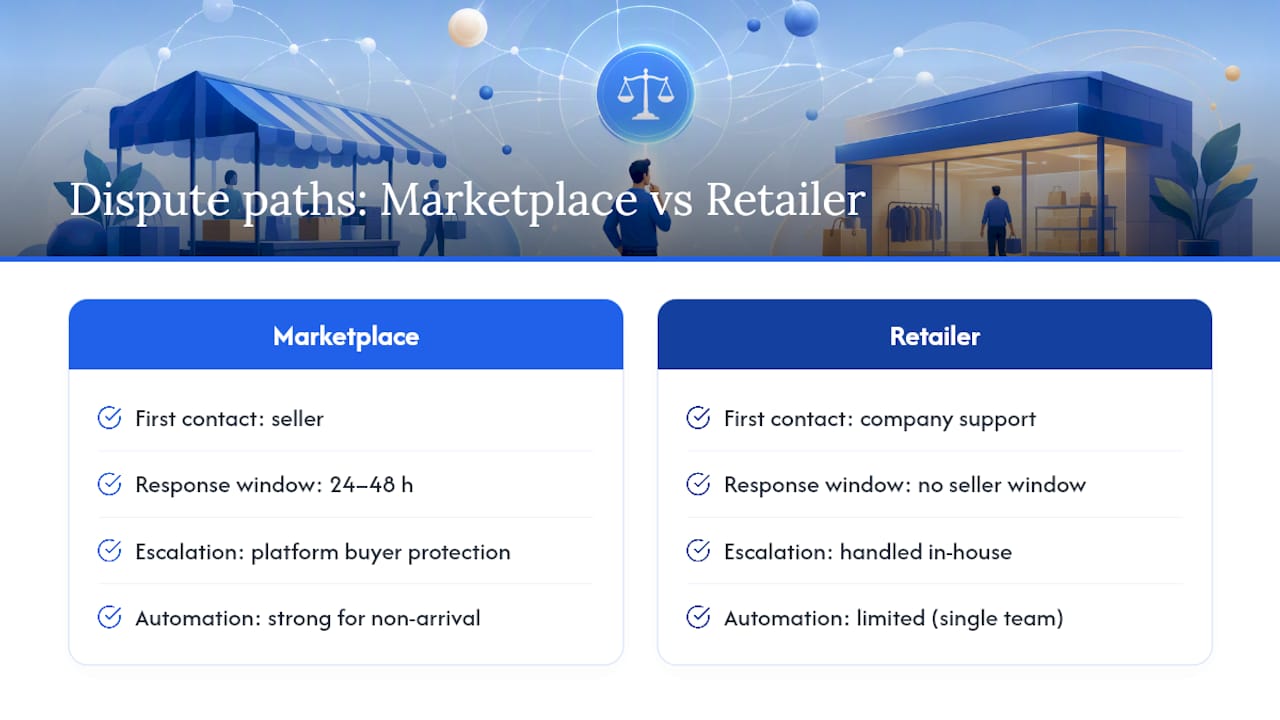
Retailers handle disputes in-house through a single customer service channel. There’s no escalation ladder to climb, since the company that sold you the item is the same one processing the refund. That simplicity is the main advantage: fewer parties, fewer chances for a dispute to stall in limbo.
Where marketplaces add value is scale. A major platform processing millions of disputes has automated systems that can force a refund even when a seller stops responding entirely, something a small retailer’s single-person support team can’t always match on speed. But that automation works best for straightforward cases like “item never arrived.” It works less well for gray areas like “item doesn’t match the description” or subjective quality complaints, where a human judgment call from a retailer’s support team can actually resolve things faster.
The practical takeaway: for anything with real dispute risk, know your escalation path before you buy, not after.
Do Buyer Protection Policies Actually Change Purchase Safety?
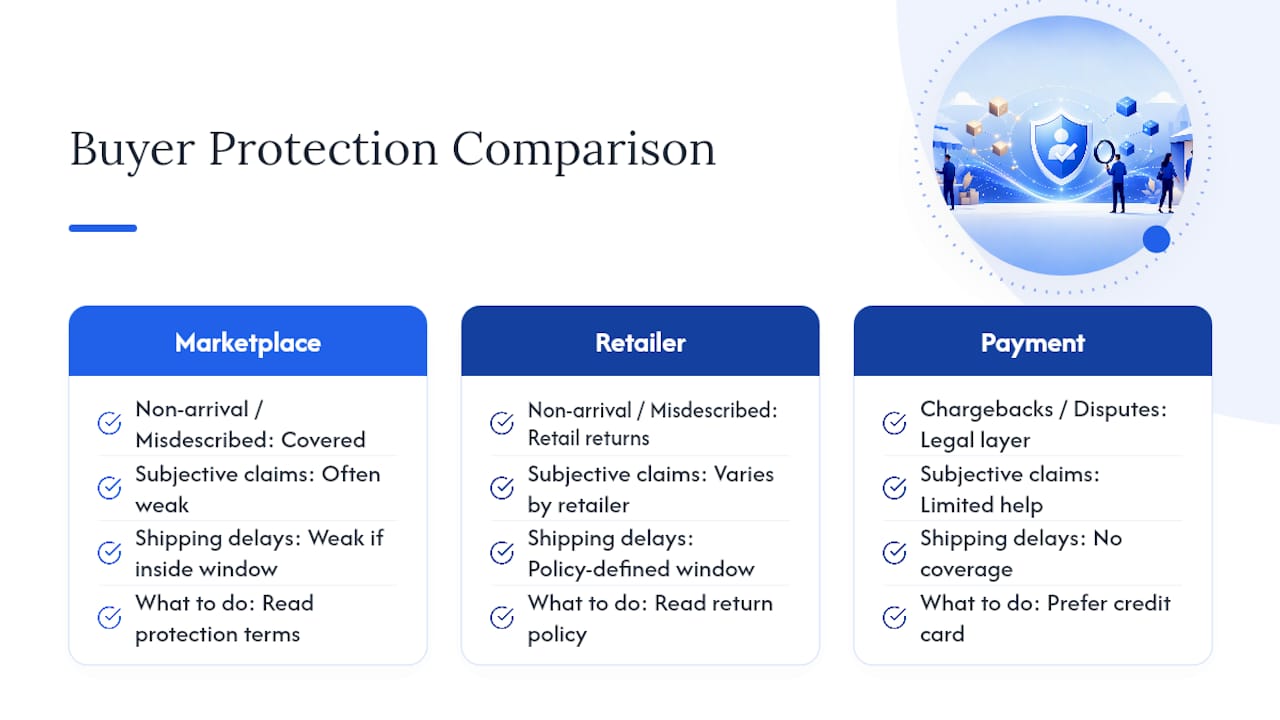
Buyer protection policies exist because platforms know shoppers hesitate to buy from a seller they’ve never heard of. They do lower the practical risk of buying from an unfamiliar marketplace seller, but they don’t eliminate it, and the details matter more than the existence of the policy itself.
Most marketplace protection programs cover items that never arrive or arrive significantly different from the listing. They cover this reliably. They’re weaker on subjective disputes, slow shipping that falls just inside the stated window, or authenticity claims that require expert verification to prove. Reading the actual protection terms, not just trusting the badge, is worth the two minutes it takes.
Retailer-side protections work differently. Since there’s no third-party seller in the mix, “buyer protection” mostly just means the retailer’s own return and refund policy, plus whatever protection your payment method adds. The FTC recommends paying with a credit card specifically because it adds a legal layer of dispute protection that debit cards and direct bank transfers don’t offer, and that recommendation applies equally on both channels.
The safest purchases combine platform-level buyer protection with a payment method that adds its own layer of coverage. Relying on just one is where shoppers get burned.
Which Channel Actually Has Better Selection?
Marketplaces win decisively on raw variety. A single search can surface dozens of sellers offering the same item at different prices, plus adjacent products, off-brand alternatives, and factory-direct options a retailer would never carry. If you’re hunting for something niche or discontinued, a marketplace is usually your best shot at finding it at all.
Retailers win on exclusivity. Brand-specific colorways, early-release products, and store-exclusive bundles often only exist through the retailer or brand’s own channel, since the manufacturer controls where those items get distributed. If you want a specific limited run or a manufacturer-backed bundle, the marketplace route may not even have it.
The practical split: shop a marketplace when you want options and price competition on a common item. Shop the retailer when you want a specific exclusive product, or when you value knowing exactly who made it and who’s standing behind it.
Timothy’s Perspective: The Small Savings That Aren’t Worth It
I’ve watched shoppers save $8 on a marketplace listing, then spend forty minutes fighting for a refund when the item showed up used. That math never works out. The habit that actually pays off is boring: check the seller’s recent reviews, calculate the real total, and ask whether the savings justify the risk if this specific purchase goes wrong.
Retailers are not automatically the safer or smarter choice. For a cheap accessory, a well-reviewed marketplace seller is fine, and the price gap is usually real money. The mistake is applying the same casual approach to a $400 purchase that you’d apply to a $12 one.
— Timothy
Compare Prices and Sellers Before You Buy, Not After
Running the checklist above manually, price line by price line, seller by seller, takes real time. Some platforms do that comparison automatically, pulling prices from various retailers and factory-direct sources side by side, while flagging seller reliability to help avoid unknown storefront risks.
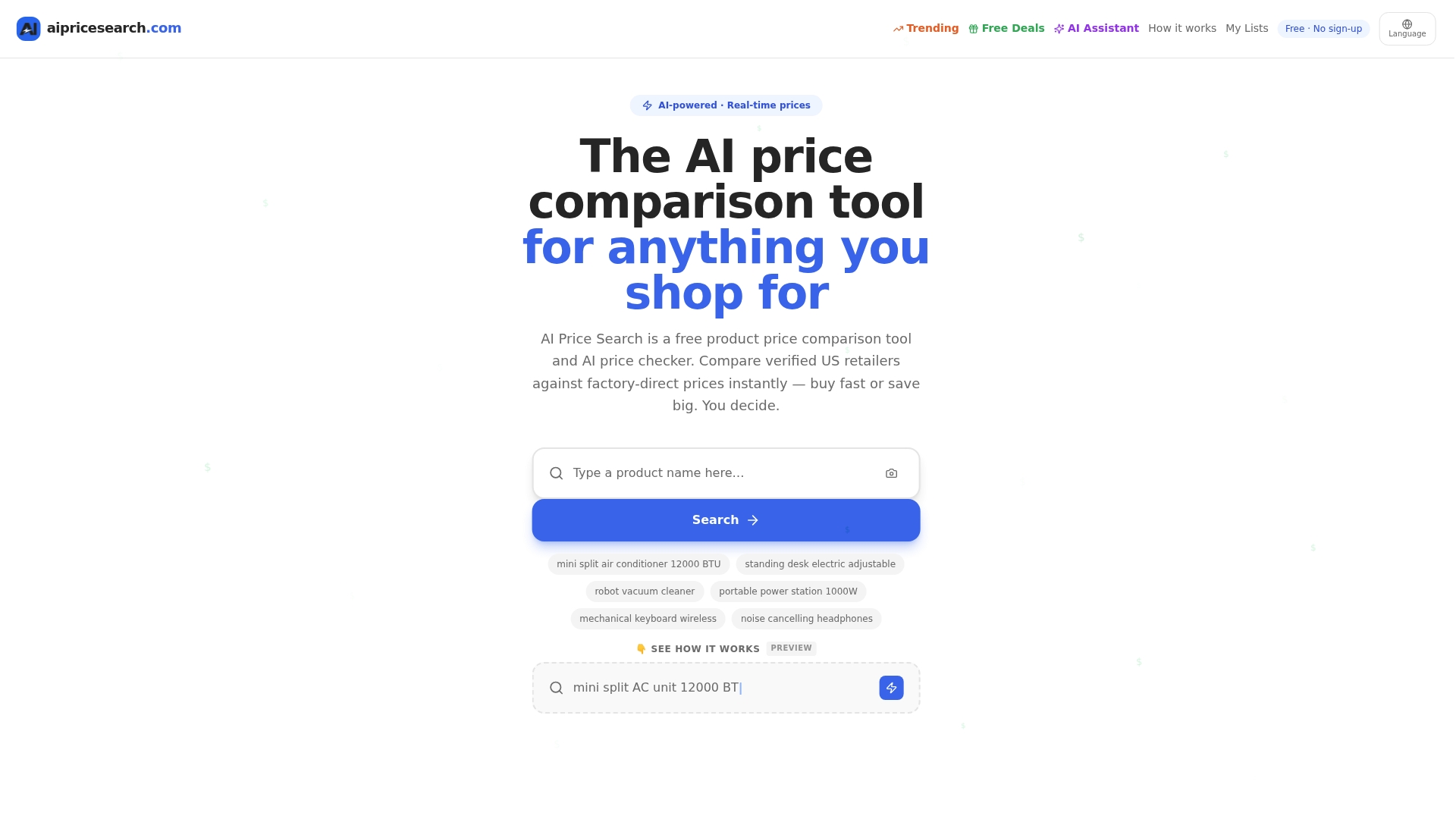
Certain platform features can catch markup patterns before you pay for them, and price-tracking alerts mean you don’t have to keep checking a listing manually while you wait for a better deal. Users comparing prices this way may see average savings, potentially reducing risks associated with less reliable sellers.
If you want to see exactly how a specific product stacks up across sellers right now, try the AIShopping Assistant and run your next purchase through it before you check out.
Sources
- What third-party sellers need to know about the INFORM Consumers Act — FTC
- Price is top of mind when consumers shop on ecommerce marketplaces — PYMNTS (2024)
- DTC vs marketplace: how to choose the right channel strategy — Forbes (2024)
- Official online brand stores or online marketplaces? exploring innovation in consumer intentions — Journal of Innovation & Knowledge (2024)
Recommended
- 225 Product Searches Analyzed Amazon Leads As Cheapest Retailer In 51 Of Cases
- Amazon Vs Walmart Price Leadership Across 182 Weekly Searches
- August Price Tracker Amazon Leads In Value Across 153 Shopper Queries
- Retailer Price Wars Aliexpress And Amazon Split The Lead In 184 Consumer Searches
Want to compare offers instantly? Search any product on AI Price Search.
Search a price →