When to Buy Electronics Month by Month in the US

Buy TVs and general electronics during Black Friday/Cyber Monday, laptops in August, and last year’s phone once the new model ships in September. The one rule that beats every calendar: wait 60 to 90 days after a successor launches whenever you can, since that’s when retailers dump older inventory. Prime Day and back-to-school season fill the gaps for headphones, tablets, and computers. Check the category breakdown below because televisions, laptops, and phones each run on their own separate clock.
TL;DR:
- Wait 60 to 90 days after a new product launch, especially for phones, laptops, and TVs, to secure the best discounts on previous models.
- Black Friday and Cyber Monday offer the deepest discounts, but retailers often start markdowns early in November, so monitor prices across categories.
- Prime Day generally provides 20% to 50% discounts on Amazon-brand devices, chargers, and smart home gear, with dates varying yearly around June or July.
- The best time to buy a TV is November for current models and January or February for last year’s stock, with prices lowest around the Super Bowl and CES.
- When shopping for laptops, August offers the best back-to-school deals, with Black Friday discounts as a secondary opportunity.
Table of Contents
- When Is the Best Time to Buy Electronics? The Sale Calendar
- Best Month to Buy a TV, Laptop, Phone, and Other Gadgets
- How to Decide: Buy Now or Wait
- How to Find Verified Electronics Deals (Not Fake Ones)
- Tracking Prices With AI Price Search
- A Straight Answer on Timing (Editorial Perspective)
- Try Aipricesearch Before Your Next Purchase
- Where to Track Deals and Sale Dates
- Sources
When Is the Best Time to Buy Electronics? The Sale Calendar
Electronics sales season runs on a predictable rhythm, and once you know the pattern, you stop buying at full price out of impatience. Each event favors different categories, so matching the calendar to what you actually need matters more than chasing every promotion.
Black Friday and Cyber Monday remain the deepest and broadest discount window of the year. Consumer Reports tracks November as the month with the largest price drops across TVs, laptops, and headphones, and retailers front-load some of those markdowns in early to mid-November before the official rush hits. If you’re watching a price tracker, don’t assume the lowest price of the season lands exactly on the Friday after Thanksgiving.
Prime Day, usually held in mid-year, targets a narrower but still valuable slice of gadgets. Expect the sharpest cuts on Amazon-brand devices, chargers, headphones, and smart home gear, with discounts commonly reaching 20% to 50% off on those categories specifically. The exact dates shift year to year, sometimes moving between June and July, so confirm the schedule before you plan around it.
Back-to-school season, roughly July through August, is laptop season. CNET’s back-to-school coverage puts typical savings at 20% to 35% on laptops and student-focused devices, driven by retailers competing for the college shopping rush.
January and Super Bowl season bring a different kind of deal: clearance pricing on last year’s TVs as new models get announced at CES and retailers make room on the floor.
Other windows worth knowing:
- Memorial Day (late May): modest discounts, mostly on appliances and mid-tier TVs
- Labor Day (early September): a secondary TV and laptop push before fall
- Spring sales (March–April): scattered promotions, usually smaller than the big four
None of these replace the Amazon holiday calendar as a planning tool if you want to map every retailer’s promotional dates against your own shopping list.
Best Month to Buy a TV, Laptop, Phone, and Other Gadgets
Timing for electronics purchases changes by category because each product follows its own release cycle, not just the retail calendar. Here’s how the major categories break down.
TVs: November for the broadest selection at deep discounts, then January through February for the steepest clearance on last year’s panels. BGR’s reporting on TV pricing shows prices bottoming out around Super Bowl season, right as CES announcements push retailers to clear older stock.
Laptops: August owns this category for back-to-school pricing, with November as a close second during Black Friday. If you can wait, comparing both windows before buying is worth the extra month.
Phones: Apple’s September launch cycle means previous iPhone models get marked down in October and November, right after the new lineup ships. Android flagships tend to launch in spring, so their predecessors get cheaper starting around March and April.
Tablets and consoles: Consoles rarely see standalone price cuts outside of holiday bundles, so November is really your only realistic window unless you’re buying used. Tablets track closer to the general calendar, with Black Friday and Prime Day both delivering solid value.
Headphones and smart home devices: These categories benefit most from Prime Day and Black Friday specifically, where audio brands and smart home manufacturers compete hardest for attention.
A quick reference:
| Category | Best window | Why |
|---|---|---|
| TVs | November, January–February | Black Friday plus CES/Super Bowl clearance |
| Laptops | August, November | Back-to-school plus Black Friday |
| Phones | October–November (prior model) | Post-launch price drops |
| Consoles | November | Holiday bundles |
| Headphones/smart home | Prime Day, Black Friday | Category-focused promotions |
How to Decide: Buy Now or Wait
The single biggest factor in timing for electronics purchases is what pricing folks call the launch tax: the premium you pay for buying a brand-new model the week it ships. Prior-generation devices typically show their deepest discounts two to three months after a successor launches, so waiting 60 to 90 days after a new release often beats buying at launch, assuming you don’t need the newest features.
Run through this checklist before you hit “buy”:
- Do you need it now, or can you wait 30 to 60 days? Urgency is the single biggest thing that kills a good deal.
- Is a major sale event within 90 days? If Black Friday or Prime Day is coming up, it’s almost always worth holding off.
- Where does the current price sit against its all-time low? If it’s already near the floor, buy. If not, wait.
- Are there clearance or stock-clearing signals? Retailers listing “limited stock” on an older model often means a price cut is close.
Pro Tip: Watch the rumor cycle for the next model in a product line. Manufacturers rarely surprise anyone anymore, and once credible leaks start circulating, retailers often start discounting the current model weeks before the announcement even happens.
How to Find Verified Electronics Deals (Not Fake Ones)
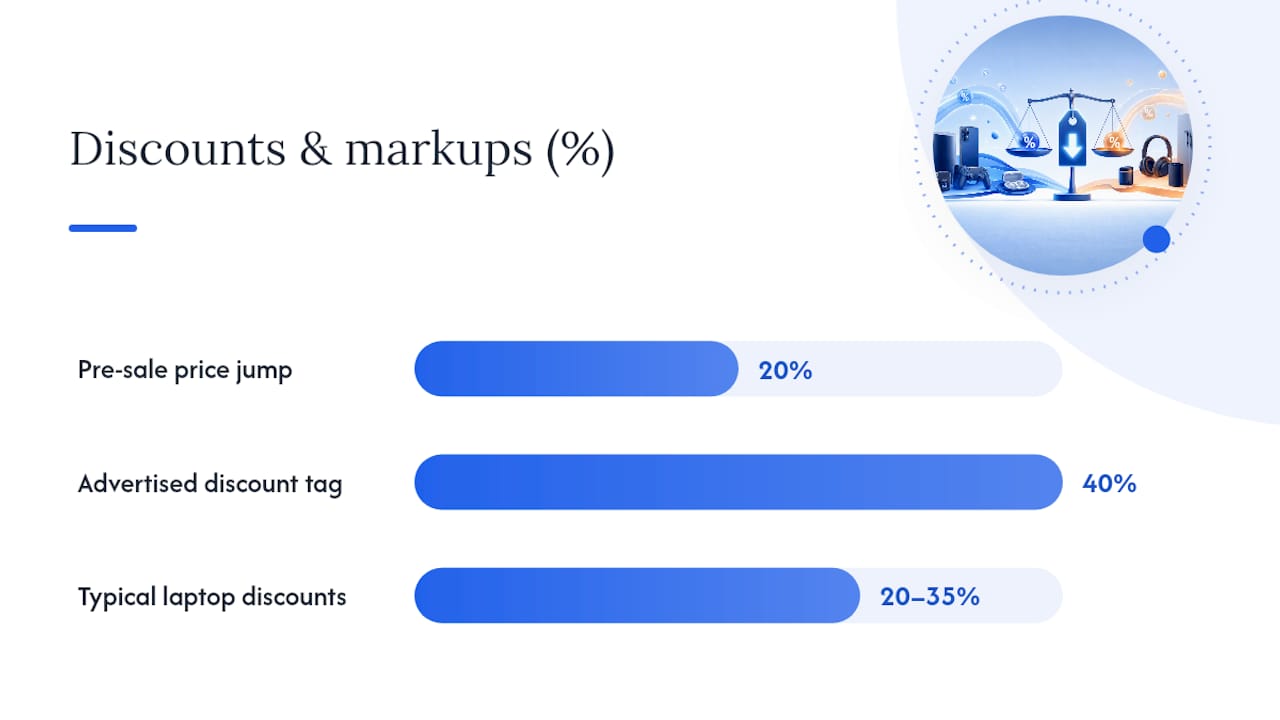
Knowing when to shop for gadgets only helps if you can tell a real discount from an inflated “sale” price. Start with price-history charts. A listing that jumped 20% right before a “40% off” tag went on is not a deal, it’s a markup with a costume on.
A few tactics that consistently work:
- Check price-history data before trusting any “was $X, now $Y” claim.
- Look for discounted gift cards at grocery stores or warehouse clubs, then stack them with an existing sale price.
- Consider open-box or refurbished units for laptops and TVs when the warranty and return window are clearly stated. A 90-day return policy on an open-box unit is a reasonable risk; a “final sale” tag is not.
- Use a retailer’s price-match policy if you find the same item cheaper elsewhere within the match window.
- Cross-check multiple marketplaces before committing. Tools like the Google Shopping comparison approach make this step faster than manually opening ten tabs.
Back-to-school shopping is a useful test case for this discipline: with typical laptop discounts landing between 20% and 35%, anything advertised outside that range deserves a second look before you trust it.
Tracking Prices With AI Price Search
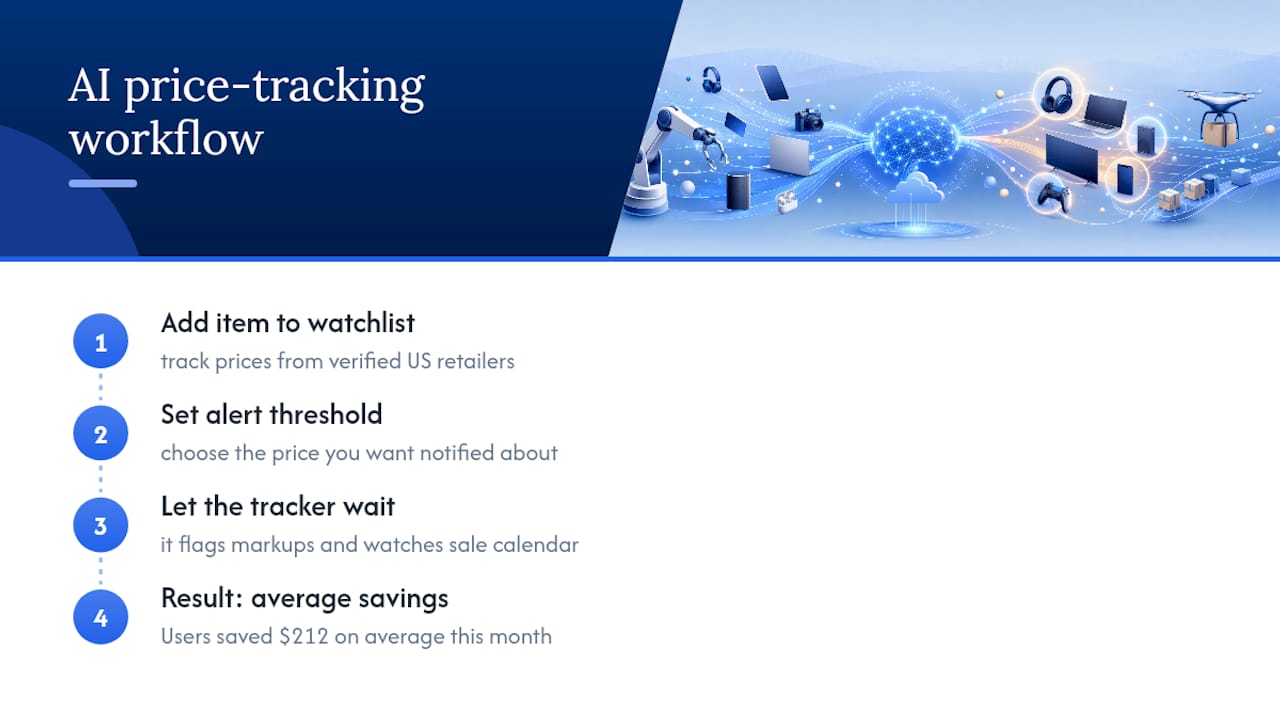
Every rule in this guide depends on one thing: knowing what a product actually cost last week, last month, and at its all-time low. That’s the gap Aipricesearch is built to close. It pulls prices from verified US retailers and factory-direct sources, flags dropship markups that inflate third-party listings, and lets you set alerts so you’re notified the moment a tracked item hits your target price.
Users who ran their shopping through the tool this month reported average savings of $212, largely by catching price drops they would have otherwise missed. The workflow is simple: add the item to a watch list, set an alert threshold, and let the tracker do the waiting while you keep an eye on the sale calendar above.
A Straight Answer on Timing (Editorial Perspective)
Most shoppers overpay not because they missed a sale, but because they bought out of impatience. My own rule is boring but effective: nothing goes in the cart until I’ve checked its price history, and nothing gets bought at launch price unless it’s genuinely broken beyond repair.
I once watched a set of noise-canceling headphones sit $40 above their all-time low for six weeks before Prime Day brought them right back down. Patience was the whole strategy.
The category variation matters more than most guides admit. Treating “electronics” as one shopping season, instead of five or six overlapping ones, is how people end up buying a TV in June and a laptop in December, both at the worst possible time.
— Timothy
Try Aipricesearch Before Your Next Purchase
Aipricesearch gets you the price-history context this whole guide depends on, without the manual work of tracking listings across a dozen retailer sites yourself. Instead of guessing whether a “sale” price is real, you see verified pricing from US retailers and factory-direct sources side by side, plus a dropship detector that flags inflated third-party markups before you click “buy.”

If you’ve got an item on your radar for Black Friday, Prime Day, or the post-launch price drop this guide just walked through, set it up on the AIShopping Assistant now and let the alerts do the waiting for you. It won’t manufacture a deal that doesn’t exist, but it will make sure you’re not the last one to notice when a real one shows up.
Where to Track Deals and Sale Dates
For ongoing research, Consumer Reports covers deal analysis, CNET breaks down category sales, and NerdWallet tracks TV timing specifically.
Sources
- Best deals on tech products right now | Consumer Reports
- The best time to buy a new TV, according to experts | BGR
- Best time to buy tech: seasonal pricing patterns and deal calendars | Byber App
- The 2026 discount calendar — Best time to buy | Fatsaver
Recommended
- Yahoo Shopping Comparison
- Google Shopping Comparison
- Ai Price Search Vs Pricegrabber
- Ai Price Search Vs Shopzilla
Want to compare offers instantly? Search any product on AI Price Search.
Search a price →