Save $212/Month: Automate Comparing Prices Online for US Shoppers

The fastest reliable way to compare prices online is to run a targeted price search alongside a price tracker, not to check five tabs by hand. Search the item once across verified retailers, then let a tracker watch it for drops. AI Price Search does both in one step and reports an average user saving this month. Search your next purchase there before you check out anywhere else.
TL;DR:
- Using a combined AI Price Search tool can save an average of $212 per month by providing verified prices, basket comparisons, and price tracking alerts.
- Total cost comparisons must include shipping, taxes, and discounts, as the lowest sticker price often appears more expensive after these extras are added.
- Relying on a single retailer for price checks is ineffective; switching between multiple sellers is common as price leadership shifts weekly across categories.
- Setting alert thresholds at 10 to 15 percent below current prices helps avoid unnecessary notifications and focus on meaningful deals.
- Automating price comparison workflows with tools that scan for deals, track price history, and flag markup risks can prevent overpaying and streamline shopping.
Table of Contents
- Fast Ways To Compare Prices Online
- How Do You Compare Total Cost Correctly?
- Extensions, Apps, And Alerts: Automating The Search
- What Evidence Backs This Approach?
- Small Habits That Actually Save Money
- Put This Workflow On Autopilot With AI Price Search
- Sources
Fast Ways To Compare Prices Online
Different purchases call for different tools, and using the wrong one wastes time. A single pair of sneakers needs a quick lookup. A grocery run needs a basket comparison. Knowing which surface fits which job is what separates someone who saves money weekly from someone who gets lucky once a year.
Single-item lookups work best through a shopping tab or aggregator site. Type in the product name or paste a link, and you get a spread of prices from multiple sellers in seconds. This is the right tool when you already know exactly what you want to buy.
Basket and list comparisons matter more for groceries and multi-item orders, where the winning retailer changes depending on what’s in your cart. A store with the cheapest paper towels might charge more for produce, so comparing the whole basket beats comparing one item.
Image, barcode, or UPC search solves the “I don’t know what this is called” problem. Snap a photo of a product on a shelf or scan its barcode, and a visual search tool matches it to listings elsewhere, often at a lower price than what’s in front of you.

Guides that round up shopping tools consistently recommend combining aggregators, browser extensions, and price trackers rather than relying on just one, since all catches deals the others miss.
Before trusting any result, verify a few things:
- The listed price includes the item’s actual condition (new, refurbished, open box)
- Stock status and delivery timeline, since availability signals matter more during shortages or high-demand periods
- Seller reputation, not just marketplace reputation
- Whether shipping and tax are already factored into the displayed price
How Do You Compare Total Cost Correctly?
The listed price is rarely the real price. A $40 item with $12 shipping and 8% tax costs more than a $45 item with free shipping, and plenty of shoppers miss that until checkout. Comparing prices before buying only works if you compare the full cost, not the sticker.
The formula is simple:
- Start with the adjusted item price after any discount or promo code
- Add shipping cost (or subtract cashback if it applies immediately)
- Add sales tax based on your location
- Subtract the value of any loyalty points or cashback you’ll actually redeem
- Divide by quantity or size to get the unit price when comparing consumables
That last step matters more than people realize. A 24-pack of paper towels at $28 sounds worse than a 12-pack at $15, until you calculate that the 24-pack costs $1.17 per roll versus $1.25. On groceries, cleaning supplies, and anything sold in bulk, unit price is the only honest comparison.
Watch for these traps:
- Membership fees required to unlock the “member price”
- Shipping thresholds that push you to add items you didn’t need
- Restocking or return fees buried in the fine print
- “Compare at” prices that reference an inflated MSRP, not a real competitor price
Worked example: Retailer A lists a blender at $89.99 with free shipping. Retailer A’s total is $89.99. Retailer B’s total comes to $90.87. The cheaper sticker price actually loses once you finish the math.
Extensions, Apps, And Alerts: Automating The Search
Manually checking five sites every time you want to buy something gets old fast, and it’s the main reason inflation pushed more shoppers toward shopping apps for holiday-season savings. Automation isn’t a luxury anymore. It’s how people avoid overpaying without spending their evenings on it.
Browser extensions typically scan for active coupon codes at checkout and overlay a quick price comparison while you shop. Apps go further, letting you scan receipts or barcodes, track price history on items you’re watching, and push alerts when a price drops.
Look for these features when picking a price comparison app:
- Basket-level comparison, not just single-item lookups
- Barcode or receipt scanning for fast entry
- Price history charts so you can tell if a “sale” is actually a discount
- Customizable alert thresholds instead of notifying you over every $0.50 shift
Pro Tip: Set your price alert threshold at 10 to 15% below the current price instead of any drop. A tighter threshold means constant notifications for meaningless changes, and you’ll start ignoring all of them, including the ones that matter.
One more thing worth a minute of attention: extensions and apps often ask for broad browsing permissions. Grant only what’s needed for price tracking and skip anything requesting access to unrelated browsing history.
What Evidence Backs This Approach?
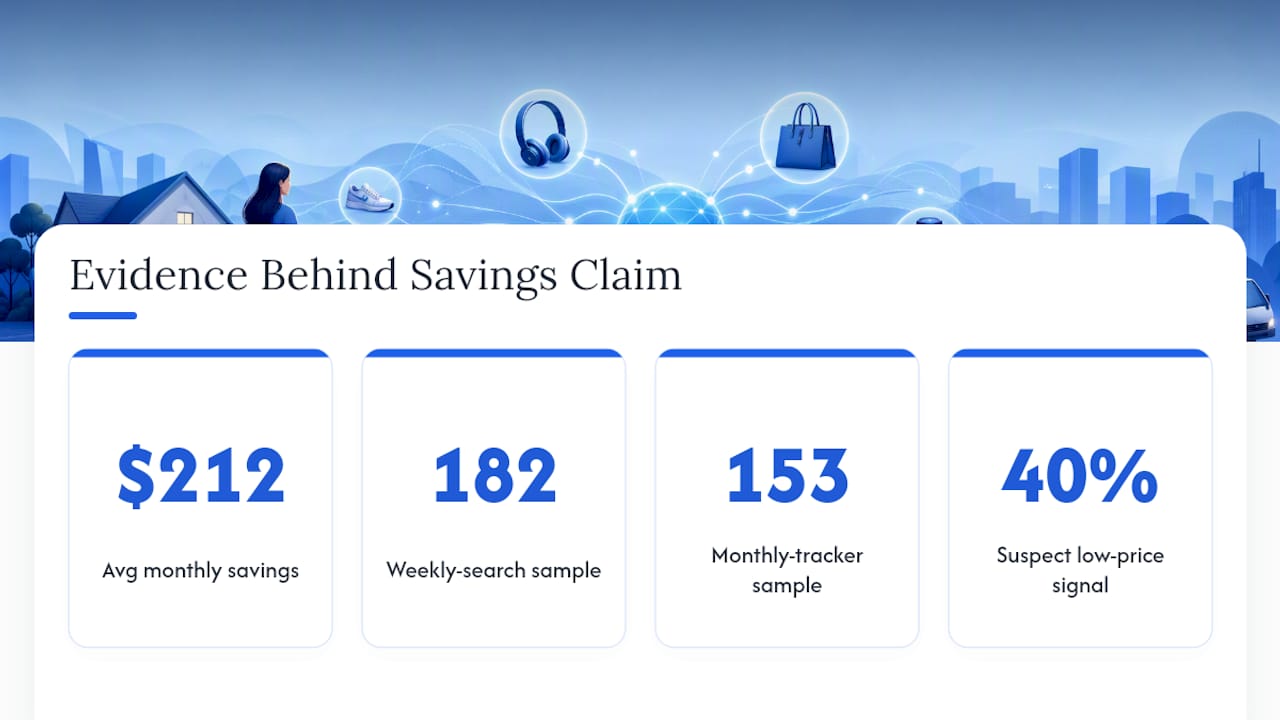
The average savings figure isn’t a guess. AI Price Search reports users saving an average of $212 this month by comparing verified retailer and factory-direct prices before buying, a number that reflects a mix of small everyday purchases and larger-ticket items where markup gaps run wide.
Case-study trackers back up the “no single retailer always wins” reality. A comparison of Amazon versus Walmart across 182 weekly searches found price leadership splitting by category rather than one retailer dominating outright. A separate monthly tracker covering 153 shopper queries showed similar swings month to month.
The retailer that’s cheapest on electronics this week may not be cheapest on home goods next week. That’s precisely why a one-time price check loses value fast, and why tracking beats checking.
The seller reliability signal matters here too. A price that looks 40% lower than everywhere else is sometimes a legitimate deal and sometimes a dropship listing with a markup baked in and a shipping delay attached. Flagging that distinction before checkout is worth more than the price difference itself.
Small Habits That Actually Save Money
Three habits do most of the work: keep a running watch list instead of searching from scratch every time, set alerts at a meaningful threshold rather than chasing every fluctuation, and always check unit price before assuming the bigger pack is cheaper.
Buy now when the price sits below its 90-day average and the item is genuinely needed soon. Set an alert and wait when it’s near a recent high or you have flexibility on timing.
None of this requires special expertise, just a workflow you actually stick to. Test it on your next planned purchase and see what changes.
— Timothy
Put This Workflow On Autopilot With AI Price Search
Everything above works better with a tool that does the checking for you. AI Price Search is built around this exact workflow: unified search across verified US retailers and factory-direct sources, basket-level comparison, price tracking with alerts, and seller reliability signals that flag markup risks before you click buy.
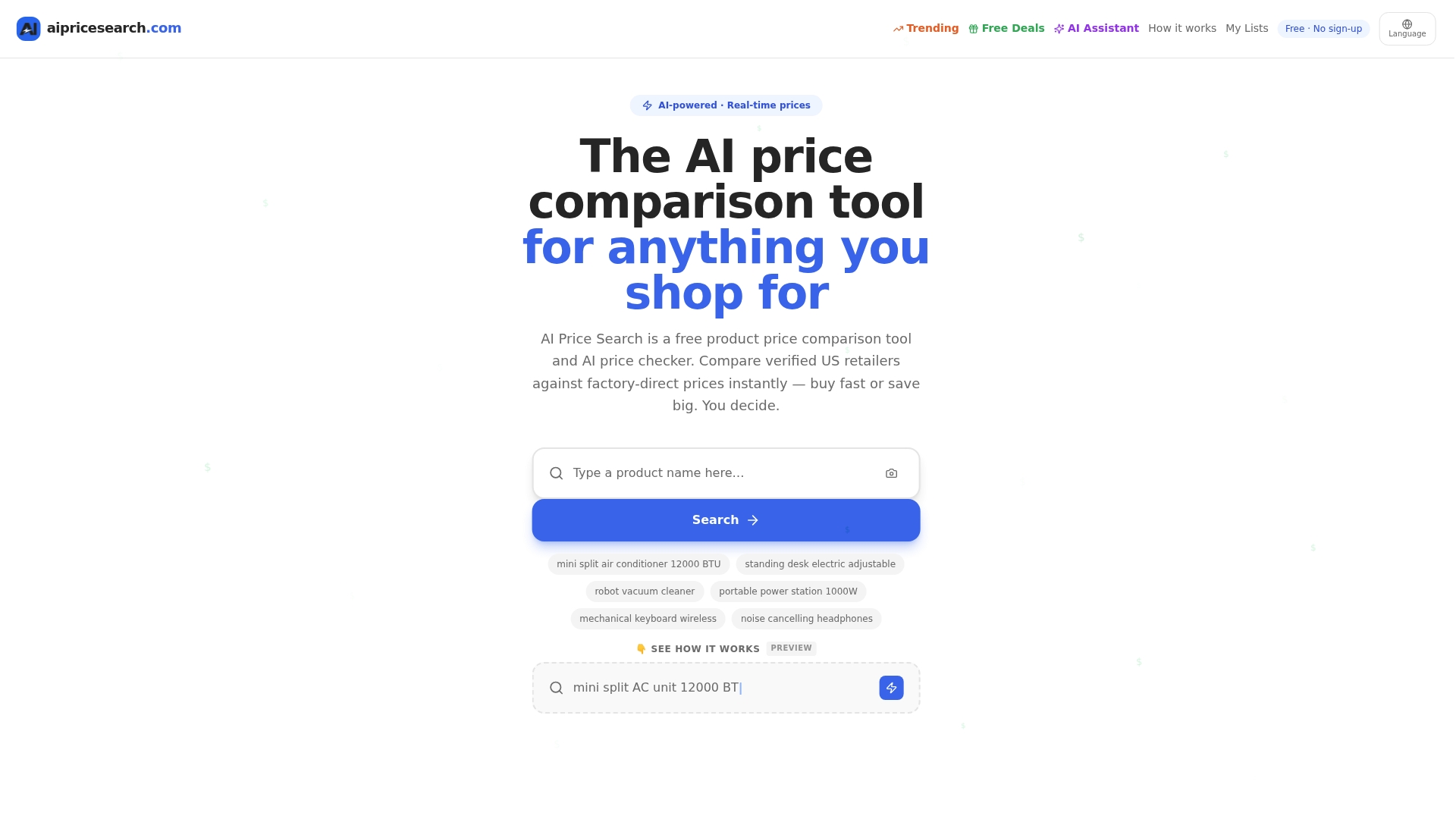
Instead of juggling a shopping tab, a spreadsheet, and a browser extension separately, you get one search that covers all three jobs. Users comparing prices this way report average savings of $212 per month, and the tool is free to use. If you’ve ever wondered how it stacks up against a Google Shopping search or Yahoo Shopping’s comparison tool, the short answer is verified pricing plus dropship detection that those surfaces don’t offer. Search your next purchase on AI Price Search before you add anything else to a cart.
Sources
- Inflation-battered U.S. consumers turn to shopping apps for holiday-season savings — Bloomberg
- Price technologies adds product-availability feature during shortages — TechCrunch
- Cheapest
- Compare prices online: The best tools & strategies to save money — Gerald
Recommended
- Yahoo Shopping Comparison
- Google Shopping Comparison
- Ai Price Search Vs Shopzilla
- Ai Price Search Vs Pricegrabber
Want to compare offers instantly? Search any product on AI Price Search.
Search a price →